
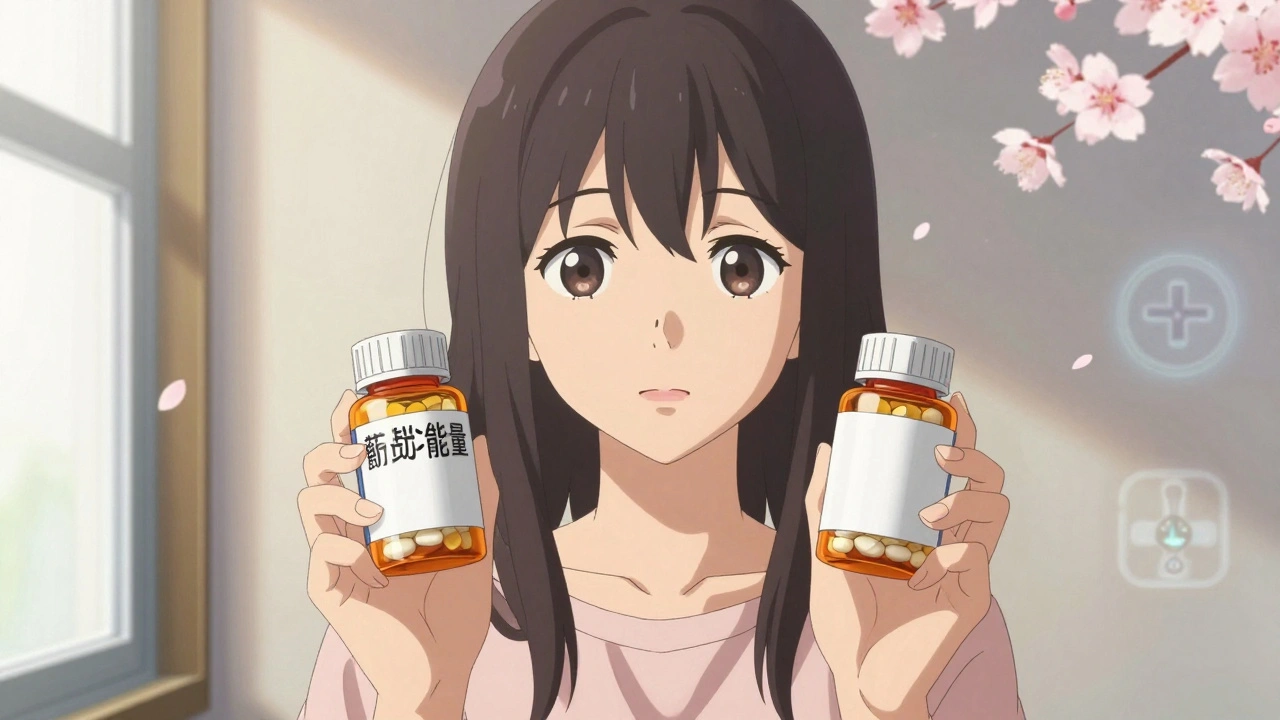
When you pick up a prescription, you might see a different name on the bottle than what your doctor wrote. It could be the brand name you’re used to-or it might be a generic version with no brand name at all. If it’s an authorized generic, you’re getting the exact same pill, capsule, or liquid as the brand-name drug-down to the last inactive ingredient. No guesswork. No trade-offs. Just the same medicine, cheaper.
What Exactly Is an Authorized Generic?
An authorized generic is not a copy. It’s not a look-alike. It’s the same drug, made in the same factory, with the same ingredients, under the same approval as the brand-name version. The only difference? No brand name on the label.
The U.S. Food and Drug Administration (FDA) defines it clearly: an authorized generic is an approved brand-name drug sold without the brand name. That’s it. No changes to the active ingredient. No swaps in fillers, dyes, or coatings. If your brand drug contains lactose, corn starch, or titanium dioxide, so does the authorized generic. Same batch. Same manufacturing process. Same quality control.
These drugs emerged after the Hatch-Waxman Act of 1984, which opened the door for generic competition. But instead of waiting for another company to reverse-engineer the formula, brand manufacturers began producing their own generics under their original New Drug Application (NDA). That means they don’t need to go through the Abbreviated New Drug Application (ANDA) process that traditional generics do. No bioequivalence studies. No waiting. Just the same product, repackaged.
How Are Authorized Generics Different From Traditional Generics?
This is where things get confusing-and why so many patients worry they’re getting a lesser version.
Traditional generics must prove they’re bioequivalent to the brand drug. That means the active ingredient must be absorbed into the bloodstream at a rate and extent within 80-125% of the brand. That’s a 20% window. In practice, most generics fall within 4-5%, but the legal allowance is still there. And while the active ingredient is tightly controlled, the inactive ingredients? They can be completely different.
That matters to some people.
Imagine someone with a severe allergy to a dye used in a traditional generic. Or someone with celiac disease who reacts to trace gluten in a filler. Or a patient with chronic conditions like epilepsy or thyroid disease who’s sensitive to even tiny variations in absorption. For them, switching to a traditional generic can mean a change in how the drug works-or how they feel.
An authorized generic eliminates that risk entirely. Because it’s made under the brand’s NDA, it uses the exact same inactive ingredients. No surprises. No hidden variables.
Are Authorized Generics Really the Same as Brand Drugs?
Yes. Absolutely.
The FDA says it plainly: “An authorized generic is therapeutically equivalent to the brand name drug because it is exactly the same drug.”
A 2018 study published in the National Center for Biotechnology Information tracked over 5,000 patients switching from brand drugs to either traditional generics or authorized generics. The results? No meaningful difference in hospital visits, emergency room trips, or medication discontinuation rates between the two generic types. In fact, the study found that patients on authorized generics were just as likely to stick with their medication as those on the brand.
Doctors who specialize in allergy and immunology confirm this. The American Academy of Allergy, Asthma & Immunology states that authorized generics are the only generic option that matches the brand’s full formulation-including allergens. For patients with sensitivities, that’s not a small detail. It’s critical.
Even the manufacturers agree. When a brand company sells an authorized generic, they’re not cutting corners. They’re using the same equipment, the same quality teams, the same testing protocols. The only thing that changes is the label.
![A pharmacist and patient examining a pill bottle labeled 'Manufactured for [Brand Name]', with floating medical symbols.](/uploads/2025/12/a-pharmacist-and-patient-examining-a-pill-bottle-labeled-039-manufactured-for-brand-name-039-with-floating-medical-symbols.-authorized-generics-vs-brand-drugs-what-you-need-to-know-about-identical-med.webp)
Why Do Authorized Generics Cost More Than Traditional Generics?
Here’s the catch.
While traditional generics often cost 80-85% less than the brand, authorized generics usually sit in the middle. They might be 30-50% cheaper than the brand-not 80%. Why?
Because the brand manufacturer is still in control. They’re selling their own product under a different label. They don’t need to compete with other generic makers. They don’t have to slash prices to win market share. In fact, many brand companies use authorized generics as a strategy to slow down competition. By offering their own generic version, they keep a big chunk of the market-and the profits-without having to fight off multiple low-cost rivals.
GoodRx data from 2023 shows that for some popular drugs, the authorized generic costs only 15-20% less than the brand. Meanwhile, a traditional generic for the same drug might be 70% cheaper.
So if your goal is the lowest possible price, the traditional generic often wins. But if your goal is zero risk, zero change, and full chemical identity to what you’ve been taking for years? The authorized generic is the only option that delivers that.
How Do You Know If You’re Getting an Authorized Generic?
It’s not always obvious.
Pharmacists are trained to know the difference, but many patients don’t. A 2023 survey in Pharmacy Times found that nearly 30% of patients question a switch to an authorized generic-even though it’s identical to their brand drug.
Here’s how to check:
- Look at the label. If it says “Manufactured for [Brand Name]” or “Distributed by [Brand Company],” it’s likely an authorized generic.
- Ask your pharmacist: “Is this an authorized generic?” They can tell you by looking up the National Drug Code (NDC) number.
- Check the FDA’s list of authorized generics. It’s updated regularly and publicly available.
Some insurance plans automatically substitute generics-authorized or traditional-unless the doctor writes “DAW” (Dispense As Written) on the prescription. If you’ve had bad reactions to generics before, ask your doctor to specify “Do Not Substitute” or “Brand Necessary.”

Who Benefits Most From Authorized Generics?
Not everyone needs them. But for certain patients, they’re the best-or only-safe option.
- Patients with allergies or sensitivities to dyes, preservatives, or fillers
- People with chronic conditions requiring precise dosing (epilepsy, thyroid disorders, heart rhythm issues)
- Those who’ve had negative experiences switching to traditional generics
- Patients on long-term medications where consistency matters more than cost
One patient on an allergy forum wrote: “I’ve been on the authorized generic of Xyzal for two years. No itching, no drowsiness, no difference from the brand. I wish I’d known this sooner.”
That’s the real value. It’s not about saving money. It’s about peace of mind.
What’s Changing in the Market?
The FDA is paying closer attention to how authorized generics are priced and marketed. In 2022, they began exploring whether to require brand companies to disclose authorized generic pricing in the Orange Book-a public list of approved drugs. That would make it easier for patients and insurers to compare costs.
Some lawmakers are also pushing back. The Affordable Prescriptions for Patients Act of 2023 includes provisions to limit brand companies from using authorized generics to delay true generic competition. Critics call it “pay-for-delay” in disguise.
Still, the market is growing. As of 2023, there are over 150 authorized generics available across 55 different drugs. Most are in categories like high blood pressure, cholesterol, asthma, and depression-where long-term use makes consistency vital.
Industry analysts predict authorized generics will hold 5-7% of the generic drug market through 2028. Not the biggest slice, but a critical one for the patients who need them.
What Should You Do?
Don’t assume all generics are the same. Don’t assume the cheapest is always the best. And don’t assume your pharmacist knows your full medical history.
If you’re switching from a brand drug to a generic:
- Ask your pharmacist: “Is this a traditional generic or an authorized generic?”
- Check the label for the manufacturer’s name. If it’s the same as the brand, it’s likely authorized.
- Monitor how you feel. Any new side effects? Changes in effectiveness?
- If you’re unsure or concerned, talk to your doctor. You have the right to request the brand or the authorized generic.
For most people, traditional generics are safe, effective, and affordable. But if you’ve ever wondered why a generic didn’t work the same way, or if you’ve had unexplained reactions after a switch-you’re not imagining it. And you’re not alone.
An authorized generic isn’t a compromise. It’s the closest thing to staying on your brand drug-without paying the brand price. And for some, that’s worth more than money.
Are authorized generics as safe as brand-name drugs?
Yes. Authorized generics are made under the same FDA-approved New Drug Application (NDA) as the brand-name drug. They use the exact same active and inactive ingredients, are produced in the same facility, and follow the same quality controls. The FDA confirms they are therapeutically identical to the brand.
Why are authorized generics sometimes more expensive than traditional generics?
Because they’re made by the original brand manufacturer, not a competing generic company. The brand company doesn’t need to lower prices to compete with other generics, so authorized generics often cost only 30-50% less than the brand, while traditional generics can be 80-85% cheaper. The price reflects market strategy, not quality.
Can I ask my doctor to prescribe an authorized generic?
Yes. You can ask your doctor to write a prescription for the brand drug and specify “Dispense As Written” or “Brand Necessary.” You can also ask your pharmacist if an authorized generic is available and request it specifically. Pharmacists are required to honor your preference if it’s clearly stated.
Do insurance plans cover authorized generics?
Yes. Most insurance plans cover authorized generics at the same tier as traditional generics, even though they’re chemically identical to the brand. This means you’ll usually pay less than you would for the brand-name version, but possibly more than for a traditional generic. Always check your plan’s formulary.
How do I tell if my medication is an authorized generic?
Look at the label: if the manufacturer is the same as the brand name, or if it says “Manufactured for [Brand Name],” it’s likely an authorized generic. You can also ask your pharmacist to check the National Drug Code (NDC) number against the FDA’s authorized generic list. The FDA maintains an updated public database.
If you’ve ever been told, “It’s just a generic,” remember: not all generics are created equal. For some people, the difference between a traditional generic and an authorized generic isn’t just about price-it’s about safety, consistency, and control over their own health.
Raj Rsvpraj
Let me tell you something, folks-this whole ‘authorized generic’ nonsense is just Big Pharma’s way of keeping you hooked! In India, we don’t need this Western overcomplication; our generics are just as good, and we don’t pay 30% extra for a label change. You think your body can’t handle a different filler? Please. You’re weak. We’ve been taking Indian generics for decades-no hospital visits, no drama. Your ‘peace of mind’ is just a marketing scam.