
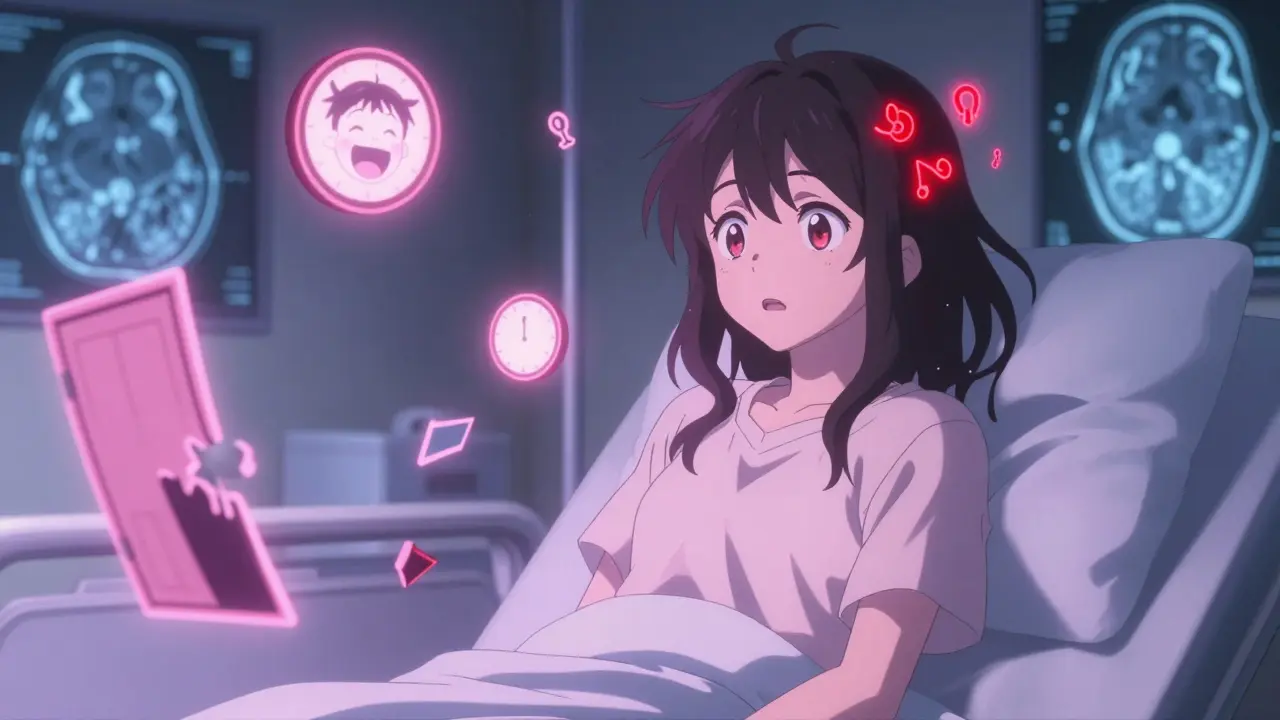
Autoimmune encephalitis isn’t something you hear about every day-but when it happens, it changes everything. It’s not a stroke. Not a virus. Not a mental health crisis. It’s your own immune system turning on your brain. And if you miss the early signs, the damage can be severe. But here’s the good news: if caught early, most people recover. A lot of them go back to work, to school, to life as they knew it. The key is knowing what to look for-and acting fast.
What Are the Real Red Flags?
Most people with autoimmune encephalitis don’t wake up one morning with a fever and a headache. It creeps in. At first, it might feel like the flu: a low-grade fever, a sore throat, maybe some diarrhea. That’s the prodrome-and it happens in about one-third of cases, one to four weeks before things get serious. Then, the brain starts to misfire. The most common first sign? Seizures. Not just any seizures. These are often new, unexplained, and hard to control with standard epilepsy meds. About 38% of patients present with them. But seizures aren’t always the first clue. For many, it’s something weirder: sudden personality changes. A usually calm person becomes aggressive. A quiet student starts talking to people who aren’t there. A parent forgets their child’s name. That’s not just stress. That’s the limbic system-the part of the brain that handles memory, emotion, and behavior-being attacked. Memory loss is another huge red flag. Not the occasional forgetfulness. This is severe. People forget conversations from five minutes ago. They can’t learn new names. They get lost in their own homes. In fact, 85% of patients have measurable cognitive decline. And it’s not just memory. Concentration, decision-making, problem-solving-all of it slows down or shuts off. Then there are the hidden symptoms. Autonomic dysfunction. Your heart races for no reason. Your blood pressure swings. You sweat excessively or stop sweating altogether. Sleep goes haywire-insomnia one night, sleeping 14 hours the next. These aren’t side effects. They’re direct results of immune cells attacking brain regions that control your body’s automatic functions. If you see someone with a mix of: new seizures, memory loss, personality shifts, and unexplained autonomic symptoms-it’s not psychiatric. It’s neurological. And it needs urgent attention.Which Antibodies Are Behind the Damage?
Autoimmune encephalitis isn’t one disease. It’s a group of diseases, each driven by a different antibody. These antibodies are like faulty homing devices. They latch onto proteins on the surface of brain cells-or sometimes inside them-and trigger an attack. The type of antibody tells you a lot: how the disease behaves, what complications to expect, and how to treat it. The most common is anti-NMDAR. It makes up about 40% of all cases. It hits young women hardest-median age 21. And here’s the critical link: in half to 80% of these cases, there’s an ovarian teratoma. That’s a benign tumor that accidentally produces brain proteins, tricking the immune system into attacking both the tumor and the brain. Remove the tumor, and the brain often heals. But if you miss it? The immune attack keeps going. Then there’s anti-LGI1. This one targets older men-median age 60. It’s famous for a very specific seizure pattern: faciobrachial dystonic seizures. That means sudden, brief, painful jerks in the face and arm-sometimes dozens a day. It also causes low sodium levels (hyponatremia) in two-thirds of cases. That’s not just a lab value. Low sodium makes people confused, nauseous, and can trigger seizures on its own. Anti-GABAB receptor encephalitis is rarer-only 5% of cases-but dangerous. Why? Because in half of these patients, there’s small cell lung cancer. The cancer cells produce the same protein the antibody attacks. Treat the cancer, and the brain symptoms often improve. Skip the cancer screening, and you’re missing the root cause. Less common antibodies like anti-CASPR2, anti-AMPAR, and anti-IgLON5 each have their own patterns. But the rule is simple: if you suspect autoimmune encephalitis, test for them all. And don’t just test blood. Cerebrospinal fluid (CSF) is more sensitive-especially for anti-NMDAR. You can miss the antibody in blood and catch it in spinal fluid.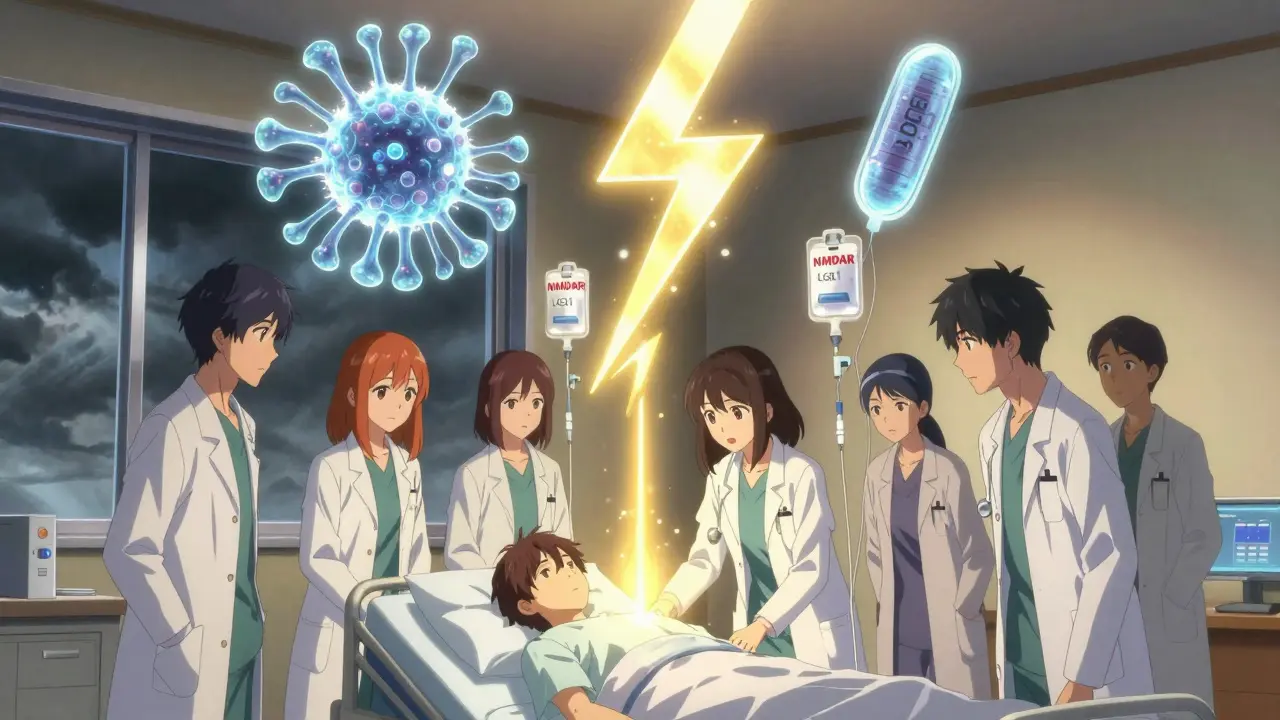
How Is It Diagnosed?
There’s no single test. Diagnosis is a puzzle. You piece together symptoms, imaging, fluid analysis, and antibody results. MRI scans are often normal-or show only mild swelling in the temporal lobes. That’s different from viral encephalitis, where MRI usually shows big, obvious lesions. In autoimmune cases, the damage is more subtle. But when inflammation is visible, it’s often in the hippocampus-right where memory lives. EEGs almost always show abnormalities. Slowing of brain waves. Not the dramatic spikes you see in classic epilepsy, but a general fuzziness. That’s a clue that the brain’s electrical activity is disrupted, even if seizures aren’t obvious. CSF analysis is key. White blood cells are usually low-under 100 per microliter. That’s much lower than bacterial or viral encephalitis, where counts can hit 1,000 or more. Protein levels are only slightly elevated. And unlike infections, you won’t find specific pathogens in the fluid. But you might find oligoclonal bands-signs the immune system is active inside the brain. The real game-changer? Antibody testing. Serum and CSF must both be sent. Some antibodies, like anti-NMDAR, are more likely to show up in CSF. Labs now offer panels that test for over 20 different antibodies. If one comes back positive, you’ve got your diagnosis. If none show up? Don’t rule it out. Some patients have antibodies that haven’t been identified yet. Clinical suspicion still matters.What’s the Treatment?
Treatment starts the moment you suspect autoimmune encephalitis-before you even have test results. Waiting for confirmation can cost you weeks. And every day counts. First-line treatment is straightforward: steroids and immunoglobulins. Intravenous methylprednisolone-1 gram a day for five days-is the standard. It shuts down the immune system’s overactive response. IV immunoglobulin (IVIg) is given at the same time or right after. It floods the body with healthy antibodies to neutralize the bad ones. About 70% of patients respond to this combo within 10 days. If a tumor is found? Surgery comes first. Remove the teratoma, remove the trigger. In 85% of cases, neurological symptoms start improving within four weeks. That’s faster than any drug. But not everyone responds to first-line treatment. About a third don’t. That’s when you move to second-line therapies. Rituximab targets B-cells-the immune cells making the bad antibodies. It’s given weekly for four weeks. About 55% of patients improve. Cyclophosphamide is stronger, used for more aggressive cases. It’s given monthly for six months. And tocilizumab, originally for rheumatoid arthritis, is now showing promise-52% response in stubborn cases. For the critically ill-those in ICU, with seizures that won’t stop, or who can’t breathe on their own-plasma exchange is life-saving. It physically removes the harmful antibodies from the blood. Five to seven sessions over two weeks can turn the tide. About 65% of these patients improve significantly.
Jon Paramore
Anti-NMDAR encephalitis is the most common paraneoplastic form in young females-always screen for ovarian teratomas. CSF antibody titers are more sensitive than serum; if clinical suspicion is high and serum is negative, LP is non-negotiable. Early IVMP + IVIg gives you a 70% response rate within 10 days. Delayed treatment = higher relapse risk. Time is brain.
GFAP is emerging as a dynamic biomarker-serum levels correlate with disease activity and treatment response. Not yet routine, but promising for monitoring.
For refractory cases, rituximab + cyclophosphamide combo hits B-cells and plasma cells simultaneously. Tocilizumab (anti-IL6R) is gaining traction in steroid-resistant cases. Plasma exchange is underrated-five sessions can be life-altering in ICU patients.
Don’t mistake faciobrachial dystonic seizures for psychogenic events. They’re pathognomonic for anti-LGI1. Hyponatremia here isn’t just a lab finding-it’s a seizure trigger. Correct sodium, then treat the immune component.
Rehab is critical. 40% have residual cognitive deficits. Cognitive behavioral therapy + memory retraining improves function in 65% at 12 weeks. Sleep hygiene + melatonin helps 60% with circadian disruption. Beta-blockers for autonomic instability? 75% response.
Recurrence rates: 12-25% for anti-NMDAR, up to 35% for anti-LGI1. Follow-up neurology visits every 3-6 months for 2 years. Repeat tumor screening. Don’t let them slip through the cracks.