
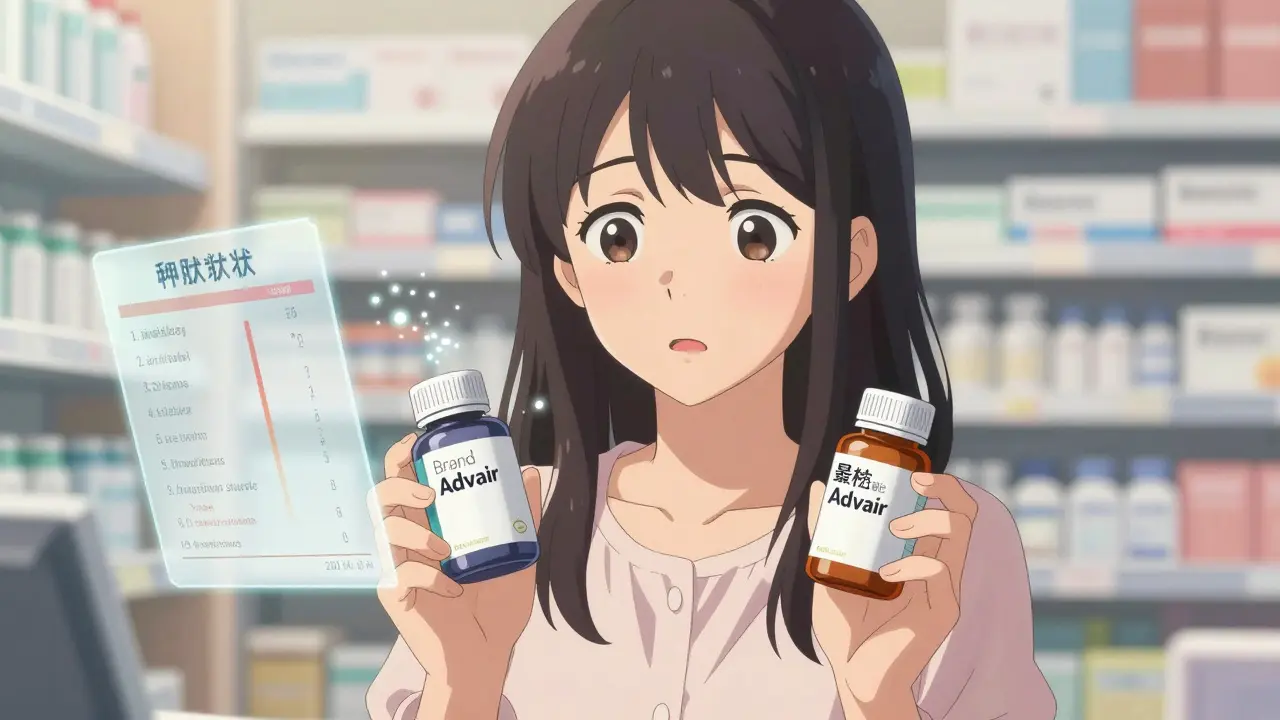
Most people assume that if a generic drug has the same active ingredients as the brand name, it works the same way. That’s usually true-but not always. When it comes to generic combination drugs, small differences in inactive ingredients can make a real difference in how you feel, how well the medicine works, or even if it causes new side effects. This isn’t theory. It’s happening right now, in pharmacies across the country, and patients are noticing.
What Exactly Is a Generic Combination Drug?
A combination drug combines two or more active ingredients in a single pill or inhaler. Common examples include metformin/sitagliptin for type 2 diabetes, fluticasone/salmeterol (Advair) for asthma, and lisinopril/hydrochlorothiazide for high blood pressure. These are designed to simplify treatment, reduce pill burden, and improve adherence. Generic versions of these drugs are supposed to be exact copies-same active ingredients, same strength, same effect. But here’s the catch: the FDA only requires that the active ingredients match. The rest-fillers, binders, coatings, dyes, preservatives-can be completely different. These are called inactive ingredients, and they’re not just harmless additives. They control how the drug dissolves, how fast it’s absorbed, and even whether it irritates your stomach or triggers an allergic reaction.Why Do These Differences Matter?
The FDA’s standard for approving generics is bioequivalence: the generic must deliver the same amount of active ingredient into your bloodstream within a certain range-80% to 125% of the brand name’s levels. That sounds precise. But it doesn’t tell you how quickly the drug releases, whether it dissolves evenly, or if the coating causes stomach upset. For most people, this doesn’t matter. But for those with conditions that need tight control-like epilepsy, thyroid disease, or blood thinning-it can be a problem. These are called narrow therapeutic index (NTI) drugs. A tiny change in absorption can mean the difference between effective treatment and dangerous side effects. A 2020 study of nearly 90,000 Medicare patients switching from brand to generic levothyroxine found over 12% needed a dose adjustment because their thyroid levels shifted. That’s more than 1 in 8 people. Another study showed 23% of asthma patients using generic Advair ended up using their rescue inhaler more often after switching.What’s in the Pill That Isn’t Listed?
Let’s look at what’s actually in those pills. Brand-name manufacturers spend billions developing formulations that ensure consistent delivery. Generic makers don’t have to replicate that. They just have to prove their version gets the same amount of drug into the blood. Here’s what commonly changes:- Magnesium stearate - a lubricant used in 38% of generic combinations. Can slow down dissolution in sensitive patients.
- Lactose - used in 29% of cases. Problematic for people with lactose intolerance.
- Microcrystalline cellulose - a binder found in 22% of generics. Can affect how quickly the tablet breaks down.
- Dyes and coatings - may cause skin rashes or allergic reactions in sensitive individuals.

Who’s Most at Risk?
Not everyone will notice a difference. But certain groups are far more likely to experience issues:- Elderly patients - often take multiple medications. Small changes in absorption can interact unpredictably.
- Patients with chronic conditions - like epilepsy, heart failure, or autoimmune disorders - where stability is critical.
- People with allergies or sensitivities - to lactose, dyes, or preservatives like parabens.
- Those on psychiatric medications - antidepressants and antipsychotics showed the highest complaint rates in patient forums.
What Should You Do?
You don’t need to avoid generics. They save money, and for most people, they work perfectly. But you should be informed. Here’s what to ask your pharmacist or doctor:- Is this a narrow therapeutic index drug? Check the FDA’s Orange Book. If it’s rated “B,” proceed with caution.
- Have I ever had a reaction to a generic before? If yes, tell your provider. Your body remembers.
- Can I see the inactive ingredients list? Pharmacies can access this. Ask for it in writing.
- Is there an authorized generic? These are made by the brand company and are identical. They cost more than regular generics but less than the brand.
- Can I stay on the brand if it’s working? Many insurance plans will cover the brand if you document medical necessity.
Doreen Pachificus
My grandma switched to a generic blood pressure med last year and started getting dizzy every afternoon. We thought it was aging, but then she switched back and boom - no more dizziness. Turns out the filler was slowing absorption. Never thought inactive ingredients could do that.