

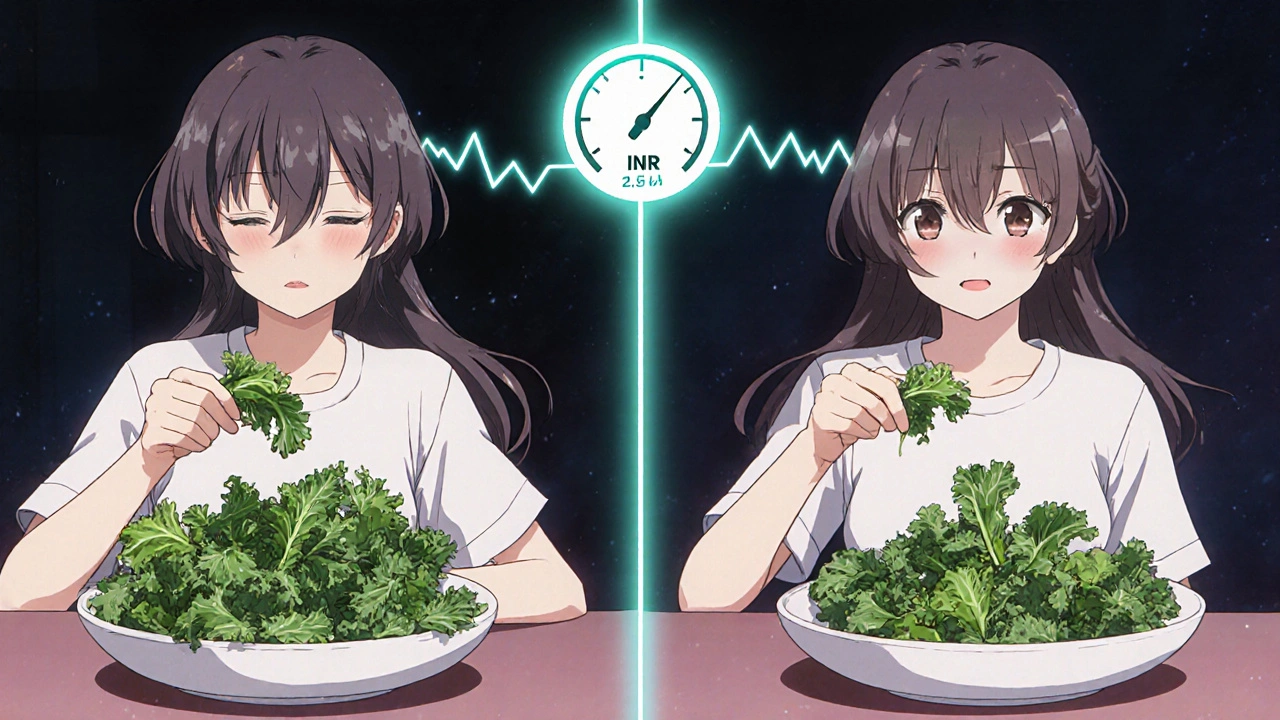
Many people on warfarin are told to avoid green leafy vegetables. But that advice is outdated-and potentially harmful. The real key isn’t cutting out spinach, kale, or broccoli. It’s keeping your intake consistent. If you eat a big bowl of kale one day and none the next, your blood clotting levels can swing dangerously. That’s not because these foods are bad. It’s because they’re powerful-and they interact directly with how warfarin works.
How Warfarin Actually Works
Warfarin (sold as Coumadin or Jantoven) doesn’t thin your blood like water. It blocks a vitamin your body needs to make clotting proteins. That vitamin is K. Without enough vitamin K, your blood takes longer to clot-which is exactly what doctors want if you’re at risk for strokes, clots, or heart valve complications.
But here’s the catch: your body needs vitamin K to do other things too-like bone health and artery function. So completely avoiding it isn’t safe or smart. The goal isn’t to eliminate vitamin K. It’s to keep your daily intake steady so your warfarin dose stays effective.
Which Vegetables Have the Most Vitamin K?
Not all greens are equal. Some pack a serious punch:
- Cooked spinach: 889 mcg per cup
- Cooked kale: 547 mcg per cup
- Cooked collard greens: 772 mcg per cup
- Cooked broccoli: 220 mcg per cup
- Cooked cabbage: 400+ mcg per cup
Compare that to the recommended daily intake for adults: 90 mcg for women, 120 mcg for men. One serving of cooked spinach has nearly 10 times your daily need. That’s why sudden changes matter.
What Happens When You Change Your Intake?
Think of your INR (International Normalized Ratio) like a thermostat for blood thinning. A reading between 2.0 and 3.0 is usually the target. Go too low? You’re at risk for clots. Go too high? You risk dangerous bleeding.
A 50% spike in vitamin K-say, eating two big salads instead of one-can drop your INR by 0.5 to 1.0 within just 3 to 5 days. That’s enough to push you out of the safe zone. The opposite happens if you suddenly stop eating greens: your INR climbs, and your risk of internal bleeding rises.
A 2024 study from the NIH looked at warfarin patients who ate 100 grams of spinach daily. The result? Their INR stayed stable. No spikes. No crashes. Just steady control. The same principle applies to kale, broccoli, or Brussels sprouts-so long as the amount stays the same.
Why Avoidance Is the Wrong Strategy
Some people think: “If vitamin K interferes with warfarin, I’ll just skip it.” But that’s a trap.
First, vitamin K deficiency isn’t harmless. It can lead to brittle bones, calcified arteries, and even worse clotting problems down the line. Second, avoiding greens often leads to eating more processed carbs, sugars, or unhealthy fats to fill the gap. That’s worse for your heart than a consistent serving of spinach.
Plus, sudden drops in vitamin K intake are just as risky as spikes. A 2021 study from the American Heart Association found that nearly 4 out of 10 warfarin-related ER visits were caused by people suddenly changing their diet-either by eating way too much or way too little vitamin K.
What You Can Eat Without Worry
You don’t have to give up vegetables. You just need to pick wisely and stick to portions.
Here are low-vitamin K options you can eat freely:
- Lettuce (½ cup, about 80g)
- Carrots (3 dessert spoons)
- Cauliflower (8 florets)
- Courgette (½ a large one)
- Mushrooms (3-4 dessert spoons)
- Green beans
- Potatoes
- Onions
The NHS and University of Iowa both list these as safe for daily, unrestricted eating. No tracking needed. No guesswork.
What About Other Foods and Supplements?
It’s not just vegetables. Some supplements and drinks can mess with warfarin too:
- Grapefruit juice
- St. John’s Wort
- Danshen (an herbal supplement)
- Ginkgo Biloba
- Cod liver oil (high in vitamin A and D)
- Glucosamine
These aren’t just “maybe” risks. They’re proven to change how warfarin works. Even if you’ve been taking them for years, talk to your doctor before continuing. Same goes for any new supplement-herbal or not.
When to Call Your Doctor
Some changes aren’t about food. Illness can throw off your INR too:
- Stomach bugs or diarrhea
- Fever lasting more than a few days
- Starting or stopping antibiotics
- Major weight loss or gain
These all affect how your body absorbs vitamin K or metabolizes warfarin. If you’re sick, don’t assume your diet is the problem. Get your INR checked.

Warfarin vs. Newer Blood Thinners
There’s a reason newer drugs like Eliquis, Xarelto, and Pradaxa are popular. They don’t care about vitamin K. You can eat kale, salad, or smoothies without checking your INR every week.
But they’re not for everyone. If you have a mechanical heart valve-especially in the mitral position-warfarin is still the only option. DOACs (direct oral anticoagulants) can fail in these cases. Same goes for people with severe kidney disease or antiphospholipid syndrome.
And cost? Warfarin costs $4-$10 a month. DOACs? $500-$600. For many people, that’s not a choice. It’s a necessity.
How to Stay Consistent
Here’s how to make it simple:
- Choose one or two high-vitamin K foods you like (spinach, kale, broccoli).
- Stick to the same portion every day or every other day. (100g of spinach daily is a proven safe amount.)
- Track your intake with a simple note in your phone or journal-no apps needed.
- On days you skip your usual green, don’t replace it with another high-K food. Just eat low-K veggies instead.
- Get your INR checked regularly-every 2-4 weeks if stable, more often if your diet changes.
Some hospitals are now testing digital tools that help patients log meals. Early results show a 27% drop in INR swings when people track their vitamin K intake. You don’t need an app. But you do need awareness.
The Bottom Line
You don’t have to give up your greens to stay safe on warfarin. In fact, you shouldn’t. The goal isn’t avoidance-it’s predictability. Eat the same amount of vitamin K-rich foods every week. Your body, your INR, and your doctor will thank you.
Warfarin has been used since 1954. Decades of research, from JAMA to the NIH, all point to the same conclusion: consistency wins. Not deprivation. Not fear. Just steady, smart eating.
Can I eat spinach if I’m on warfarin?
Yes, you can. The NIH confirmed in 2024 that eating 100 grams of spinach daily is safe for warfarin patients-as long as you eat the same amount every day. Sudden changes in portion size are what cause INR swings, not spinach itself.
What happens if I eat a big salad one day and nothing the next?
Your INR can drop sharply after a large vitamin K intake, increasing your risk of clots. If you skip greens entirely the next day, your INR can rise, raising your risk of bleeding. Consistency is the only way to keep your blood clotting stable.
Are newer blood thinners better than warfarin?
For many people, yes-they don’t require diet tracking. But warfarin is still the best option for those with mechanical heart valves, severe kidney disease, or antiphospholipid syndrome. Cost is also a major factor: warfarin costs under $10 a month, while newer drugs cost over $500.
Can I drink grapefruit juice with warfarin?
No. Grapefruit juice can interfere with how your body breaks down warfarin, leading to unpredictable INR levels. It’s one of several substances-along with St. John’s Wort, Ginkgo Biloba, and cod liver oil-that should be avoided entirely.
How often should I get my INR checked?
If your diet and health are stable, every 2-4 weeks is typical. But if you’ve changed your eating habits, started a new medication, or gotten sick, your doctor may want you checked weekly until your levels stabilize again.
Is it okay to eat kale every day?
Yes, if you eat the same amount daily. One cup of cooked kale has about 547 mcg of vitamin K-far above the daily recommended amount. But if you eat one cup every day, your body adapts and your INR stays steady. Switching between kale and spinach or skipping it entirely is what causes problems.
Brian Bell
This is the kind of post I wish I saw when I first started on warfarin. I used to panic every time I ate spinach. Now I just eat my daily 100g like clockwork. No more stress. 🙌