
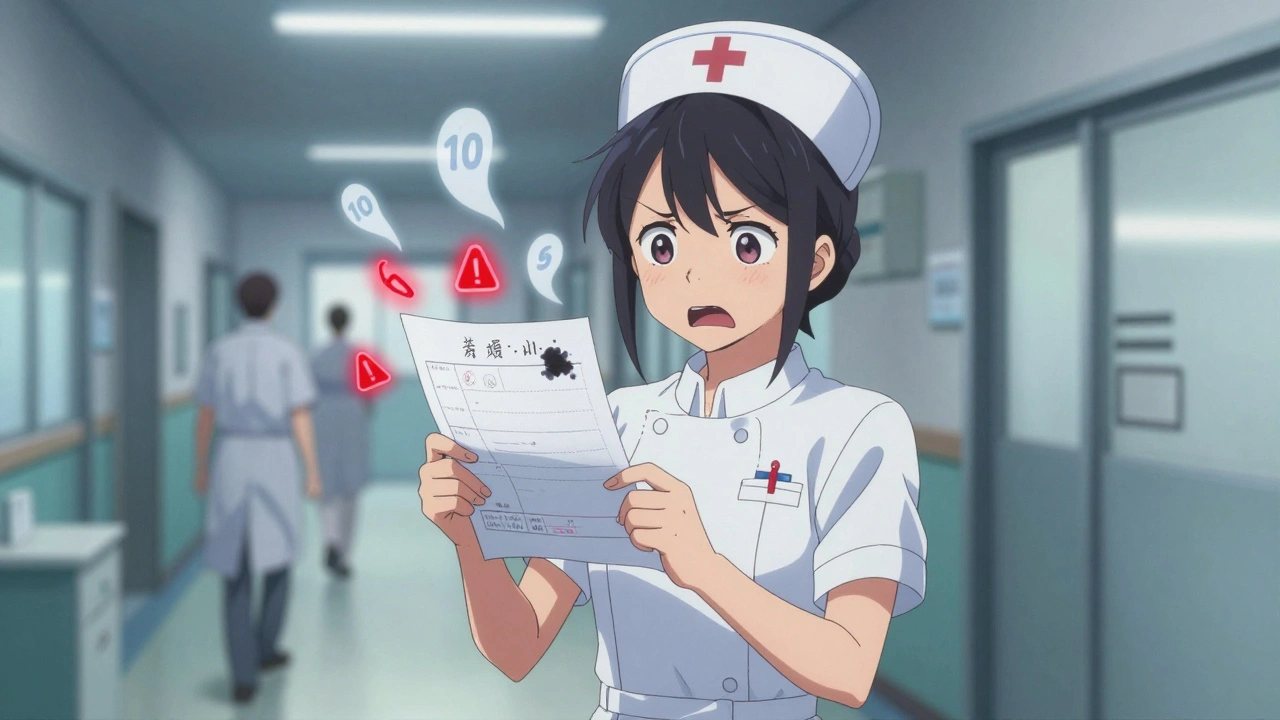
Every year, thousands of people in the U.S. die not from their illness, but because a doctor’s handwriting was too messy to read. A prescription for metoprolol gets mistaken for metformin. A dose of 10 mg turns into 100 mg because the zero looks like a 6. A nurse spends 13 minutes on the phone trying to figure out if the doctor meant every 8 hours or every day. These aren’t rare mistakes. They’re routine.
In 2025, you’d think we’d have left this behind. But in clinics, hospitals, and even some pharmacies across the world, handwritten prescriptions still exist. And they’re still killing people.
Why Handwritten Prescriptions Are Dangerous
Illegible handwriting isn’t just annoying-it’s deadly. According to the Institute of Medicine, more than 7,000 patient deaths each year in the U.S. are directly tied to errors caused by unreadable prescriptions. That’s more than traffic accidents involving alcohol. And it’s all preventable.
Studies show that 92% of medical students and doctors have made at least one prescription error because of poor handwriting. One 2005 audit of surgical notes found only 24% were rated as "good" or "excellent" for legibility. The rest? Nurses and pharmacists had to guess. One wrong guess, and a patient gets the wrong drug, the wrong dose, or the wrong route-like oral instead of IV.
Common mistakes include:
- Confusing similar-looking drug names (e.g., hydroxyzine vs. hydralazine)
- Missing decimal points (1.0 mg written as 10 mg)
- Using dangerous abbreviations like "QD" (daily) instead of "daily"-which can be read as "QID" (four times a day)
- Omitting the route of administration (oral, IV, topical)
- Failing to include prescriber details, making it impossible to verify the order
Pharmacists make over 150 million calls per year in the U.S. just to clarify handwriting. Nurses spend an average of 12.7 minutes per illegible prescription tracking down the right info. That’s not just wasted time-it’s time stolen from patient care.
The Human Cost of Bad Handwriting
It’s easy to think, "I’ve seen worse handwriting-it’s fine." But that mindset is what gets people hurt.
Dr. Daniel Sokol from Keele University and Dr. Samantha Hettige from St. George’s Hospital documented cases where patients received wrong doses because a doctor’s "5" looked like a "9," or a "0" looked like a "6." One patient was given 10 times the intended dose of insulin. Another got a neurotoxin instead of a painkiller. Both survived-but only because a pharmacist caught the error at the last second.
And it’s not just about drugs. Illegible handwriting delays treatment. A patient with sepsis waits 45 minutes because the order for antibiotics can’t be read. A child with asthma gets sent home because the inhaler dose is smudged. These aren’t hypotheticals. They’re documented cases.
Even worse, 22% of healthcare workers admit they sometimes ignore illegible prescriptions rather than take the time to clarify them. That’s not negligence-it’s burnout. Doctors are rushed. Nurses are overloaded. Pharmacists are drowning in calls. The system is broken.
How E-Prescribing Fixed the Problem
The solution isn’t harder training or better pens. It’s technology.
Electronic prescribing-e-prescribing-started gaining traction in the early 2000s. By 2019, 80% of U.S. office-based providers had switched to digital systems. And the results? Dramatic.
A 2025 study in JMIR compared safety compliance between handwritten and electronic prescriptions. Handwritten prescriptions met safety standards just 8.5% of the time. E-prescriptions? 80.8%. Even manually typed e-prescriptions without templates hit 56% accuracy-still more than six times safer than pen and paper.
E-prescribing eliminates handwriting errors by design. It:
- Uses dropdown menus for drug names, avoiding look-alike/sound-alike mix-ups
- Forces complete fields: dose, frequency, route, duration
- Blocks dangerous abbreviations automatically
- Checks for allergies and drug interactions in real time
- Directly sends the order to the pharmacy, cutting out phone calls
Veradigm reports e-prescribing reduces illegibility-related errors by 97%. That’s not a small improvement. That’s a revolution.
And it’s not just about safety. It saves time. Pharmacists no longer need to call back. Nurses don’t waste hours chasing down orders. Doctors get faster feedback on patient adherence. Everyone wins.

But E-Prescribing Isn’t Perfect
Switching to digital doesn’t mean the problems disappear-it just changes shape.
Some doctors complain that e-prescribing systems are slow. Clicking through 10 menus to pick a dose feels worse than writing it by hand. Others say the alerts are too noisy. A system might flag a common combination like aspirin and ibuprofen as risky, even though it’s safe for most people. Clinicians start ignoring alerts. That’s called "alert fatigue," and it’s a new kind of risk.
Integration is another headache. If your electronic health record doesn’t talk to your pharmacy system, you’re stuck with manual workarounds. And the cost? Setting up a full e-prescribing system can run $15,000 to $25,000 per provider. Training takes 8 to 12 hours per clinician. Small clinics struggle to afford it.
Still, these are implementation problems-not reasons to go back to pen and paper. The fix isn’t to abandon e-prescribing. It’s to improve it: better user design, smarter alerts, and more support for under-resourced clinics.
What About Places Without Technology?
Not every clinic has high-speed internet or a $20,000 system. In rural areas, low-income countries, or emergency settings, handwritten prescriptions are still common.
For now, there are best practices to reduce risk:
- Use printed letters, not cursive
- Avoid all abbreviations on The Joint Commission’s "Do Not Use" list
- Write out "daily," not "QD"
- Write "5 mg," not "5mg"-the space helps avoid misreading
- Always include patient name, drug name, dose, route, frequency, and your signature
- Use printed labels if possible, even if handwritten
One study found that using a simple 15-item checklist and getting feedback from peers reduced errors by over 40% in handwritten prescriptions. It’s not perfect-but it’s better than nothing.
Emerging tech like AI-powered handwriting recognition is also helping. Early tools can interpret common drug names with 85-92% accuracy. That’s not a replacement for e-prescribing, but it’s a bridge for clinics still using paper.
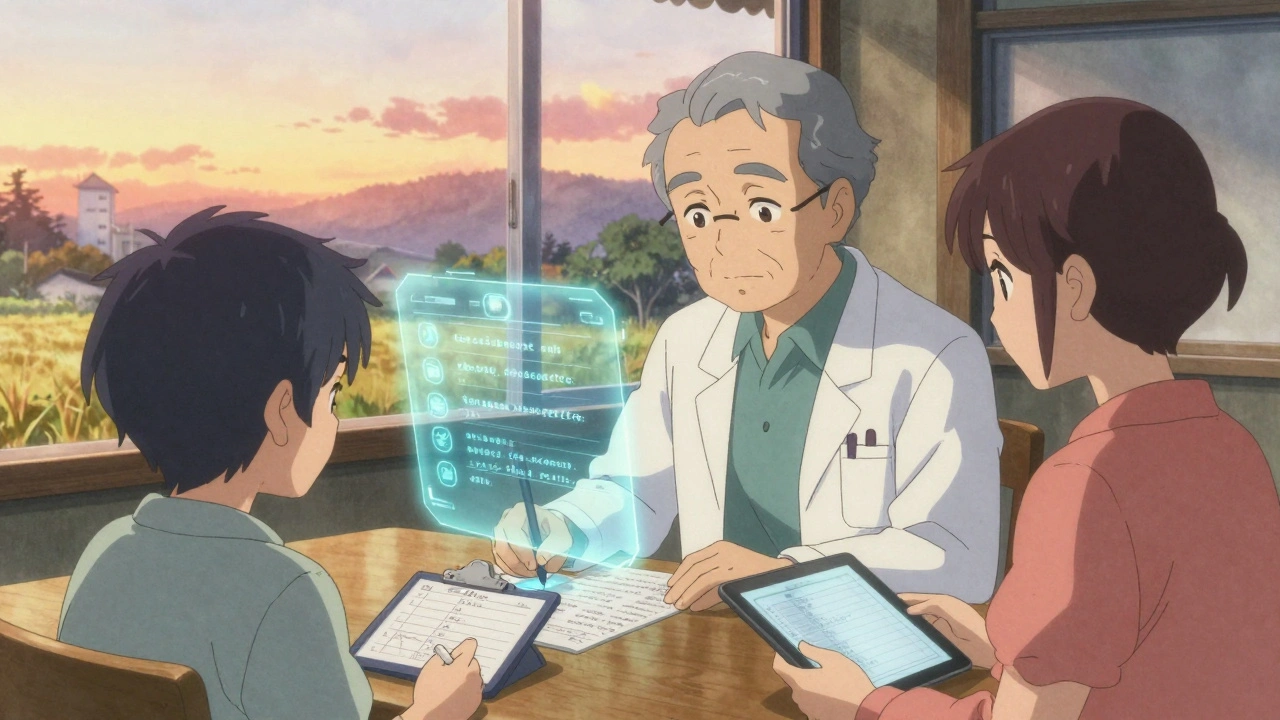
The Future Is Digital-And Fast Approaching
Back in 2000, Dr. Lucian Leape and Dr. Don Berwick called handwritten prescriptions "a dinosaur long overdue for extinction." At the time, it sounded like a radical idea. Now, it’s just common sense.
Regulations are pushing the change. The Medicare Improvements for Patients and Providers Act of 2008 gave financial bonuses for e-prescribing. The 21st Century Cures Act of 2016 required systems to talk to each other. The Centers for Medicare & Medicaid Services now tie reimbursement to electronic health record use.
By 2030, handwritten prescriptions will be rare in developed countries. The U.S. e-prescribing market is projected to hit $4.2 billion by 2027. That’s not just a business trend-it’s a public health win.
Every time a doctor switches from pen to screen, they’re not just saving time. They’re saving lives.
What You Can Do
If you’re a patient:
- Always double-check your prescription at the pharmacy. Ask: "Is this what the doctor meant?"
- Use digital prescriptions when possible. Many clinics now text or email your prescription directly.
- If you’re handed a paper script, ask the doctor to write clearly-or ask if they can send it electronically.
If you’re a healthcare worker:
- Push for e-prescribing in your clinic. Even small practices can use low-cost platforms.
- Use checklists to audit your own prescriptions. Peer review works.
- Never ignore a messy script. Call it in. Even if it takes 5 minutes.
Illegible handwriting isn’t a personal failing. It’s a system failure. And systems can be fixed.
Gwyneth Agnes
Handwritten prescriptions are a death sentence waiting to happen.