
Missing a dose of your blood pressure pill because you forgot? Taking two doses by accident? You’re not alone. Around 50% of people don’t take their medications as prescribed - and that’s not just inconvenient, it’s dangerous. In the U.S. alone, medication non-adherence leads to about 125,000 deaths every year and sends nearly a quarter of hospital patients back through the doors. The good news? Simple tools - apps, alarms, and pill organizers - can make a real difference. But not all of them work the same way. Here’s what actually helps, what doesn’t, and how to pick the right one for you.
Why Medication Reminders Matter More Than You Think
It’s easy to think, "I’ll just remember." But life gets busy. Work, kids, travel, fatigue - they all get in the way. Even people who care deeply about their health miss doses. Studies show that people with chronic conditions like diabetes, heart disease, or depression are most at risk. And the consequences aren’t theoretical. Missed doses can mean a stroke, a hospital stay, or even death. The problem isn’t laziness. It’s complexity. Someone on five different medications might need to take pills at 7 a.m., 1 p.m., 7 p.m., and 11 p.m. - some with food, some without, some with water, some not. Add in side effects, refill delays, or cost concerns, and it’s no wonder people slip up. That’s where reminders come in. They don’t fix the root causes - like high drug prices or confusing instructions - but they do give you a fighting chance. Research from the Mayo Clinic found that when patients used a digital reminder system with clinician follow-up, hospital readmissions dropped by 22% for heart failure patients. That’s not a small win.Medication Reminder Apps: The Digital Assistant in Your Pocket
Apps are the most popular tool today. There are over 300 of them. Some are free. Some cost $5 a month. Some are built into your phone. But not all are created equal. Medisafe is the most downloaded app, with over 5 million users. It’s trusted by clinics and hospitals because it checks for dangerous drug interactions with 99.2% accuracy. If you’re on blood thinners, antidepressants, or diabetes meds, this feature alone can prevent a serious mix-up. It also lets caregivers - like a daughter or home nurse - get alerts if you miss a dose. That’s huge for older adults living alone. But Medisafe has a downside. It nags. Push notifications flood your phone. One user on Reddit said, "It flagged my prenatal vitamins as dangerous with Tylenol. I spent 20 minutes on the phone with my pharmacist just to prove it wasn’t a problem." False alerts like that make people turn off notifications - and that’s the opposite of what you want. MyTherapy is better for younger users or people tracking more than just pills. It logs symptoms, mood, sleep, and even blood pressure if you have a compatible device. People with anxiety or depression find the streak-tracking feature motivating - it’s like a fitness app for your health. One user said, "Seeing my 47-day streak made me want to keep going. I didn’t even realize how much better I felt." EveryDose uses an AI assistant named Maxwell to explain your meds in plain language. It knows about 10,000 FDA-approved drugs and can tell you why you’re taking each one. But it’s clunky. Seniors struggled with the menu layout in testing, and it doesn’t have live support - just email, which can take two days. And then there’s Apple’s built-in Medications app, which launched in late 2023. It’s free, comes with iOS 17.2+, and pulls data from your Health app. It flags 500,000+ drug interactions using CDC guidelines. If you already use your iPhone to track steps or sleep, this integrates smoothly. No extra app to download. No subscription. Just a quiet, reliable reminder that doesn’t interrupt your day.Alarms: The Simplest Tool - and the One Most People Fail With
You don’t need an app to set a reminder. Your phone’s alarm clock can do it. Set three alarms for your morning, afternoon, and night pills. Easy, right? Wrong. Duke University found that only 43% of people using basic phone alarms actually took their meds when the alarm went off. Why? Because alarms are too generic. They don’t tell you which pill to take. They don’t remind you if you already took it. And if you’re tired or confused - especially if you’re older or have memory issues - you might ignore it, snooze it, or just not know what to do next. The fix? Make your alarms specific. Instead of "Take meds," say: "Take 10mg Lisinopril with breakfast." Use different ring tones for different times of day. Put your phone next to your pill bottle so the sound and sight trigger together. Still, for people with dementia or cognitive decline, alarms alone aren’t enough. A study showed 68% of these users stopped responding to alarms within a month. That’s why combining alarms with physical tools - like a pill organizer - works better.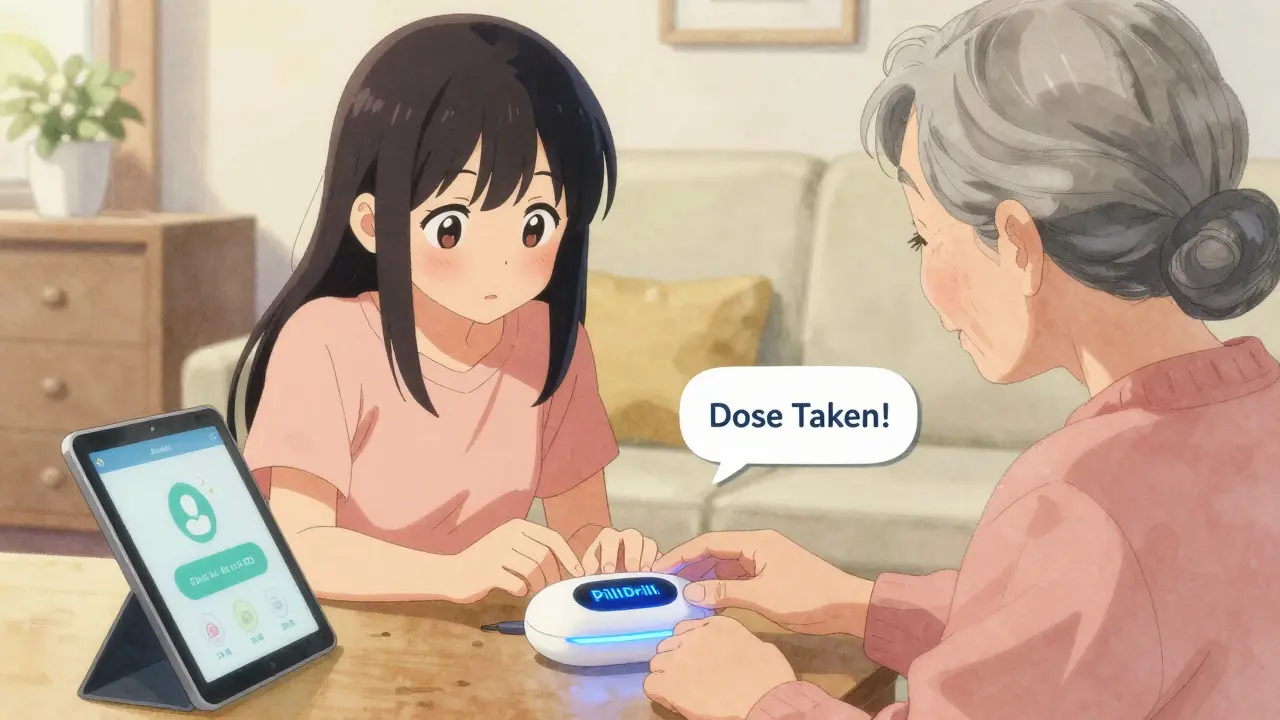
Pill Organizers: The Old-School Solution That Still Works
Pill organizers aren’t new. But modern ones are smarter than the plastic boxes from the 90s. PillDrill is a Bluetooth-enabled organizer with 28 compartments. It syncs with your phone, lights up when it’s time to take a pill, and sends a text to your caregiver if you don’t open the right compartment. It costs $129.99 - not cheap - but it’s one of the few that actually tracks whether you took the pill, not just that you opened the box. Hero is a robotic dispenser that looks like a small fridge. It automatically dispenses pills at the right time, locks away the rest, and texts you if you miss a dose. It’s $99.99 upfront plus $30/month subscription. But in Medicare trials, users had a 92% adherence rate. That’s the highest of any tool tested. The problem? Setup is a nightmare. One user said, "I spent three hours trying to load my 12 pills into the right slots. I gave up halfway and just used the app instead." These devices work best with help - from a family member, pharmacist, or home health aide. And don’t underestimate the humble 7-day pill box. Even a basic one - $5 from your local pharmacy - can cut missed doses by half if you use it right. The trick? Fill it every Sunday. Put it next to your toothbrush or coffee maker. Make it part of your routine.What Actually Works? The Science Behind Success
Not every tool works for every person. But research shows some patterns:- Weekly verification - checking your pill box or app with a pharmacist or caregiver - reduces errors by 53%.
- Adding a caregiver - someone who gets alerts if you miss a dose - boosts 90-day adherence from 62% to 88%.
- Biometric integration - linking your pill reminders to your Apple Watch or Fitbit - increases consistency by 22% because the alert is on your wrist, not buried in your phone.
- Simple setup - apps with clear instructions, like MyTherapy’s 127-page illustrated guide, have 91% user comprehension. Dosecast’s sparse help? Only 43% understand how to use it.
Choosing the Right Tool for Your Life
Here’s how to pick:- If you’re over 65 and live alone: Go with Medisafe + a 7-day pill box. Use the caregiver sharing feature. Ask a family member to check in once a week.
- If you’re managing multiple chronic conditions (diabetes, heart disease, depression): Use MyTherapy. It tracks symptoms and meds together, so you can see patterns.
- If you’re tech-savvy and already use an iPhone: Try Apple’s Medications app. It’s free, quiet, and built in. No extra apps. No subscriptions.
- If you’re on a tight budget: Use your phone’s alarm + a $5 pill box. Set alarms with clear labels. Fill the box every Sunday.
- If you’re caring for someone with dementia: Consider Hero or PillDrill. They’re expensive, but they prevent dangerous mistakes.
What’s Coming Next?
The field is changing fast. In 2024, Google partnered with Walgreens so your prescriptions sync automatically to Dosecast - no manual entry. Amazon’s Alexa can now read your pill schedule aloud. Medisafe is testing an "AdherenceScore" that predicts when you’re likely to miss a dose - and sends a personalized nudge before it happens. Medicare now pays $15/month for approved adherence tools. That means more people will get access to these systems - but only if they’re proven to work long-term. Right now, only 28% of free apps show lasting results after six months. The future isn’t just about reminders. It’s about understanding why you forget - and helping you overcome it.Can I just use my phone’s alarm to remind me to take my pills?
Yes - but only if you make it specific. Instead of "Take meds," set your alarm to say "Take 10mg Lisinopril with breakfast." Put your phone next to your pill bottle so the sound and sight work together. Still, alarms alone fail for 68% of people with memory issues. For better results, pair them with a pill organizer.
Are medication reminder apps safe with my health data?
It depends. Apps like Medisafe and MyTherapy use encryption and comply with HIPAA rules if used in clinical settings. But many free apps make money by selling anonymized data. A 2023 Princeton study found 63% of free apps monetize user health data. Stick to apps from trusted companies - like Apple, Medisafe, or those covered by Medicare - and read their privacy policies before signing up.
What’s the cheapest way to remember my meds?
The cheapest way is a $5 plastic pill organizer + your phone’s alarm. Fill the box every Sunday. Set alarms with clear labels like "Take 5mg Amlodipine at 8 a.m." Keep your phone and pill box together - on your nightstand or kitchen counter. This simple combo works for 70% of people who stick with it.
Do pill organizers really help people with dementia?
Yes - but only if they’re smart ones. Basic pill boxes don’t help much if the person can’t remember to open them. Devices like Hero or PillDrill use lights, sounds, and caregiver alerts to guide the user and notify others if a dose is missed. These reduce dangerous errors by up to 80% in dementia patients. They’re expensive, but for some families, they’re worth every penny.
Can I get help paying for a smart pill organizer?
Yes. Starting in 2023, Medicare began covering up to $15 per month for FDA-approved adherence tools - including devices like Hero and apps like Medisafe. Ask your doctor or pharmacist for a prescription for an adherence device. Some Medicaid programs and nonprofit organizations also offer subsidies or free devices for low-income seniors.
Akriti Jain
So Apple’s app is free but Medisafe costs money? 😏 Guess I’ll just let Big Tech track my blood pressure while Big Pharma sells me more pills. 🍏💊 #DataIsTheNewOil #TrustNoOne