

Imagine this: you’ve been managing your multiple sclerosis for years. Your legs feel heavy, your vision’s been shaky since optic neuritis, but you’ve got a rhythm. Then, one morning, your balance goes sideways. You can’t stand up without holding the counter. Your doctor says it’s a relapse. You’re scheduled for IV steroids. But what if it’s not a relapse at all? What if it’s just your body reacting to last night’s hot shower-or a bladder infection you didn’t notice? This isn’t rare. It happens more than you think.
What’s Really Going On? Relapse vs. Pseudorelapse
A true MS relapse means your immune system is attacking your nervous system again. New inflammation. New damage. New lesions on your MRI. Symptoms last more than 24 to 48 hours and show up without any clear outside cause. This is when steroids like IV methylprednisolone might help-by calming that inflammation and speeding up recovery. A pseudorelapse is different. It’s not new damage. It’s old damage getting worse because something else is stressing your system. Your nerves, already scarred from past MS attacks, are like frayed wires. Heat, infection, stress, or fatigue can make them misfire. Symptoms feel just as real: weakness, blurry vision, numbness. But your MRI? Nothing new. No inflammation. No fresh lesions. Just your body screaming because something’s off. The difference isn’t just academic. Getting it wrong means you get steroids when you don’t need them. And steroids aren’t harmless. They can spike your blood sugar, wreck your sleep, trigger anxiety or even psychosis in rare cases. One nurse with MS on Reddit told me about five patients she saw get IV steroids for pseudo-relapses-then end up in the hospital with steroid-induced psychosis. That’s not a fluke. It’s a pattern.Common Triggers: Heat, Infections, and Stress
Pseudorelapses don’t come out of nowhere. They have clear triggers-and most of them are everyday things.- Heat: This is the big one. Around 41% of people with MS report worsening symptoms in hot weather. A hot shower, a sauna, even a warm room can do it. Uhthoff’s phenomenon-where vision blurs or double vision hits when you’re overheated-is the classic example. It affects 60 to 80% of people who’ve had optic neuritis. Cool down, and symptoms vanish in minutes or hours.
- Urinary tract infections (UTIs): The #1 trigger. In 67% of pseudorelapse cases, a UTI is the culprit. You might not even feel sick-just more tired, more wobbly, more numb. A simple urine test can catch it. Treat the infection, and the MS-like symptoms fade.
- Fever: Any fever, even from a cold or flu, can trigger a pseudo-relapse. Your body temperature rising by just 0.5°C can make old nerve damage act up.
- Stress and exhaustion: Emotional stress, lack of sleep, or overdoing it physically can push your nervous system past its limit. Your body’s already working hard to compensate for MS damage. Add burnout, and it collapses.
Why Steroids Don’t Work for Pseudorelapses
Steroids fight inflammation. That’s their job. But in a pseudorelapse? There’s no inflammation. Just overheated, overworked nerves. Giving steroids is like using a firehose to put out a static shock. It doesn’t fix the problem-and it creates new ones. Studies show that 30 to 40% of people with MS get unnecessary steroids because their pseudo-relapse was misdiagnosed as a true relapse. The risks? Up to 25% get high blood sugar. 40% can’t sleep. 30% feel anxious or depressed. And none of it helps their symptoms. The American Academy of Neurology says this clearly: before calling something a relapse, rule out fever, infection, and metabolic issues. That means checking your temperature, doing a urine test, and running basic blood work. If your sodium is off or your white blood cell count is high, you’re not having a relapse-you’re having a reaction to an infection.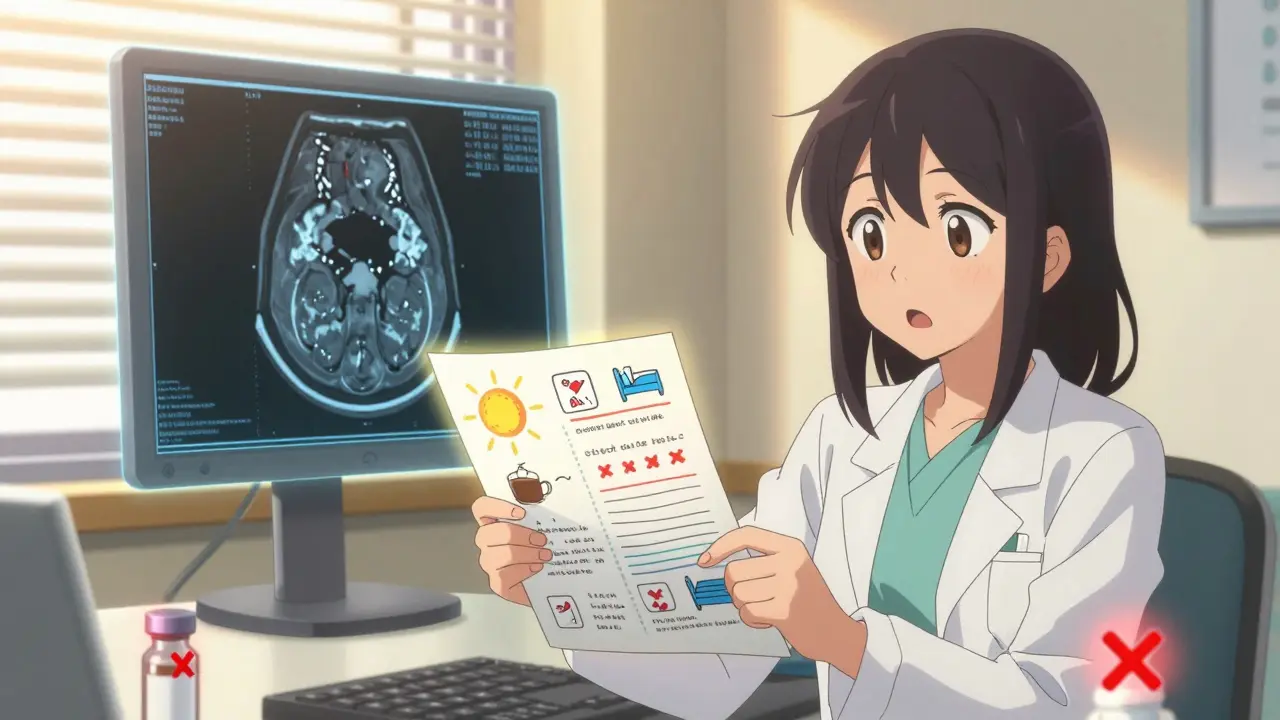
How to Know for Sure: The 3-Step Check
You don’t need an MRI every time you feel off. But you do need a simple system.- Check the clock: Did symptoms last less than 24 hours? If yes, and they improved after cooling down or treating a UTI, it’s likely a pseudorelapse.
- Look for triggers: Did you have a fever? A hot bath? A urinary symptom? A stressful week? Write it down. Keep a daily log. Temperature, sleep, infections, mood. This isn’t fluff-it’s your diagnostic tool.
- Test before treating: If symptoms last longer than 48 hours and you can’t find a trigger, then talk to your neurologist about an MRI. If there are no new lesions, and your labs are clean, it’s still likely a pseudorelapse.
Real Stories: What Happens When You Get It Right
One woman in Melbourne, 58, with MS for 22 years, started having sudden leg weakness every summer. She’d been told it was a relapse three times. Each time, she got steroids. Each time, she felt worse-fatigued, anxious, with spikes in her blood sugar. Then she switched neurologists. The new doctor asked: “Have you been in the sun? Hot showers?” She admitted she’d been using a hot tub to ease her joint pain. He told her to stop. Gave her a cooling vest. Within two hours, her legs were normal. No steroids. No hospital. Just common sense. Another man, 41, noticed his balance got worse every time he got a cold. He thought it was MS progressing. Turns out, he had silent UTIs. His urine was always cloudy, but he ignored it. Once he started drinking cranberry water and checking his urine after every cold, the episodes stopped. No new lesions. No disability progression. Just a simple fix.
What Happens If You Ignore the Difference?
Pseudorelapses don’t cause permanent damage. They don’t make MS worse. They don’t add to your disability score. That’s huge. But if you keep mistaking them for relapses, you might think your disease is progressing when it’s not. You might start on stronger drugs unnecessarily. You might feel hopeless. And the financial cost? In the U.S. alone, unnecessary steroid treatments for pseudorelapses cost $12.7 million a year. That’s hospital visits, lab tests, complications, missed work. All avoidable. New tools are helping. The MS-Relapse Assessment Tool (MS-RAT), launched in 2023, uses your symptoms, temperature, and functional impact to give a probability score. It’s 92% accurate. Some telehealth apps now let you upload symptom logs and get instant feedback. You don’t need to wait weeks for an appointment to know if you’re in crisis or just overheated.What You Can Do Today
- Keep a symptom log: Note temperature, sleep, infections, stress, and activity levels. Use a free app or a notebook. It’s your best diagnostic tool.Can a pseudorelapse turn into a real relapse?
No. A pseudorelapse is not a sign that your MS is worsening. It’s a temporary flare-up caused by an outside factor like heat or infection. Once the trigger is gone, symptoms fade. It doesn’t cause new damage or lead to a true relapse. However, if you ignore frequent pseudorelapses and keep exposing yourself to triggers, your body may become more sensitive over time-making symptoms harder to manage.
Do I need an MRI every time I have symptoms?
Not unless your symptoms last more than 48 hours and you can’t find a trigger. Most pseudorelapses resolve quickly once the cause is treated. MRI is expensive and not always necessary. Your doctor should first rule out fever, infection, or metabolic issues. If symptoms persist despite that, then an MRI helps confirm whether there’s new inflammation.
Why do some doctors still give steroids for pseudorelapses?
Because the symptoms look identical. Without a symptom diary, lab tests, or a clear trigger, it’s easy to assume it’s a relapse. Many doctors aren’t trained in MS-specific nuances. Studies show general neurologists misdiagnose pseudorelapses 40% of the time. That’s why patient advocacy matters-you need to bring your data to the table.
Can stress alone cause a pseudorelapse?
Yes. Stress doesn’t cause MS damage, but it can worsen nerve signaling in already damaged areas. If you’re sleep-deprived, anxious, or emotionally drained, your nervous system has less reserve to cope. This can trigger symptoms that feel like a relapse. Managing stress with rest, mindfulness, or therapy can reduce these episodes significantly.
Are there any blood tests to tell the difference?
Not yet for routine use. But research is promising. Blood tests measuring neurofilament light chain (NfL) levels show higher levels during true relapses due to nerve damage. In pseudorelapses, NfL stays normal. These tests aren’t widely available yet, but they’re being validated. For now, urine tests, temperature checks, and symptom logs are your best tools.
Anjula Jyala
Let me be clear pseudorelapses are not a thing they’re just lazy patients avoiding real treatment