
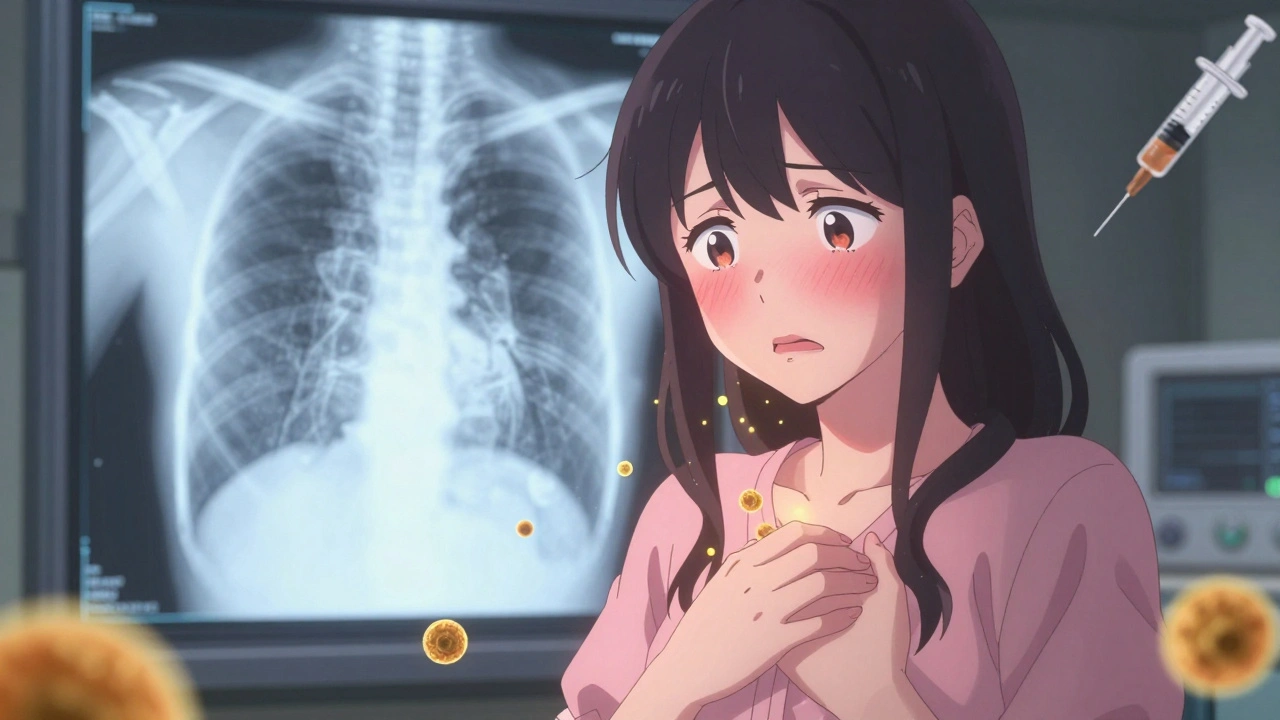
When your lungs feel heavy, your cough won’t quit, and even breathing feels like a chore, it’s not just a cold. It could be pneumonia - and not all pneumonia is the same. The type you have changes everything: how you feel, how it’s diagnosed, and most importantly, how it’s treated. Getting the right answer isn’t just about feeling better faster - it’s about avoiding dangerous mistakes like taking antibiotics when they won’t help at all.
Bacterial Pneumonia: The Sudden Onset
Bacterial pneumonia hits fast. One day you might feel a little under the weather, and the next, you’re running a high fever - 102°F or higher - with chills so bad you can’t stop shaking. Your cough turns wet and thick, coughing up yellow, green, or even bloody mucus. Chest pain isn’t just annoying; it’s sharp, stabbing, and gets worse every time you breathe or cough.
This is the classic picture of bacterial pneumonia, and it’s most often caused by Streptococcus pneumoniae. This one bug alone is responsible for over half of all community-acquired pneumonia cases in adults and children. It’s also the top reason kids under five end up in the hospital with pneumonia. The bacteria sneak into the lungs, multiply fast, and trigger a massive immune response. White blood cells flood the air sacs, filling them with fluid and pus - that’s what shows up as a solid white patch on an X-ray, called lobar consolidation.
Other bacteria like Staphylococcus aureus, Haemophilus influenzae, and even Legionella (the cause of Legionnaires’ disease) can do the same thing. What sets bacterial pneumonia apart is how quickly it progresses. Symptoms often spike within 24 to 48 hours. You might notice your lips or fingertips turning blue - a sign your body isn’t getting enough oxygen. That’s a red flag. It means you need help now.
Treatment? Antibiotics. Penicillin, amoxicillin, or macrolides like azithromycin work well against common strains. But here’s the catch: if you take them when you don’t need them - say, if it’s actually viral - you’re not helping yourself. You’re making superbugs stronger. The CDC says nearly one in three antibiotic prescriptions for respiratory infections are unnecessary. That’s not just wasteful. It’s dangerous.
Viral Pneumonia: The Slow Burn
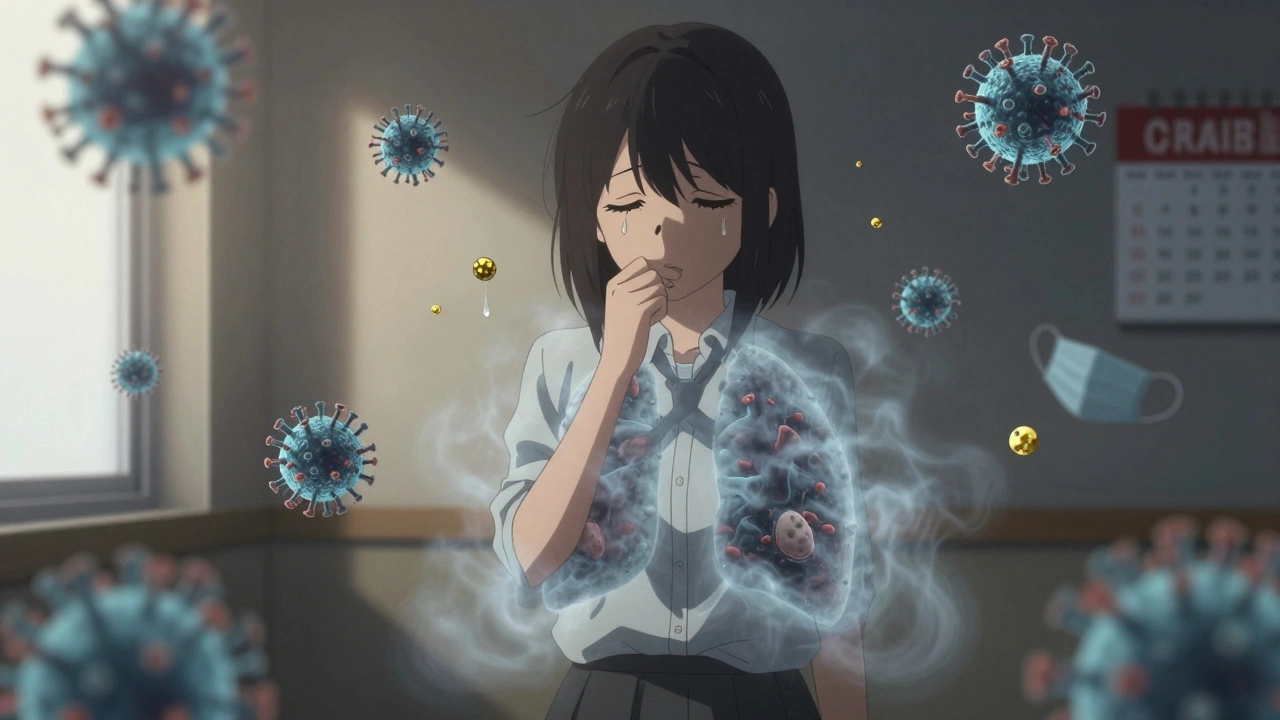
Unlike bacterial pneumonia, viral pneumonia creeps in. You might start with a runny nose, sore throat, or a mild headache - the kind of stuff you’d write off as a bad cold. Then, after a few days, things get worse. Your cough becomes dry and relentless. Your muscles ache. You feel exhausted, even after sleeping. Fever is usually lower, around 100-102°F, and you might not feel as sick as you look.
This is the hallmark of viral pneumonia. The usual suspects? Influenza A and B, RSV (especially in kids and older adults), and SARS-CoV-2 (COVID-19). These viruses don’t just sit in your nose - they work their way down into your lungs, inflaming the tiny air sacs and filling them with fluid and cellular debris. But instead of one solid white patch on your X-ray, you’ll see a hazy, diffuse pattern across both lungs. That’s because the infection spreads more evenly, not in one lobe.
What makes viral pneumonia tricky is that it can open the door for a bacterial infection. About one in four people who get severe flu end up with a secondary bacterial pneumonia - often from Streptococcus pneumoniae again. That’s why some people seem to get better, then crash again a week later. It’s not a relapse. It’s a new infection.
Antibiotics won’t touch a virus. But antivirals like oseltamivir (Tamiflu) can help if started within 48 hours of flu symptoms. For severe COVID-19 pneumonia, remdesivir may be used in hospitals. Most of the time, though, treatment is about support: rest, fluids, oxygen if needed, and fever reducers. Recovery can take weeks. Fatigue lingers. That’s normal.
Fungal Pneumonia: The Hidden Threat
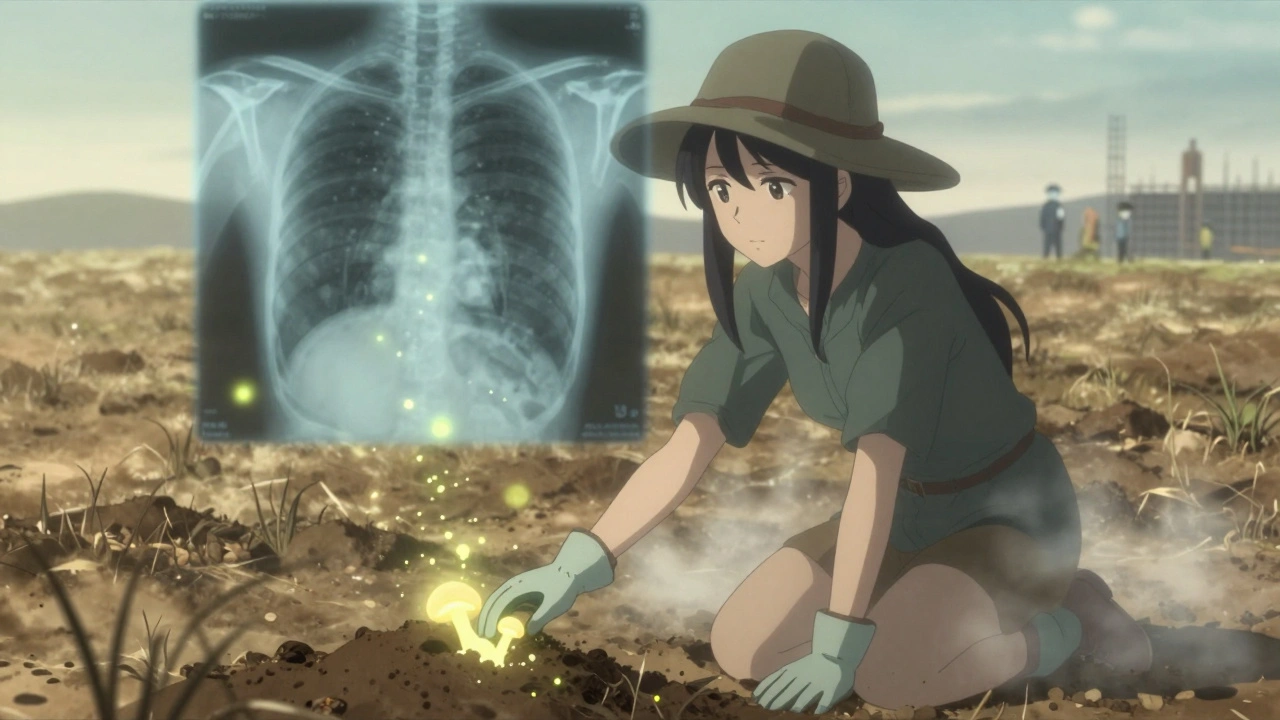
Fungal pneumonia doesn’t come from person-to-person spread. It comes from the ground. From soil. From bird or bat droppings. If you’re gardening, farming, or working in construction in places like the Ohio River Valley, the Southwest, or parts of the Midwest, you’ve probably breathed in spores without even knowing it.
Fungal pneumonia is rare in healthy people. But if your immune system is weak - because of HIV, cancer treatment, an organ transplant, or long-term steroids - it becomes a serious threat. The three main fungi that cause pneumonia in the U.S. are Coccidioides (Valley fever), Histoplasma, and Blastomyces. Each lives in specific soils and causes similar symptoms: fever, cough, chest pain, fatigue, and sometimes nausea or joint pain.
Here’s the problem: fungal pneumonia looks a lot like bacterial or viral pneumonia on the surface. You get a cough. You have a fever. Your X-ray might show patchy shadows. But antibiotics? Useless. Antivirals? Won’t help. You need antifungals - drugs like fluconazole, itraconazole, or in severe cases, amphotericin B. These are strong medicines, often taken for months. Misdiagnosis can be deadly.
Doctors usually only suspect fungal pneumonia in high-risk patients with prolonged symptoms or those who’ve been in endemic areas. Testing requires special lab work - cultures, antigen tests, or PCR panels - that aren’t done in a regular doctor’s office. That’s why many cases are missed until they’re advanced.
How to Tell Them Apart - And Why It Matters
Here’s the real-world breakdown:
- Onset: Bacterial - sudden. Viral - gradual. Fungal - slow and sneaky, often over weeks.
- Fever: Bacterial - high (102°F+). Viral - moderate (100-102°F). Fungal - variable, often low-grade.
- Cough: Bacterial - wet, thick sputum. Viral - dry at first, then possibly productive. Fungal - persistent, sometimes with blood.
- X-ray: Bacterial - one solid white area. Viral - hazy, both lungs. Fungal - patchy, sometimes nodules or cavities.
- Treatment: Bacterial - antibiotics. Viral - antivirals (sometimes), rest. Fungal - antifungals.
Getting this wrong isn’t just a misstep - it’s risky. Taking antibiotics for viral pneumonia doesn’t cure you. It just makes bacteria in your body tougher. That’s why doctors are pushing for faster, smarter tests. New PCR panels can now test a single nasal swab for over 20 different viruses and bacteria at once. That kind of speed could cut down on unnecessary antibiotics by 40%.
Prevention: What Actually Works
You can’t avoid every germ - but you can stack the odds in your favor.
For bacterial pneumonia, the pneumococcal vaccine is your best shield. There are two types: PCV20 (Prevnar 20) and PPSV23. CDC recommends both for adults 65+, and one or both for younger adults with chronic conditions like asthma, diabetes, or heart disease. In kids, the vaccine series starts at two months and cuts severe cases by 60-70%.
For viral pneumonia, the flu shot is non-negotiable. It cuts pneumonia risk by 40-60% in good match years. And the COVID-19 vaccine? It reduces pneumonia hospitalizations by up to 90% in the months after getting boosted.
For fungal pneumonia, prevention is about avoiding exposure. If you work in high-risk jobs - farming, landscaping, construction - wear a mask when disturbing soil or dust in endemic areas. Don’t clean bird coops or bat caves without proper protection. If you’re immunocompromised, your doctor might recommend avoiding certain outdoor activities altogether.
When to Worry
Not every cough means pneumonia. But if you have any of these, call your doctor right away:
- High fever that won’t go down
- Difficulty breathing or shortness of breath at rest
- Chest pain that gets worse with breathing
- Lips or fingernails turning blue
- Coughing up blood
- Confusion or dizziness - especially in older adults
These aren’t signs to wait out. They’re red flags. Pneumonia kills about 50,000 people in the U.S. every year. Most of those deaths happen in people over 65, or those with other health problems. But even healthy people can get sick fast - especially with bacterial or fungal types.
The bottom line? Pneumonia isn’t one illness. It’s three very different diseases wearing the same mask. Knowing the difference saves lives - your life, or someone else’s.
Can you get pneumonia from the flu?
Yes. The flu virus can cause pneumonia directly, but it also weakens your lungs, making it easier for bacteria like Streptococcus pneumoniae to invade. About 25-30% of severe flu cases lead to a secondary bacterial pneumonia, which is often more dangerous than the flu alone.
Is fungal pneumonia contagious?
No. Fungal pneumonia isn’t spread from person to person. You get it by breathing in spores from the environment - soil, bird droppings, or dust in certain regions. You can’t catch it from someone else who has it.
Do I need antibiotics for pneumonia?
Only if it’s bacterial. Antibiotics don’t work on viruses or fungi. Taking them when they’re not needed doesn’t help you - it harms everyone by making bacteria resistant to treatment. Doctors now use tests to confirm the cause before prescribing.
Can you have pneumonia without a fever?
Yes, especially in older adults or people with weak immune systems. They might only show signs like confusion, dizziness, or a drop in body temperature instead of a fever. That’s why pneumonia can be missed in seniors - it doesn’t always look like the textbook case.
How long does pneumonia last?
Bacterial pneumonia often improves in 1-3 weeks with treatment. Viral pneumonia can take 2-6 weeks to fully clear, with fatigue lasting longer. Fungal pneumonia requires months of antifungal treatment and can take up to a year to resolve completely, especially in immunocompromised patients.
Krys Freeman
Antibiotics for everything. Classic American healthcare.