
Statin Intolerance Assessment Tool
This tool follows the National Lipid Association's criteria for statin intolerance. It helps determine if your symptoms might be due to true statin intolerance or other factors.
Symptom Assessment
Assessment Results
Your Likelihood of True Statin Intolerance
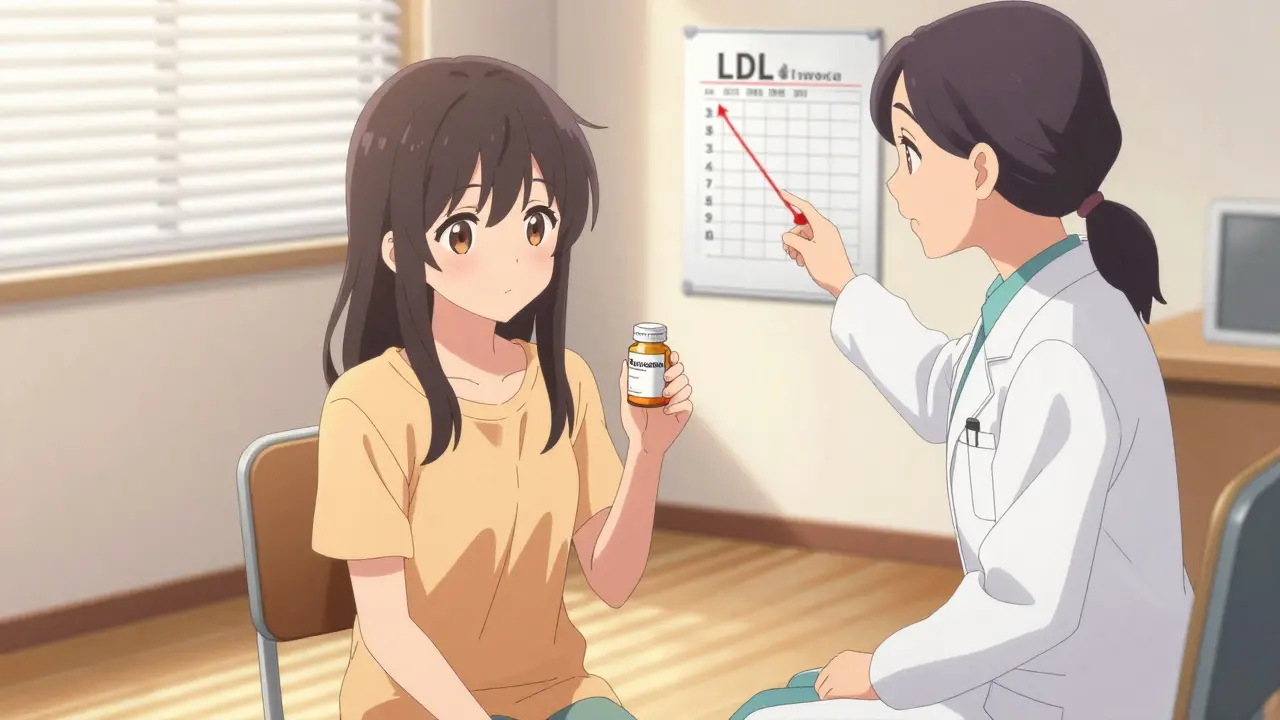
Thousands of people stop taking statins because of muscle pain, fatigue, or cramps - only to find out later they could have kept taking them safely. Statin intolerance isn’t always what it seems. Many patients are told they can’t take statins after one bad reaction, but without a structured approach, that decision might be wrong. That’s where statin intolerance clinics come in. These specialized programs don’t just say "stop the drug." They figure out if the problem is really the statin - and if so, how to get you back on effective treatment without the side effects.
What Really Counts as Statin Intolerance?
Statin intolerance isn’t just feeling sore after taking a pill. The National Lipid Association (NLA) defines it clearly: you can’t tolerate two different statins, one at the lowest dose and another at any dose, because of symptoms that go away when you stop. This isn’t about mild discomfort. It’s about real, recurring muscle pain or weakness that starts within weeks of starting or increasing a statin and fades within weeks of stopping. Many people think they’re intolerant because they felt tired or achy after starting a statin. But in studies using blinded rechallenge - where patients don’t know if they’re getting the real drug or a placebo - up to 80% of those who thought they were intolerant actually tolerated statins just fine. This is called the nocebo effect: expecting side effects makes you more likely to feel them. That’s why skipping a formal evaluation can lead to unnecessary risks. Statins cut heart attacks and strokes by 20-25% for every 1 mmol/L drop in LDL cholesterol. If you stop them because of a misdiagnosis, you’re leaving yourself exposed to preventable heart disease - the number one killer worldwide.The Four-Step Protocol That Works
Statin intolerance clinics follow a clear, step-by-step process. It’s not guesswork. It’s science-backed and repeatable. Here’s how it typically goes:- Stop the statin - You stop all statins for at least two weeks. This gives your body time to reset. Muscle symptoms should begin to fade during this period.
- Rule out other causes - Doctors check for things that mimic statin side effects: low thyroid function, low vitamin D, kidney issues, alcohol use, or interactions with other meds like fibrates or certain antibiotics. If any of these are found, they’re treated first.
- Rechallenge with a different statin - You’re given a new statin, usually one that’s less likely to cause muscle problems. Hydrophilic statins like rosuvastatin or pravastatin are preferred because they stay mostly in the liver instead of spreading into muscle tissue. You start at the lowest possible dose - sometimes even half a pill.
- Adjust the schedule - If daily dosing still causes issues, switching to an intermittent schedule helps. Taking rosuvastatin or atorvastatin just two or three times a week can still lower LDL by 20-40% while keeping side effects minimal. A 2021 Cleveland Clinic study of over 1,200 patients found 76% of those previously labeled intolerant could tolerate this approach.
When Statins Still Don’t Work: What Comes Next?
For the 5-15% who truly can’t take any statin, even at low or intermittent doses, there are effective alternatives. But they’re not all equal. Ezetimibe is the first-line choice. It blocks cholesterol absorption in the gut and lowers LDL by about 18-20%. It costs around $35 a month. The IMPROVE-IT trial showed it reduces heart attacks and strokes by 6% when added to statins - and it works alone too. No muscle pain. No major side effects. Bempedoic acid (Nexletol) is newer. Approved in 2020, it works in the liver like a statin but doesn’t enter muscle cells. In the CLEAR Outcomes trial with over 14,000 patients, it lowered LDL by 18% with no increase in muscle symptoms. It costs about $491 a month, which is expensive - but often covered for high-risk patients. PCSK9 inhibitors like evolocumab and alirocumab are injectables that slash LDL by 50-60%. But they cost around $5,850 a year. Insurance often denies them unless you’ve tried and failed other options. Some patients spend months appealing. Still, for those with genetic high cholesterol or very high heart risk, they’re life-changing. The ACC’s Statin Intolerance Tool helps doctors weigh the benefits of each option against your personal risk. It doesn’t just look at LDL numbers - it factors in your age, blood pressure, diabetes status, family history, and more.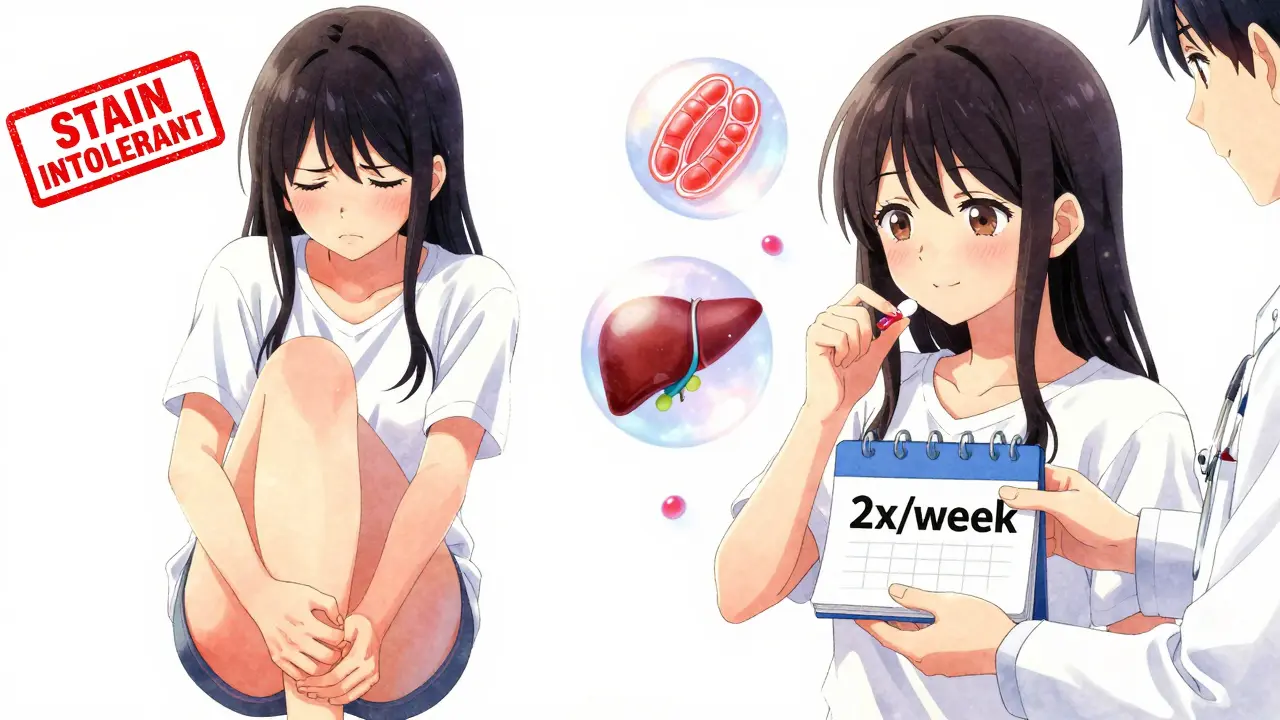
Real Patients, Real Results
One patient, labeled statin intolerant for five years, finally went to a lipid clinic at Johns Hopkins. They switched to rosuvastatin 5 mg twice a week, added CoQ10, and within three months, their LDL dropped from 142 to 89 - with zero muscle pain. That’s not rare. In Kaiser Permanente’s program, 82% of patients who completed the protocol got back on effective therapy. In regular clinics? Only 45% did. On patient forums, common themes emerge: relief at being heard, frustration with long wait times (6-8 weeks to see a specialist), and anger over insurance blocking cheaper options. One patient wrote: "I got on ezetimibe after three failed statins - but my insurance denied PCSK9 inhibitors even though I met the criteria. Four appeals. Eleven weeks. I almost gave up." These stories aren’t just complaints. They’re calls for better access.Why This Matters More Than You Think
About 39 million Americans take statins. Of those, 2.7 to 11.3 million report muscle symptoms. But only a fraction ever get evaluated properly. Most just quit. And that’s dangerous. Cardiovascular disease kills more people than cancer, diabetes, and accidents combined. Statins are one of the most effective tools we have. But if we keep mislabeling people as intolerant, we’re letting preventable deaths slide. Clinics that use structured protocols don’t just fix side effects - they save lives. Cleveland Clinic’s program achieved LDL goals in 68% of statin-intolerant patients. The key? Switching to hydrophilic statins (72% success) or intermittent dosing (65% success). Even better? When pharmacists lead the rechallenge process - reviewing meds, adjusting doses, tracking symptoms - outcomes improve by 22% compared to doctors working alone.
What’s Coming Next?
The field is evolving fast. Mayo Clinic now offers genetic testing for the SLCO1B1 gene variant, which increases the risk of simvastatin muscle damage. If you have this variant, you’re better off avoiding simvastatin entirely and choosing safer options. New treatments are on the horizon. Nanoparticle-delivered statins - still in early trials - are showing 92% tolerability in early tests. That could mean delivering the drug straight to the liver, bypassing muscle tissue entirely. The 2024 ACC Expert Consensus says intermittent dosing will become standard. More than 78% of lipid specialists plan to use it more often. But the biggest barrier isn’t science. It’s access. Only 63 of the 100 largest U.S. health systems have formal statin intolerance protocols. Academic centers are leading the way - 87% have them. Community hospitals? Only 42% do. If you’ve been told you’re statin intolerant, don’t accept it as final. Ask: Did they rule out other causes? Did they try a different statin? Did they test me at a low dose or try less frequent dosing? If the answer is no - you need a second opinion.What to Do If You Think You’re Intolerant
- Don’t stop statins without talking to a doctor. Stopping cold increases your heart risk.
- Keep a symptom diary: note when pain started, where it is, how bad it is (0-10 scale), and if it lines up with when you took your pill.
- Ask for a CK blood test. Levels over 10 times the normal range are a red flag. But even normal CK doesn’t rule out true intolerance.
- Request a referral to a lipid specialist or statin intolerance clinic. These aren’t common, but they exist - especially at major hospitals.
- Ask about ezetimibe or bempedoic acid as alternatives. They’re safer and cheaper than PCSK9 inhibitors.
- Be prepared for delays. Wait times can be long. But the payoff - keeping your heart protected - is worth it.
Frequently Asked Questions
Can statin intolerance be reversed?
Yes, in many cases. Up to 80% of patients who think they’re intolerant can actually tolerate statins after a proper evaluation. A structured rechallenge protocol - stopping the statin, ruling out other causes, then restarting with a different type or lower dose - often works. Intermittent dosing (e.g., rosuvastatin twice a week) is especially effective for those who react to daily use.
What’s the difference between statin side effects and true intolerance?
Side effects are common and often mild - like occasional muscle soreness. True statin intolerance means symptoms recur with multiple statins, even at low doses, and resolve after stopping. The key is pattern: symmetric muscle pain in large muscle groups (thighs, shoulders), starting 2-4 weeks after starting the drug and fading within 2-4 weeks of stopping. If symptoms don’t follow this pattern, something else may be causing them.
Is it safe to take statins less often?
Yes, for certain statins. Rosuvastatin and atorvastatin have long half-lives, meaning they stay active in the body for days. Taking them two or three times a week can still lower LDL by 20-40% - close to daily dosing - while reducing muscle side effects. Studies show 76% of previously intolerant patients tolerate this approach. It’s not a hack - it’s a proven strategy backed by clinical trials.
What are the best non-statin options for lowering cholesterol?
Ezetimibe is the first choice - it’s affordable, safe, and lowers LDL by 18-20%. Bempedoic acid (Nexletol) is next - it works like a statin but doesn’t affect muscles, lowering LDL by 18%. PCSK9 inhibitors like evolocumab are the strongest, cutting LDL by 50-60%, but cost over $5,000 a year and require injections. Your doctor will pick based on your risk level and insurance coverage.
Why do some doctors say I’m intolerant without testing?
Many doctors don’t have time or training to run a full evaluation. They see muscle pain, assume it’s the statin, and stop it. But without a rechallenge or ruling out other causes (like low vitamin D or thyroid issues), it’s often a misdiagnosis. That’s why specialized clinics exist - they follow strict protocols to avoid this mistake. If you’re told you’re intolerant, ask: "Did you try a different statin? Did you check my vitamin D and thyroid?" If not, seek a second opinion.
Nina Stacey
So many people just quit statins because they feel a little sore and think it's the drug but honestly most of the time it's just stress or low vitamin D or something else entirely
My uncle was told he was intolerant for 7 years then went to a lipid clinic and turned out he just needed more magnesium and a different statin
Now he runs marathons and his LDL is 78
Why do doctors just stop and not dig deeper