
Statin Muscle Pain Risk Calculator
Which Statin Has the Lowest Muscle Pain Risk?
Compare clinical evidence on muscle pain risk levels for common statin medications.
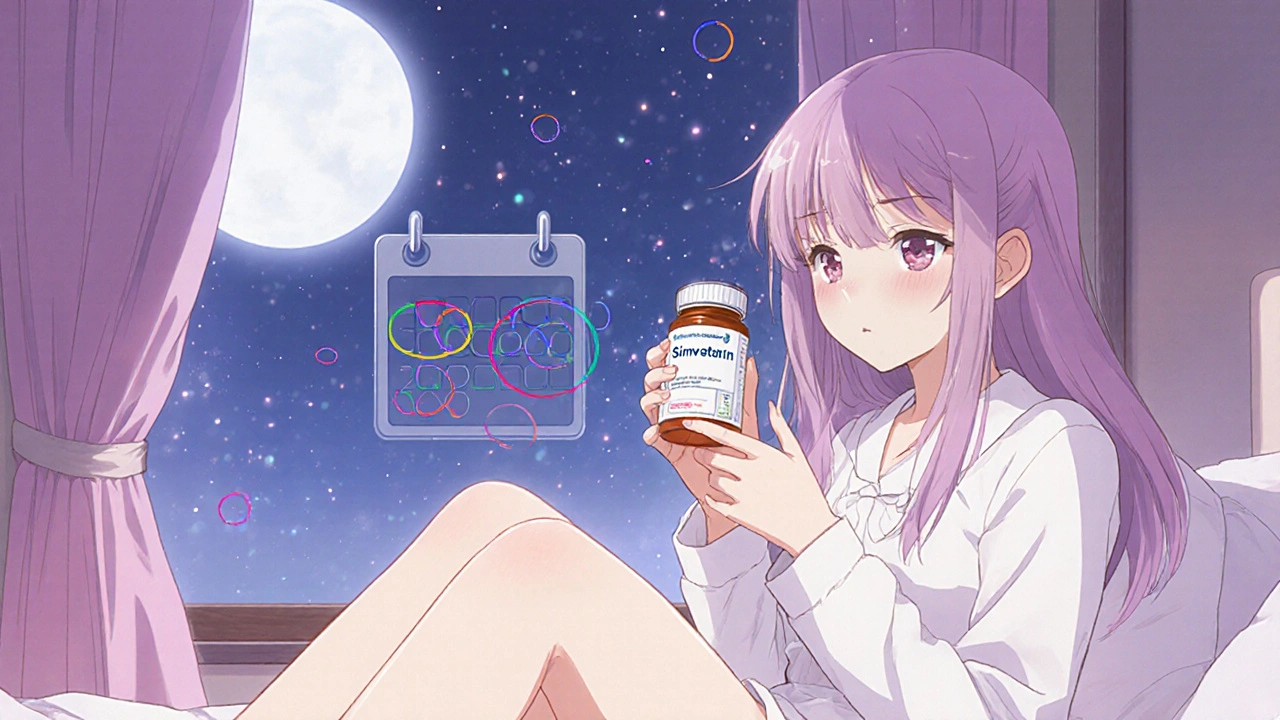
Simvastatin Details
High risk (80% more likely than pravastatin to cause muscle symptoms). Lipophilic nature allows easier penetration into muscle tissue.
Rating: 3.2/5 on Drugs.com
Millions of people take statins to lower their cholesterol and protect their hearts. But for many, the fear of muscle pain keeps them from sticking with the medication. You’ve probably heard stories - leg cramps, soreness, weakness - blamed on statins. And if you’ve experienced it yourself, it’s real. But here’s the twist: statins are likely not the culprit in most cases.
How Common Is Muscle Pain From Statins?
A massive 2022 study published in The Lancet followed more than 123,000 people over several years. Half took statins. Half took a sugar pill. The results? Muscle pain or weakness was reported by 27.1% of statin users and 26.6% of placebo users. That’s less than a 1% difference. In real numbers, only about 11 extra people out of every 1,000 felt muscle issues because of the statin - not because of bad luck or aging, but because of the drug itself.
That means for every 15 people who think their muscle pain is from statins, only one is actually right. The rest? Their pain started around the same time they began the pill, but it’s not caused by it. This is called the nocebo effect - when you expect a side effect, your brain makes you feel it. Think of it like a placebo, but backwards. If you’ve read online that statins cause muscle pain, your body might start looking for it - even if the drug isn’t doing anything.
Which Statins Are Worst for Muscle Pain?
Not all statins are created equal. Some carry a higher risk of muscle issues than others - and the difference matters if you’re struggling with symptoms.
Based on multiple studies, including a 2015 analysis from SUNY and a 2013 meta-analysis in Circulation, here’s how the main statins rank from highest to lowest risk of muscle pain:
- Simvastatin - Highest risk. Studies show it’s nearly 80% more likely than pravastatin to cause muscle symptoms. It’s also more potent and lipophilic (fat-soluble), which lets it penetrate muscle tissue more easily.
- Atorvastatin - Moderate risk. Often prescribed at higher doses, which increases side effect chances. Still, many tolerate it well.
- Rosuvastatin - Slightly lower risk than atorvastatin. It’s water-soluble, so it stays more in the liver and less in muscle.
- Pravastatin - Low risk. It’s water-soluble and doesn’t cross into muscle cells as easily. Often the go-to switch for people who can’t tolerate other statins.
- Fluvastatin - Lowest risk. Used less often, but for people with muscle sensitivity, it’s the safest option.
Real-world data backs this up. On Drugs.com, simvastatin has a muscle pain rating of 3.2 out of 5, while fluvastatin scores 2.3. Pravastatin sits at 2.5 - low enough that many patients report feeling better after switching.
Why Do Some Statins Cause More Pain Than Others?
The difference comes down to chemistry. Statins that dissolve easily in fat (lipophilic) - like simvastatin and atorvastatin - slip into muscle cells more readily. Once there, they can interfere with energy production and trigger inflammation. Water-soluble statins like pravastatin and rosuvastatin stay mostly in the liver, where they’re supposed to work. That’s why they’re gentler on muscles.
Dose also plays a role. Higher doses = higher risk. A 40mg dose of simvastatin carries more muscle risk than a 10mg dose of atorvastatin. That’s why doctors often start low and go slow - especially with high-risk statins.
What If You Have Muscle Pain? Don’t Quit Without a Plan
Most people stop statins because of muscle pain. But here’s the problem: 78% of them quit without talking to their doctor. And that’s dangerous. Statins prevent heart attacks and strokes. For every 100 people who take them for five years, three major cardiovascular events are avoided. Stopping without reason puts you at risk.
Before you quit, try this:
- Track your symptoms. When did they start? Do they get worse with activity? Are they worse on certain days?
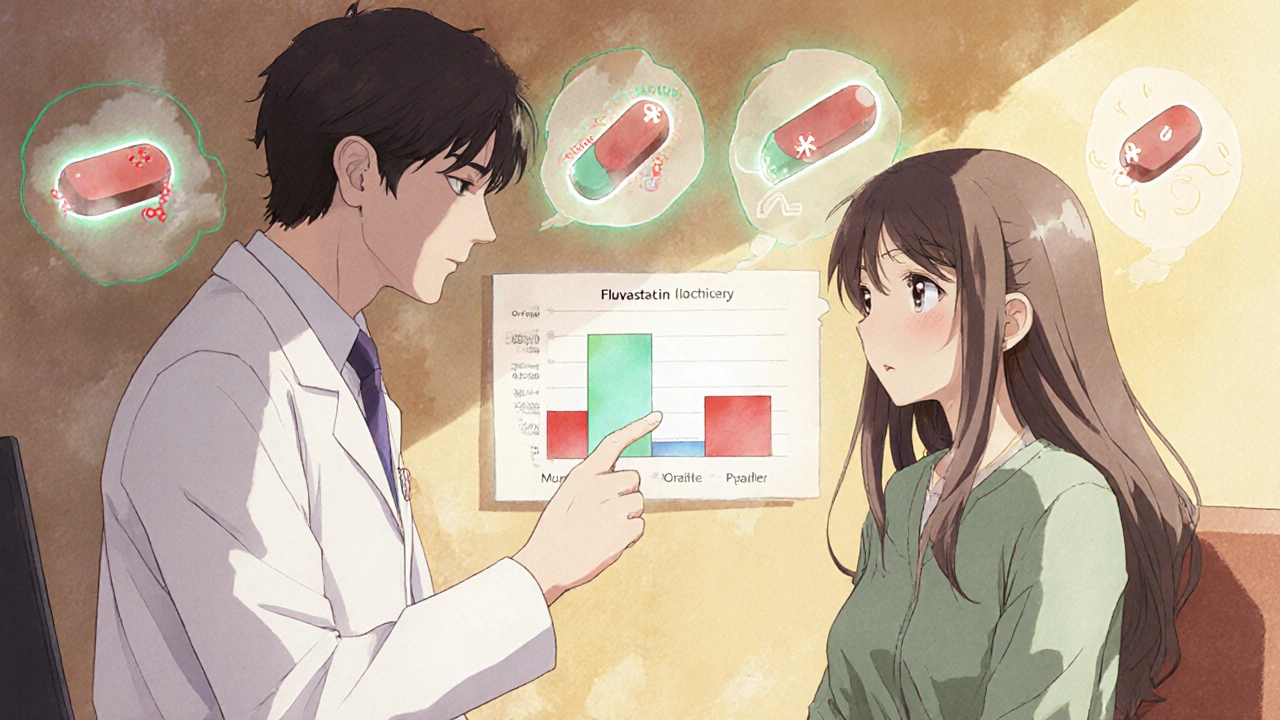
- Ask your doctor about a statin holiday. Stop the statin for 2-4 weeks. If the pain goes away, then restart it. If it comes back, that’s a clue.
- Try a blinded challenge. Your doctor can give you a placebo and a statin in random order - without telling you which is which. If symptoms happen on both, it’s likely not the drug.
- Get a blood test. High CK (creatine kinase) levels can signal true muscle damage. But most people with statin-related pain have normal CK.
One patient on Reddit stopped simvastatin after severe leg cramps. After switching to pravastatin, her pain vanished. Another did a blinded challenge and found his muscle pain happened equally on placebo and statin. He realized it was all in his head - and got back on the medication.
What Are Your Options If Statins Don’t Work?
If you truly can’t tolerate any statin - and that’s rare - there are other options. But they’re not better. They’re just alternatives.
- Lower-dose statin - Sometimes taking half a tablet, or every other day, reduces pain while keeping benefits.
- Switch to pravastatin or fluvastatin - These are the safest bets for muscle-sensitive patients.
- Ezetimibe - A non-statin pill that blocks cholesterol absorption in the gut. It lowers LDL by about 15-20%. Often used with a low-dose statin.
- PCSK9 inhibitors - Injectable drugs like evolocumab and alirocumab. They’re powerful - lowering LDL by 60% or more - but cost over $5,800 a year. Most insurance won’t cover them unless you’ve failed other options.
A 2023 Mayo Clinic study found that 68% of people who thought they were statin-intolerant could restart therapy after education and a structured reintroduction plan. The key? Understanding the nocebo effect. When patients learned that most muscle pain isn’t from the drug, their symptoms improved - even when they were back on the same statin.

Genetics and Muscle Pain: Is It in Your DNA?
There’s one small group of people who truly can’t tolerate statins - and it’s genetic. A variation in the SLCO1B1 gene makes it harder for the liver to clear certain statins, causing them to build up in the blood and muscles. This raises the risk of severe muscle damage (rhabdomyolysis) by 4.5 times.
But here’s the catch: fewer than 3% of people have this gene variant. Routine genetic testing isn’t recommended for everyone. Only consider it if you’ve had severe muscle pain on multiple statins, or if your CK levels were dangerously high.
What’s Changing in 2025?
Thanks to the 2022 Oxford study, regulators are finally updating guidelines. The European Medicines Agency already changed its label to say muscle pain is reported just as often with placebo as with statins. The FDA is reviewing its labels too - and changes are expected in early 2025.
Doctors are being trained to talk differently about statins. Instead of saying, "This might cause muscle pain," they’re saying, "Muscle pain is common, but it’s rarely from the statin. Let’s figure out what’s really going on."
Meanwhile, statin sales are still over $15 billion a year. Why? Because they work. They save lives. And for most people, the muscle pain they fear isn’t real.
Do all statins cause muscle pain?
No. Muscle pain from statins is rare - affecting less than 1% of users. Among the statins, simvastatin has the highest risk, while fluvastatin and pravastatin carry the lowest. Most people who report muscle pain are experiencing the nocebo effect, not a true drug reaction.
Can I switch statins if I have muscle pain?
Yes. Many people who can’t tolerate simvastatin or atorvastatin do fine on pravastatin or fluvastatin. These are water-soluble statins that don’t penetrate muscle tissue as easily. Switching is often the first step before quitting statins entirely.
Is muscle pain from statins dangerous?
In most cases, no. Mild soreness or cramping isn’t harmful. True statin-induced muscle damage (rhabdomyolysis) is extremely rare - less than 1 in 10,000 users. It’s usually only a concern if you have very high CK levels, fever, or dark urine. If you have those symptoms, contact your doctor immediately.
Should I stop taking statins if I feel muscle pain?
Don’t stop without talking to your doctor. Most muscle pain isn’t caused by statins. Stopping them increases your risk of heart attack or stroke. Instead, ask about a statin holiday or a blinded challenge to find out if the drug is truly the cause.
Are there natural ways to reduce statin muscle pain?
Coenzyme Q10 supplements are sometimes tried, but studies show they don’t reliably help. The best approach is medical: switching to a lower-risk statin, lowering the dose, or using a structured reintroduction plan. No supplement replaces the proven benefits of statins.
How do I know if my muscle pain is from statins or something else?
True statin-related pain starts soon after starting the drug, improves after stopping, and returns if you restart it. If your pain is constant, unrelated to activity, or accompanied by swelling or fever, it could be something else - like arthritis, nerve issues, or vitamin D deficiency. A doctor can help rule out other causes.
Why do so many people stop statins if the risk is so low?
Because of misinformation. Online stories, TV ads, and even some doctors’ warnings create fear. People assume muscle pain must be from the statin because it happened after they started taking it. But correlation isn’t causation. The science shows most of these cases aren’t real side effects - they’re coincidences amplified by expectation.
Can I take statins every other day to avoid muscle pain?
Yes - for some people. Studies show that taking a statin every other day can still lower cholesterol effectively while reducing side effects. This works best with longer-acting statins like atorvastatin or rosuvastatin. Always do this under your doctor’s supervision.
Sherri Naslund
so like... i started simvastatin last year and my legs felt like they were full of wet sand? but then i read this and realized maybe it was just me being a hypochondriac? or maybe the pharma bots are gaslighting us?? idk anymore