
Warfarin Antibiotic Interaction Calculator
Antibiotic Interaction Tool
Your Results
Critical Monitoring Required
For high-risk antibiotics like ciprofloxacin and Bactrim, INR can spike by 1.8 units in 5 days. Monitor every 2-3 days starting within 72 hours of beginning the antibiotic.
Timing of Risk
Fast Reaction (CYP Inhibition): 48-72 hours, peaks at days 3-5, resolves in 3 days after stopping
Slow Reaction (Gut Flora): 5-7 days to onset, peaks at days 8-14, continues for 7-10 days after stopping
Moderate Monitoring Required
For moderate-risk antibiotics like azithromycin, bleeding risk is minimal but monitoring is still recommended. Check INR once during therapy.
Timing of Risk
Fast Reaction: Minimal to none
Slow Reaction: Minimal effect
Low Risk Antibiotic
For low-risk antibiotics like nitrofurantoin or fosfomycin, INR changes are minimal. No dose adjustment needed, but continue standard monitoring.
Timing of Risk
Fast Reaction: None
Slow Reaction: None
Important Note
Rifampin reduces warfarin effectiveness. Your INR may drop below 1.5, increasing stroke risk. Expect to increase warfarin dose by 50% on day 1 and monitor INR daily until stable.
Recommended Actions
Adjust your warfarin dose by:
INR monitoring schedule:
Critical Bleeding Signs
Watch for unexplained bruising, bleeding gums, nosebleeds that won't stop, red or dark brown urine, black tarry stools, or severe headaches. INR above 4.0 increases bleeding risk 4-8x.
When you're on warfarin, even a simple antibiotic can throw your blood thinning off balance - and that can be life-threatening. Many people don’t realize that common antibiotics like ciprofloxacin, Bactrim, or amoxicillin/clavulanate can cause your INR to spike suddenly, putting you at risk for dangerous bleeding. This isn’t rare. About 15-30% of all warfarin-related hospital visits involve antibiotics. The good news? With the right monitoring and adjustments, almost all of these events are preventable.
Why Antibiotics Mess With Warfarin
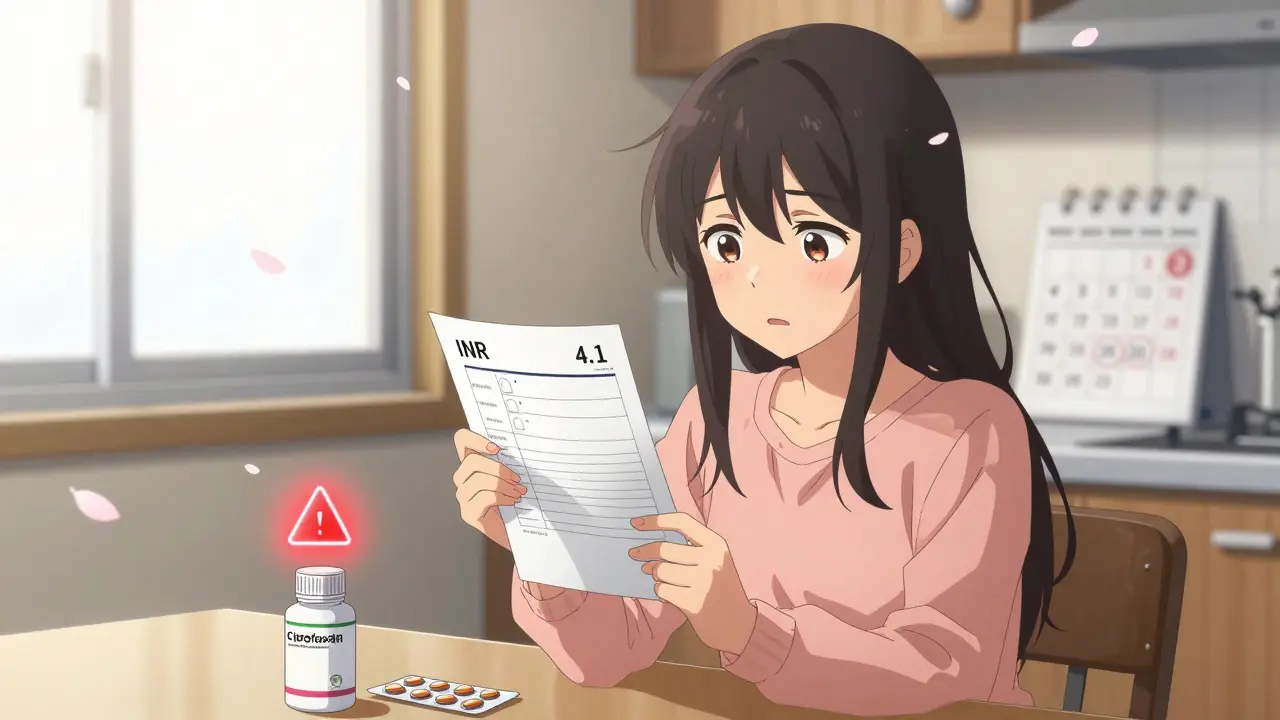
Warfarin works by blocking vitamin K, which your body needs to make clotting factors. But your gut bacteria also make vitamin K - about 10-15% of what your body uses. When you take certain antibiotics, they kill off those helpful bacteria. That means less vitamin K, more warfarin effect, and a rising INR. There’s another mechanism too: your liver uses enzymes called CYP450 to break down warfarin. Some antibiotics block those enzymes, especially CYP2C9, which handles the more powerful form of warfarin (S-warfarin). When that enzyme slows down, warfarin builds up in your blood. That’s why INR can jump from 2.5 to 4.1 in just a week with ciprofloxacin.Which Antibiotics Are Riskiest?
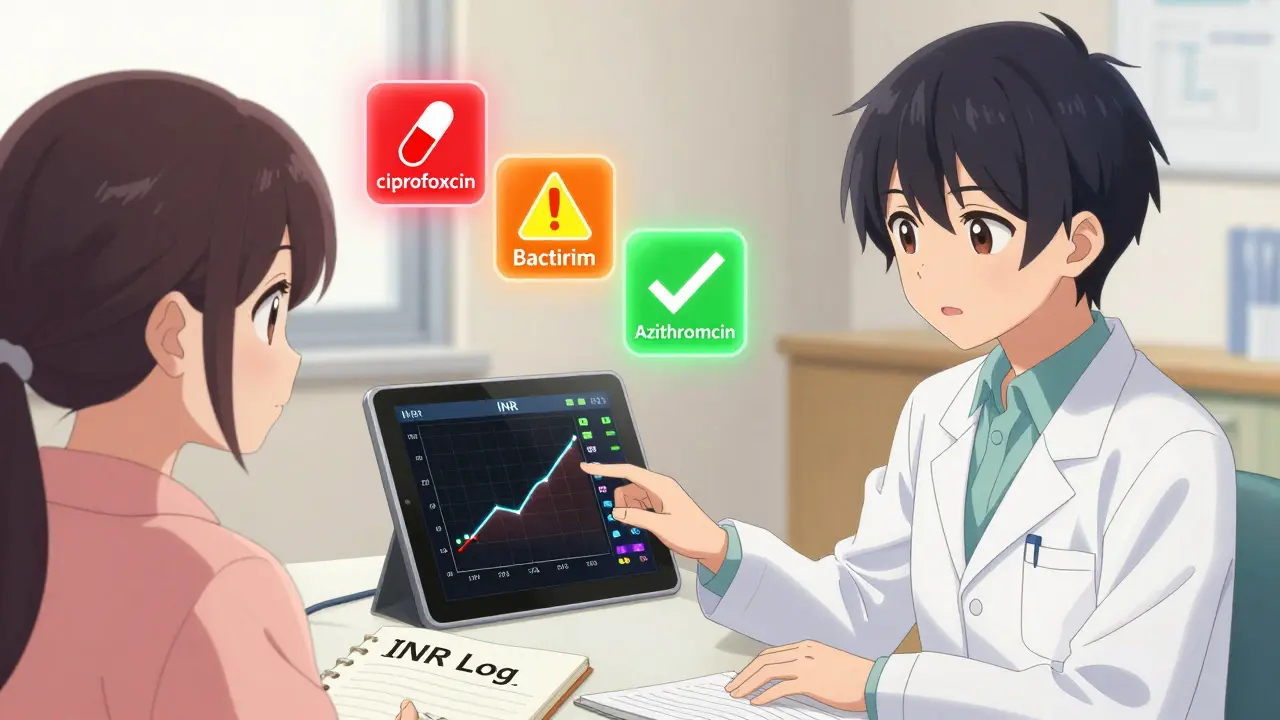
Not all antibiotics are created equal when it comes to warfarin. Some are quiet. Others are loud. Here’s what the data shows:- High risk: Ciprofloxacin, levofloxacin (fluoroquinolones), erythromycin, Bactrim (sulfamethoxazole/trimethoprim), amoxicillin/clavulanate, cefotetan, cefoperazone
- Moderate risk: Azithromycin (much safer than erythromycin), ceftriaxone (minimal effect)
- Low risk: Nitrofurantoin, fosfomycin, tedizolid, penicillin (without clavulanate)
- Opposite effect: Rifampin - it makes warfarin less effective. Your INR can drop below 1.5, raising your risk of stroke or clot.
Fluoroquinolones like ciprofloxacin are the biggest culprits. A 2018 meta-analysis found they increase bleeding risk by over 2-fold. Bactrim is just as dangerous - it can push INR up by 1.8 units in five days. Even amoxicillin/clavulanate, often thought of as "safe," raises INR by about 1.2 units on average.
When Does the Risk Happen?
Timing matters. There are two different clocks ticking when you start an antibiotic.- Fast reaction (CYP inhibition): Happens in 48-72 hours. This is what you see with ciprofloxacin or erythromycin. The INR climbs quickly, peaks around day 3-5, and drops back within 3 days after stopping the antibiotic.
- Slow reaction (gut flora kill-off): Takes 5-7 days to show up. That’s why INR spikes often hit hardest between days 8-14 of antibiotic therapy. Even after you finish the antibiotic, your gut bacteria need 7-10 days to recover. So your INR can keep climbing after you’ve stopped the drug.
This delay is why many patients get caught off guard. They feel fine after finishing their antibiotic, but their INR is still rising. That’s when bleeding happens - often at home, without warning.
How to Monitor and Adjust
The American College of Chest Physicians says this clearly: Check your INR within 72 hours of starting any antibiotic. Then check again twice a week until the antibiotic is done - and for at least a week after. For high-risk antibiotics (ciprofloxacin, Bactrim, erythromycin):- Reduce your warfarin dose by 20-30% the day you start the antibiotic.
- Check INR every 2-3 days.
- Don’t wait for symptoms. Bleeding can happen before you feel anything.
For gut flora disruptors (amoxicillin/clavulanate, cefotetan):
- Don’t change your dose upfront.
- Check INR weekly.
- Only reduce warfarin if your INR goes above your target range.
For rifampin:
- Expect your INR to drop.
- Increase your warfarin dose by 50% on day one.
- Check INR daily until it stabilizes.
Real-world data shows that when pharmacists manage warfarin during antibiotic therapy, bleeding drops by 37%. That’s not a small difference - it’s life-saving.
What to Watch For - Bleeding Signs
Don’t wait for a hospital visit. Learn the warning signs:- Unexplained bruising - especially large, dark patches
- Bleeding gums when brushing teeth
- Nosebleeds that won’t stop
- Red or dark brown urine
- Black, tarry stools or bright red blood in stool
- Headaches, dizziness, weakness - could mean bleeding in the brain
- Prolonged bleeding from cuts or injuries
If you notice any of these, call your anticoagulation clinic immediately. Don’t wait for your next scheduled test. INR above 4.0 means your bleeding risk is 4 to 8 times higher than normal.
What About Newer Antibiotics?
The field is changing. Newer drugs like tedizolid (used for skin infections) show almost no interaction - INR changes are under 0.2 units. Fosfomycin and nitrofurantoin are also safe for urinary tract infections. But don’t assume a new antibiotic is safe just because it’s "new." Always check.A 2024 review confirmed that even cephalosporins - once thought to be low risk - raise bleeding risk by 1.9-fold. So don’t rely on old assumptions. Always treat any antibiotic as a potential risk until proven otherwise.

What You Can Do Right Now
If you’re on warfarin:- Always tell your doctor and pharmacist you’re taking warfarin before they prescribe anything - even a single dose of an antibiotic.
- Keep a log of your INR values and the antibiotics you’ve taken. Note the dates.
- Ask: "Is this antibiotic known to interact with warfarin?" If they say "probably not," ask for the evidence.
- Set phone reminders to check your INR at day 3, day 7, and day 10 after starting an antibiotic.
- Don’t take over-the-counter painkillers like ibuprofen or naproxen - they also increase bleeding risk.
Many people don’t realize that 42% of warfarin-related ER visits involve antibiotics. Ciprofloxacin, Bactrim, and amoxicillin/clavulanate are behind two-thirds of those cases. You can’t control every variable - but you can control your monitoring.
What’s Next? Personalized Warfarin Dosing
Science is moving toward precision. Studies now show that people with certain gene variants (CYP2C9*2 or *3) have 2.4 times greater INR spikes when on antibiotics. In the 2023 WARF-GEN trial, patients who got genetically guided dosing had 41% fewer INR fluctuations during antibiotic therapy.That means in the near future, your warfarin dose might be adjusted not just by your INR - but by your DNA. Until then, the best tool you have is consistent monitoring and clear communication with your care team.
Can I take amoxicillin while on warfarin?
Yes, but with caution. Amoxicillin alone has minimal effect on warfarin. But amoxicillin/clavulanate (Augmentin) can raise your INR by about 1.2 units on average. You don’t need to reduce your dose upfront, but you must check your INR within 72 hours of starting it and again at day 7. Bleeding risk peaks between days 8-14, so keep monitoring even after you finish the antibiotic.
Does azithromycin affect warfarin?
Azithromycin has very little effect on warfarin. Unlike erythromycin, it doesn’t block the CYP enzymes that break down warfarin. Studies show only a 1.2-fold increase in bleeding risk - not statistically significant. You can usually take azithromycin without changing your warfarin dose, but it’s still smart to check your INR once during the course, just to be safe.
How long should I keep checking my INR after stopping an antibiotic?
At least 7-10 days after stopping. If the antibiotic affected your gut bacteria (like amoxicillin/clavulanate or cephalosporins), your INR can keep rising for days after you finish the course. CYP-inhibiting antibiotics like ciprofloxacin usually stabilize within 3 days of stopping, but gut effects last longer. Most guidelines recommend weekly INR checks for at least one week after the antibiotic ends.
Can I use an over-the-counter anticoagulant instead of warfarin?
No. Over-the-counter products like aspirin, fish oil, or garlic supplements are not replacements for warfarin. Aspirin doesn’t work the same way and doesn’t offer the same level of protection against stroke in conditions like atrial fibrillation. Also, aspirin increases bleeding risk on its own. Never switch or stop warfarin without consulting your doctor - even if you’re worried about interactions.
Why do some doctors say antibiotics are fine with warfarin?
Some doctors rely on outdated guidelines or assume that because a drug is "common," it’s safe. But research since 2012 - including studies of over 30,000 Medicare patients - shows antibiotics are among the top causes of warfarin-related bleeding. The risk is real, predictable, and preventable. If your doctor says it’s fine, ask for the evidence. The latest guidelines from the American College of Chest Physicians and UC San Diego clearly state that all antibiotics except nitrofurantoin and fosfomycin require monitoring.
Samar Khan
OMG I just had to read this after my mom almost bled out last year 😭 I was on cipro for a UTI and didn’t tell my doctor I was on warfarin... INR hit 6.8 and they rushed her to the ER. I didn’t even know antibiotics could do that. Now I have a whole spreadsheet 📊 with every med she takes + INR dates. Life-changing post. Thank you. 🙏