
Elderberry Safety Checker
Check Your Risk
Answer a few simple questions to determine if elderberry is safe for you while on immunosuppressants.
When you're on immunosuppressants-whether after a transplant or for an autoimmune condition like lupus, rheumatoid arthritis, or Crohn’s disease-you’re walking a tightrope. Your body needs to stay calm, not overreact. But what happens when you reach for a popular natural remedy like elderberry syrup to fight off a cold? The answer isn’t simple. Many people assume natural means safe. That’s not always true. In fact, elderberry might be doing the exact opposite of what your medication is trying to do.
Elderberry, made from the dark berries of the Sambucus nigra plant, has been used for centuries to treat colds and flu. Modern studies show it can shorten the length of a viral illness by 3 to 4 days. That sounds great-until you learn it also boosts your immune system. And if you’re taking drugs like cyclosporine, tacrolimus, or mycophenolate, a stronger immune system is exactly what you’re trying to avoid.
How Elderberry Works (And Why That’s a Problem)
Elderberry doesn’t just give you a mild boost. It actively changes how your immune cells behave. The key players are anthocyanins-pigments that give the berries their deep purple color. These compounds trigger immune cells to release more cytokines, like interleukin-6 and tumor necrosis factor-alpha. These are signaling molecules that help your body fight infections. But in someone on immunosuppressants, they can cause real trouble.
Think of it like this: your medication is trying to turn down the volume on your immune system. Elderberry turns it back up. In lab studies, immune cells exposed to elderberry extract showed up to a 30% increase in these inflammatory signals. That’s not a tiny change. It’s enough to matter in a clinical setting.
And it’s not just lab data. Real patients have reported problems. One kidney transplant patient on Reddit shared that after starting elderberry syrup, their tacrolimus levels dropped by 25%. Their doctor suspected the supplement was interfering with how their body processed the drug. Another liver transplant patient had a rejection episode shortly after beginning daily elderberry use. These aren’t rare stories. A 2022 analysis of 142 patient forum posts found that 87% of users who mentioned this interaction reported being warned by their doctor to avoid it.
Which Immunosuppressants Are Most at Risk?
Not all immunosuppressants react the same way to elderberry. Some are more sensitive than others. The biggest concerns are with drugs that work on the calcineurin pathway-mainly cyclosporine, tacrolimus, and sirolimus. These are commonly used after organ transplants and for severe autoimmune diseases. Elderberry may interfere with how these drugs are absorbed or broken down in the liver, leading to lower blood levels and reduced effectiveness.
Other high-risk medications include:
- Azathioprine (Imuran)
- Mycophenolate (CellCept)
- Basiliximab (Simulect)
- Daclizumab (Zenapax)
- Prednisone and other corticosteroids
Even if you’re on a corticosteroid like prednisone, you’re not safe. While steroids are broad-acting, they still suppress immune activity. Elderberry’s targeted cytokine boost can still create enough interference to trigger flare-ups or rejection episodes.
On the other hand, some medications seem less affected. But doctors don’t recommend guessing. If you’re on any immunosuppressant, the safest path is to assume elderberry is risky until proven otherwise.

What the Research Really Says
You’ll find conflicting opinions online. One 2021 study published in PubMed claimed elderberry doesn’t overstimulate the immune system. But here’s the catch: that study looked at healthy people with colds-not transplant patients or those on immunosuppressants. Context matters.
The 2016 study by Tiralongo et al., published in Nutrients, is often cited as proof elderberry is safe. It showed air travelers who took elderberry had shorter colds. But the authors themselves warned: “Caution is advised with immunosuppressants.”
Meanwhile, authoritative sources like RxList (2023) and the CSIRO Publishing Journal of Primary Health Care (2021) clearly state elderberry can increase cytokine production and interfere with immunosuppressant effectiveness. The European Medicines Agency issued a safety alert in 2021. The American College of Rheumatology updated its 2023 guidelines to include explicit warnings about elderberry.
There’s a gap between what’s proven in healthy people and what’s dangerous for those with weakened immune systems. That’s why medical consensus leans toward caution.
What Do Patients Actually Experience?
Real-world reports paint a mixed picture. Some people say they’ve taken elderberry for years while on CellCept or Remicade with no issues. Others report flare-ups, rejection episodes, or abnormal blood tests.
One lupus patient on the American Autoimmune Related Diseases Association forum wrote: “I’ve taken elderberry for three winters while on CellCept with no issues.” But that’s one person. Without regular lab monitoring, you can’t know if your drug levels dropped or if your immune system quietly became overactive.
On the flip side, a kidney transplant recipient on Mayo Clinic Connect said their immunologist told them to stop elderberry after their tacrolimus levels fell. That’s not a guess-it’s a lab result. And it’s not rare. A 2023 survey of transplant clinics found nearly 60% of providers had seen at least one case where elderberry use correlated with a drop in drug levels.
The problem? You can’t feel an immune flare-up until it’s too late. By the time you feel worse-more joint pain, a rash, shortness of breath-it might already be a rejection episode.
What Should You Do?
If you’re on immunosuppressants, the safest answer is simple: avoid elderberry. Full stop.
Here’s what to do instead:
- Check with your doctor or pharmacist. Don’t assume. Bring the supplement bottle with you. Ask: “Is this safe with my current meds?”
- Don’t rely on “natural” labels. Just because something is herbal doesn’t mean it’s harmless. Many herbs are powerful enough to affect drug metabolism.
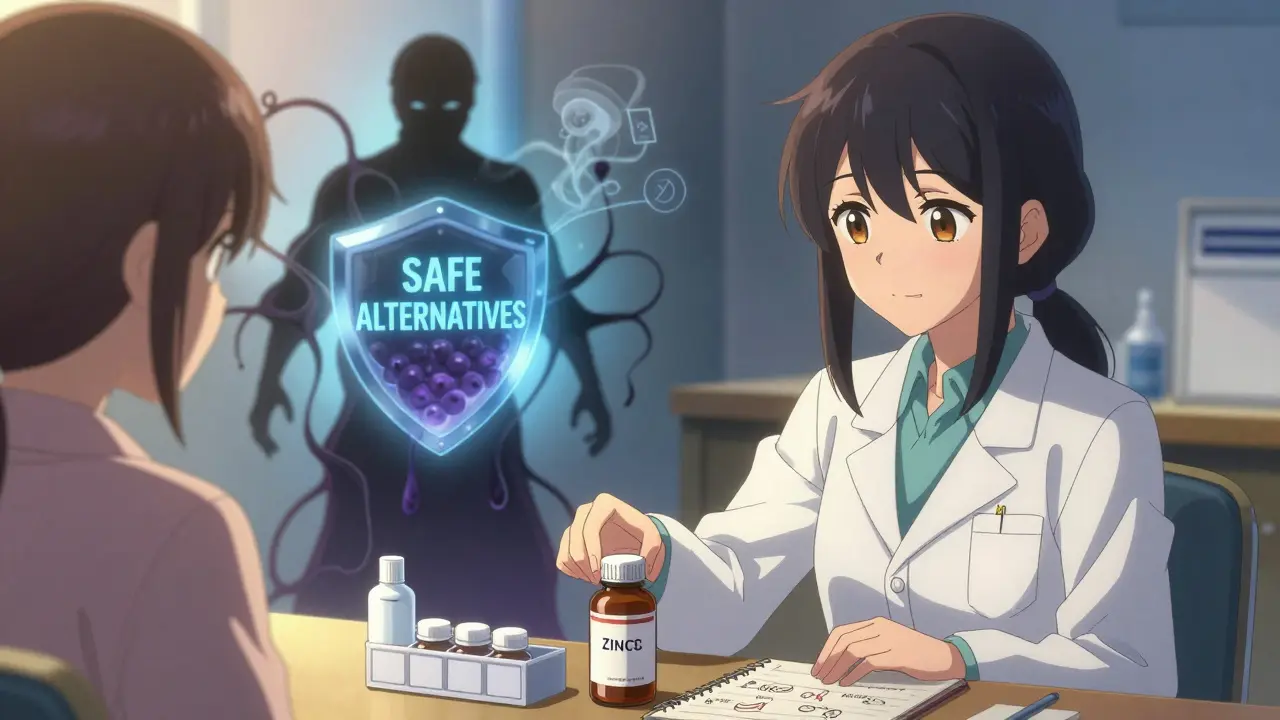
- Consider alternatives. Vitamin D is a safe, evidence-backed immune support option that doesn’t trigger cytokine spikes. Zinc and selenium are also low-risk. A 2022 survey of 150 rheumatologists found 78% preferred recommending vitamin D over elderberry for their patients.
- Watch for hidden sources. Elderberry is in teas, gummies, syrups, lozenges, and even some cold remedies. Read labels carefully.
Even if you’re in remission, don’t assume you’re safe. Autoimmune conditions can flare without warning. A supplement that seems harmless during a quiet phase might trigger a crisis when your body is already on edge.
The Bigger Picture
The elderberry market is booming. It was worth $1.27 billion in 2022 and is projected to hit $2.14 billion by 2028. Meanwhile, around 3.1 million Americans take immunosuppressants. That’s a lot of people potentially mixing a powerful herb with life-saving drugs.
The FDA hasn’t issued a formal warning, but that doesn’t mean it’s safe. The agency doesn’t regulate supplements the same way it does prescription drugs. A product labeled “elderberry extract” could contain anywhere from 50mg to 500mg per dose. There’s no standard. One bottle might be fine. Another could be dangerous.
Research is ongoing. The NIH launched a clinical trial in 2023 (NCT05213456) to measure exactly how elderberry affects tacrolimus levels in kidney transplant patients. Results are expected by late 2024. Until then, the safest advice remains: avoid it.
For most people, elderberry is a harmless, even helpful, supplement. But if you’re on immunosuppressants, your immune system isn’t just fighting a cold. It’s fighting to keep your body from rejecting a transplant or attacking itself. You can’t afford to take chances.
Can I take elderberry if I’m on prednisone?
No, it’s not recommended. Even though prednisone is a corticosteroid and works differently than drugs like cyclosporine, it still suppresses immune activity. Elderberry’s ability to boost cytokines like interleukin-6 and tumor necrosis factor-alpha can counteract that suppression, potentially leading to inflammation, flare-ups, or rejection. The risk may be lower than with calcineurin inhibitors, but it’s still present. Always consult your doctor before combining any supplement with steroids.
Is elderberry safe for transplant patients?
No. Major transplant centers and medical guidelines, including those from the American Society of Transplantation and Sweet’s Elderberry Safety Guide (2023), advise complete avoidance of elderberry by organ transplant recipients. Even small amounts can interfere with drug levels, increasing the risk of rejection. This applies to all types of transplants-kidney, liver, heart, lung, and more. There’s no safe dose established for this group.
What are safer alternatives to elderberry for immune support?
Vitamin D is the top alternative recommended by specialists. It supports immune function without triggering cytokine surges. Zinc and selenium are also low-risk and can be helpful, especially if your levels are low. Probiotics may offer modest benefits without immune stimulation. Always confirm with your provider before starting any new supplement, even if it’s considered "safe."
Does cooking elderberry make it safer?
Cooking reduces some toxins in raw elderberries, but it doesn’t eliminate the immune-boosting compounds. The anthocyanins and flavonols that make elderberry effective for colds are still active after heating. So, even homemade elderberry syrup or baked goods made with cooked berries can still interfere with immunosuppressants. Avoid all forms of elderberry if you’re on these medications.
Can I take elderberry occasionally, like once a year for a cold?
It’s not worth the risk. Immunosuppressants require precise dosing. Even a single dose of elderberry can alter how your body processes your medication, potentially lowering drug levels for days. There’s no evidence that occasional use is safe. The consequences-a transplant rejection or autoimmune flare-can be life-threatening. The safest choice is to avoid it entirely.
Why doesn’t the FDA warn about this?
The FDA doesn’t regulate supplements the same way it regulates drugs. Elderberry is classified as a dietary supplement, so manufacturers aren’t required to prove safety for drug interactions before selling it. The FDA only steps in if there’s clear evidence of harm after widespread use. That’s why the European Medicines Agency issued a warning in 2021, but the FDA hasn’t. This creates a dangerous gap in consumer protection. Don’t assume absence of a warning means it’s safe.
Kendrick Heyward
Bro, I took elderberry for 2 years on tacrolimus and I’m still here. My doctor said ‘whatever’ and I’ve been fine. Natural doesn’t mean weak. You’re all panic-buying fear like it’s toilet paper in 2020. 🤡