
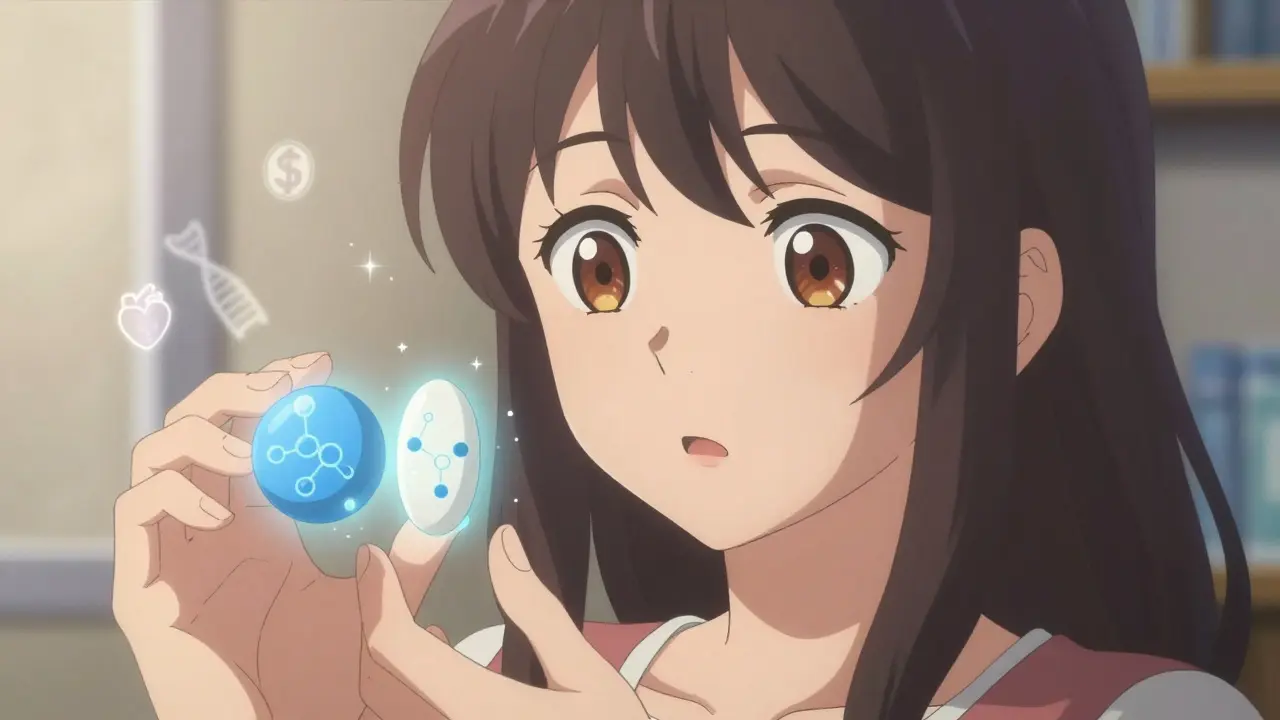
Every year, millions of people in the U.S. stop taking their meds-not because they feel better, but because they don’t understand what’s in their pill bottle. They see a different shape, a different color, a different name on the label, and they assume it’s not the same drug. That’s not paranoia. It’s a direct result of health literacy gaps, especially when it comes to generic medications.
What You’re Really Taking When You Get a Generic
Generic drugs aren’t cheap knockoffs. They’re exact copies of brand-name drugs in every way that matters: same active ingredient, same strength, same dosage form, same route of administration. The FDA requires them to be bioequivalent-meaning they work the same way in your body, within a 90% confidence interval of 80-125% of the brand-name version. That’s not a loophole. That’s science.But here’s the problem: 47% of patients with low health literacy don’t realize generics contain the same active ingredients as brand-name drugs. They think the blue pill they’ve been taking for years is somehow better than the white one they got at the pharmacy last month. That misunderstanding leads to real consequences: 32% higher hospitalization rates, 2.5 times more medication errors, and 23% lower adherence rates.
It’s not about the drug. It’s about the label. Generic pills look different because they use different inactive ingredients-fillers, dyes, coatings-that don’t affect how the medicine works, but do change the appearance. That’s why your blood pressure generic might be oval and white, while the brand was round and blue. The active ingredient? Identical. The effect? Identical. The cost? Often 80% lower.
Why People Don’t Trust Generics
Trust isn’t built with facts. It’s built with clarity.When a pharmacist says, “This is the same drug, just cheaper,” many patients hear, “This is the cheaper version, so it’s probably weaker.” That’s not just a misunderstanding-it’s a cultural belief shaped by decades of marketing. Brand-name drugs spend billions on ads that make them feel essential. Generics? They show up in plain packaging with no name recognition. No commercials. No billboards. Just a label you have to read.
And reading is the hurdle. Only 12% of U.S. adults have proficient health literacy. That means 88% struggle with basic medical instructions. For generics, the gap is even wider. Studies show 63% of people with low literacy can’t identify the active ingredient on a generic label, compared to 28% on brand-name labels. They see “amlodipine besylate” and panic. They don’t know it’s the same as Norvasc. They think they’re being given something experimental.
One Reddit user stopped taking their blood pressure med because the generic looked different. Another nearly overdosed on antidepressants because they didn’t realize their doctor switched them to a generic-and thought it was a new prescription. These aren’t rare cases. They’re symptoms of a broken system.
Who Gets Left Behind
This isn’t a problem for everyone equally. It hits hardest where the system is already stretched thin.Older adults? Many don’t read labels at all. They rely on family or pharmacists. But if the pharmacist doesn’t explain, they assume nothing changed.
Immigrants and non-native English speakers? 3.2 times more likely to misunderstand generic medication info. Labels in English only. Instructions read aloud without confirmation. No translated materials. No visuals.
People with lower incomes? They’re more likely to be switched to generics-but also more likely to skip doses if they’re unsure. Why? Because the cost savings mean nothing if they’re afraid the drug won’t work.
These aren’t abstract statistics. They’re real people. A grandmother in Bristol who can’t read the small print on her diabetes meds. A single dad in Manchester who switches between pharmacies because he can’t afford the brand-name insulin. A refugee in Leeds who doesn’t know the green pill she got this week is the same as the red one from last month.
How Pharmacists Are Trying to Fix This
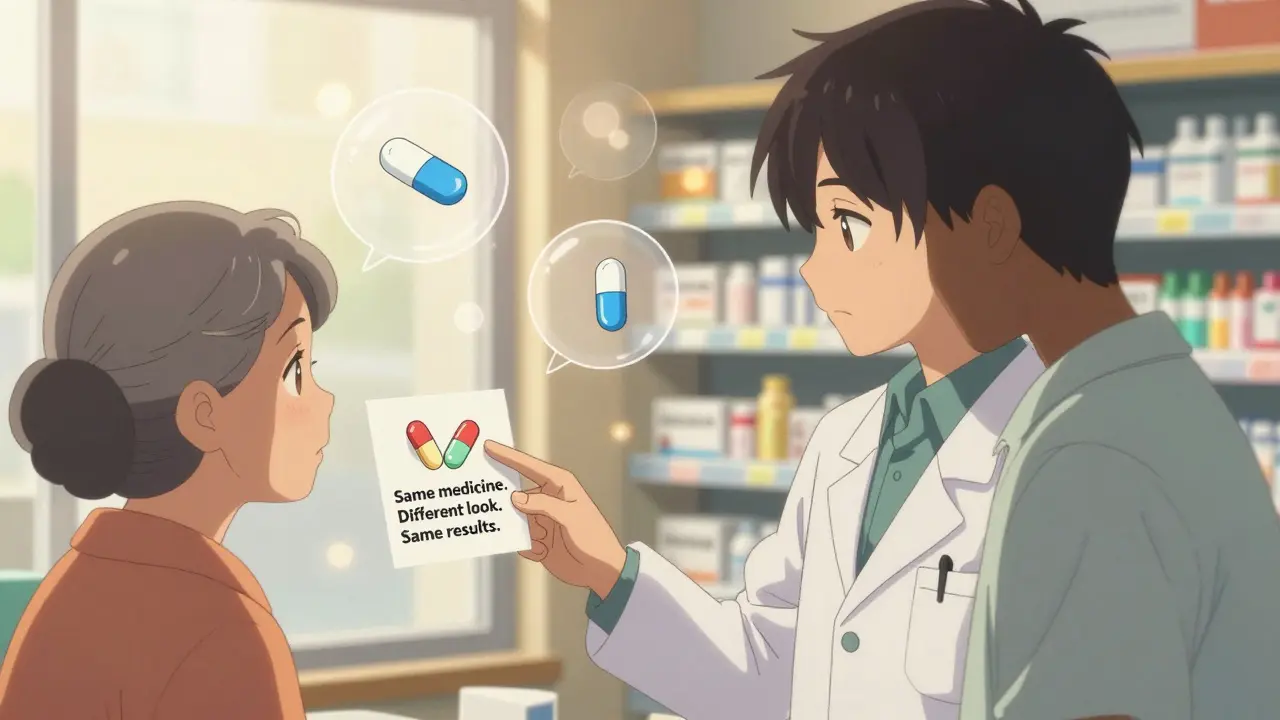
Pharmacists are on the front lines. They spend an average of 4.2 minutes explaining generics. But if the patient has low health literacy? That jumps to nearly 10 minutes.Some are using the Teach-Back method: “Tell me in your own words what this pill does and why you’re taking it.” Simple. Effective. Proven to reduce misunderstandings by 42%.
Others use visual aids-side-by-side photos of brand and generic pills, with the active ingredient circled in bold. One pharmacy in Bristol started handing out small cards with the drug name, the generic name, and a simple line: “Same medicine. Different look. Same results.” Adherence jumped 18% in three months.
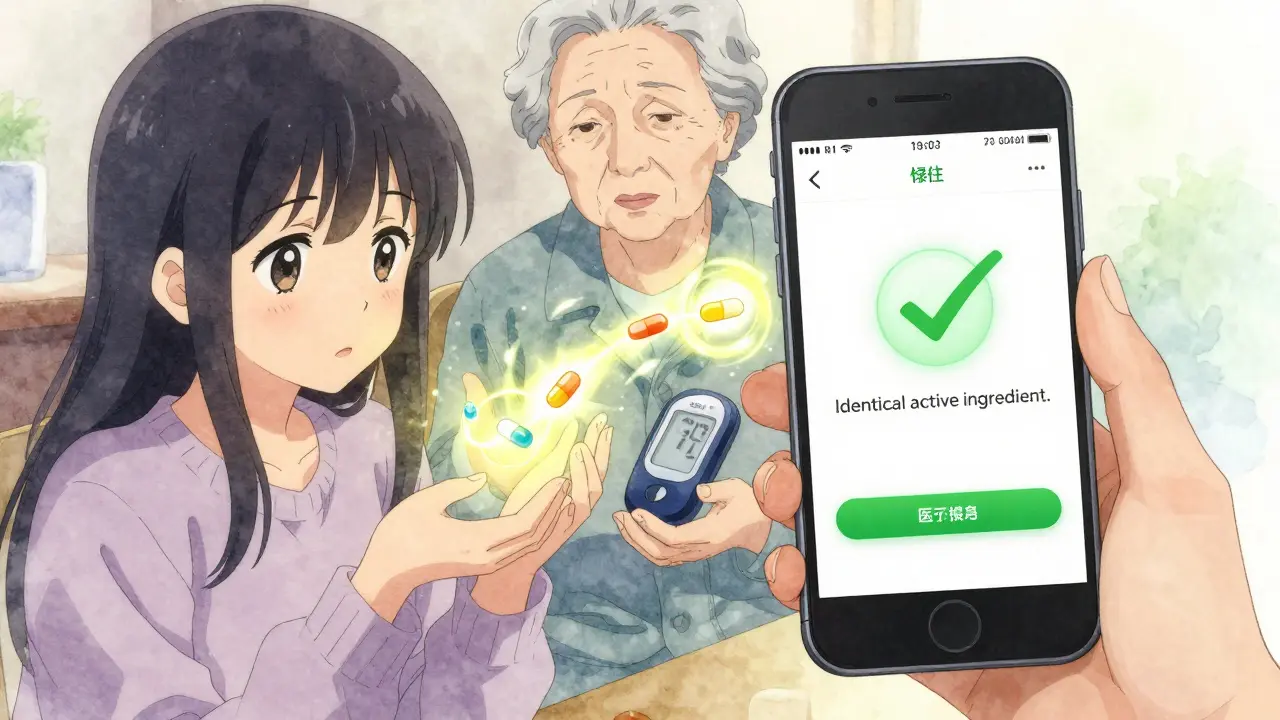
And then there’s the app trend. A 2022 study found patients using a pill-identification app with photos of generics were 35% better at recognizing their meds. No more guessing. Just snap a picture. The app says: “This is the generic version of Lipitor. Same active ingredient. Same effect.”
What Health Systems Are (Still) Not Doing
Here’s the shocking part: only 38% of healthcare organizations have any program specifically focused on helping patients understand generics.Electronic health records rarely flag when a patient has low literacy. Prescriptions don’t come with plain-language inserts. Insurance forms don’t explain why generics are preferred. The system assumes everyone can read, understand, and trust the label.
But we know better. The NIH found patients who got clear, visual explanations about generics were 83% more likely to stick with their meds. That’s not a small boost. That’s life-changing.
And the savings? Massive. When patients understand generics, they’re 14% less likely to end up in the ER for medication errors. That’s $675 saved per person every year. Multiply that by millions, and you’re talking billions.
What You Can Do Right Now
If you’re taking a generic, or if someone you care about is:- Ask your pharmacist: “What’s the brand-name version of this?” Write it down.
- Ask: “Is the active ingredient the same?” If they say yes, ask them to point it out on the label.
- Take a photo of your pill. Use a free app like Medscape or Drugs.com to compare it to the brand.
- If you’re confused, say so. Don’t guess. Don’t skip doses. Don’t assume it’s broken.
- Ask for a printed card or visual guide. Most pharmacies will give you one if you ask.
If you’re a caregiver, family member, or friend: don’t assume they understand. Ask them to explain it back to you. If they can’t, help them find the right information. A simple conversation can prevent a hospital visit.
The Bigger Picture
Generics make up 90% of all prescriptions filled in the U.S.-but only 23% of spending. That’s the power of generics. They save money. They save lives. But only if people know how to use them.Health literacy isn’t about reading level. It’s about trust. It’s about clarity. It’s about making sure that when someone gets a pill, they don’t have to wonder if it’s real, if it’s safe, if it’s enough.
Closing this gap isn’t about more brochures. It’s about redesigning how we communicate. It’s about pharmacists having time to talk. It’s about labels that don’t require a degree to read. It’s about making sure no one ever has to stop their medicine because they thought the color changed.
The science is clear. The tools exist. What’s missing is the will to make it simple for everyone.
Kelly Weinhold
Man, I never realized how much fear plays into this stuff. My grandma stopped her cholesterol med because the pill looked different-she thought they gave her the ‘bad’ version. I had to sit with her for an hour, showing her the label, comparing pictures, even calling the pharmacy to get a printed card. She cried because she felt stupid. But now? She takes it every morning like clockwork. It’s not about intelligence. It’s about feeling safe. We need to stop acting like reading a label is common sense. For a lot of people, it’s like being handed a foreign language and told to fix their life with it.