
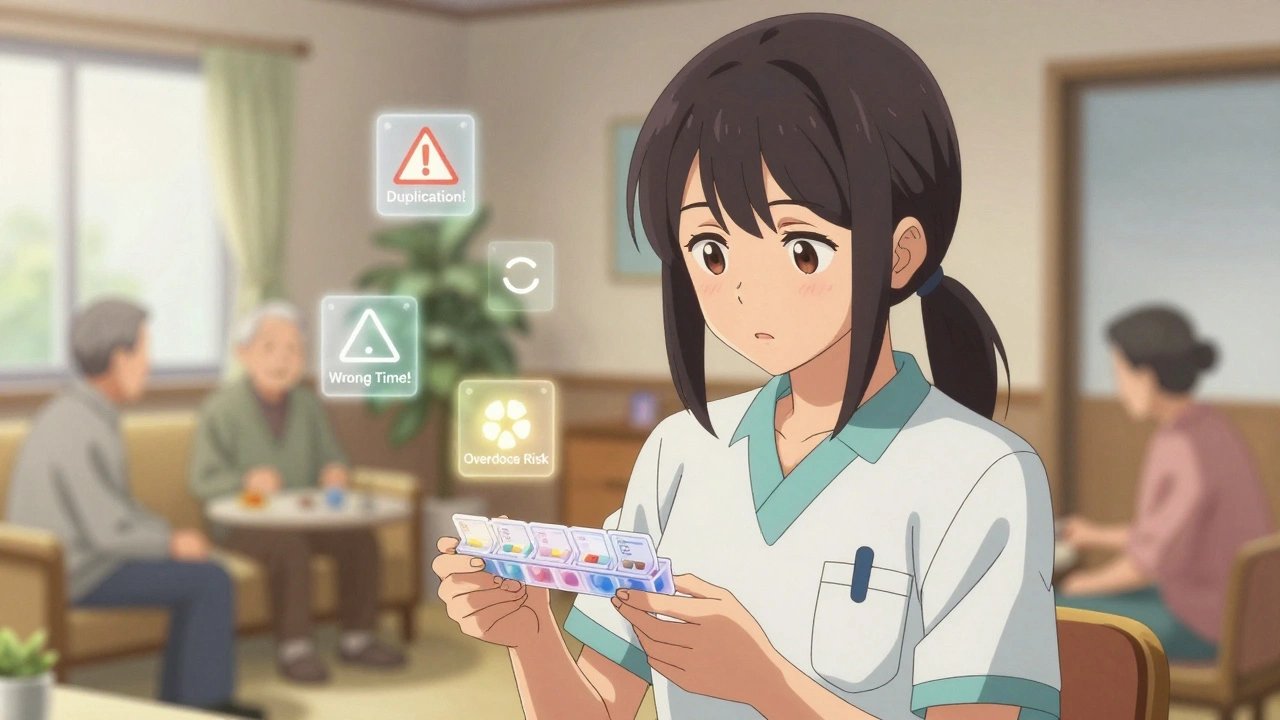
Every year, over 250,000 medication errors happen in U.S. nursing homes - and most go unreported. For seniors taking five, ten, or even fifteen different pills a day, a simple mistake - a wrong dose, a duplicated drug, a missed timing - can mean hospitalization, brain damage, or death. The problem isn’t just bad luck. It’s systemic. And families, caregivers, and even staff often don’t know how to spot it - or what to do when they do.
What Counts as a Medication Mistake in Seniors?
A medication error isn’t just giving the wrong pill. It’s any preventable mistake that harms someone while they’re under care. In older adults, these fall into clear patterns:- Wrong dose (42.7% of errors): Too much blood pressure medicine? Too little pain relief? Both can be deadly.
- Wrong time (23.1%): Giving a sleep aid at breakfast or an anticoagulant at night instead of morning.
- Wrong drug (15.8%): Confusing aspirin with ibuprofen, or giving acetaminophen when it’s already in the painkiller.
- Wrong route: Crushing a pill that shouldn’t be crushed, or giving an oral med IV.
- Monitoring failure: Not checking kidney function before giving certain drugs, or ignoring signs of dizziness after a new beta-blocker.
One of the most common hidden dangers? Duplication. A senior might get Tylenol from their doctor and then get another pill called “Acetaminophen” from a specialist - not realizing they’re the same thing. That’s how liver failure starts.
The Five Rights: Your First Line of Defense
Every time a medication is given - whether by a nurse, caregiver, or family member - use the Five Rights. It’s simple, and it cuts errors by over 60%.- Right patient - Check the name and ID band. Don’t assume.
- Right medication - Compare the label to the prescription. Look at the name, color, shape, and strength.
- Right dose - Does this match what the doctor ordered? Is it the same as yesterday?
- Right route - Is it supposed to be swallowed, applied to the skin, or inhaled?
- Right time - Is it morning, evening, or with food? Did they already get it today?
Even in busy nursing homes, staff trained in the Five Rights reduce errors by 63%. If you’re helping a loved one at home, write these down and keep them posted by the medicine cabinet.
Red Flags That Mean Trouble
You don’t need to be a nurse to spot danger. Watch for these signs:- Confusion or sudden drowsiness - Especially after a new prescription or dose change.
- Falls - Many seniors fall because of sedatives, blood pressure meds, or diuretics.
- Loss of appetite or nausea - Could be a drug interaction or toxicity.
- Unexplained bruising or bleeding - Common with blood thinners like warfarin or new anticoagulants.
- Expired pills - Found in the medicine drawer? That’s a red flag.
- Medications not documented - Staff check off “given” but you didn’t see it happen.
One family noticed their mother’s balance got worse after her doctor added a new anxiety pill. They asked for a full med review - and found she was on two drugs that both cause dizziness. One was stopped. She stopped falling.
How to Report a Medication Mistake - Step by Step
If you suspect an error, don’t wait. Don’t hope it was a one-time thing. Here’s how to act:- Stop the error immediately - If you see someone about to take the wrong pill, speak up. Say: “I think this isn’t right.”
- Notify the nurse or staff - Ask to speak with the charge nurse or pharmacist on duty. Don’t argue. Just say: “I need to report a possible medication error.”
- Document everything - Write down: What drug? What dose? When? Who gave it? What happened after? Take a photo of the pill bottle if you can.
- Request an incident report - Ask for the facility’s official Medication Error Reporting Form. By law, they must provide it. If they refuse, say: “I’m filing a complaint with the state ombudsman.”
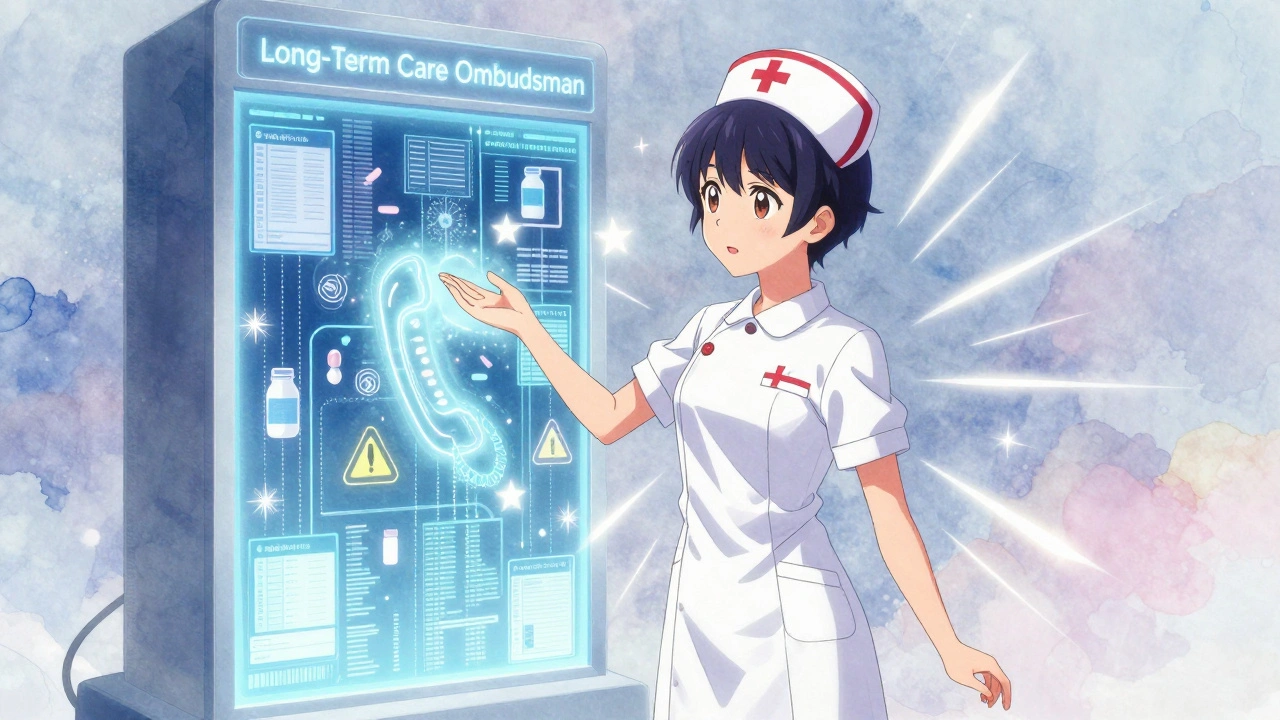
- Call the Long-Term Care Ombudsman - Dial 1-800-677-1116. They’re free, confidential, and legally required to investigate. Families who use them get responses within 72 hours 68% of the time.
- Report to the FDA - For serious harm or death, file a report at FDA MedWatch. This helps track patterns nationwide.
Don’t be afraid to push. One Reddit user wrote: “When I caught the nurse giving my mom double doses of blood pressure medicine, the facility refused to file a report - until I threatened to call the state. Then they apologized and changed their process.”
Why Most Errors Go Unreported - And How to Beat the System
The truth? Facilities often hide errors. Why? Fear of fines, lawsuits, or bad reviews. Staff may blame the patient: “She’s confused,” or “She didn’t tell us she already took it.”But here’s what they don’t want you to know: voluntary reporting systems save lives. The MEDMARX system, used by over 1,800 facilities, captures 83% of errors because it protects reporters from blame. It focuses on fixing systems - not punishing people.
Still, only 48% of nursing homes use it. That’s why families must be the watchdogs. If you’re told “It’s not a big deal,” respond: “I’m reporting this to the state. I want to know what’s being done to prevent it.”
What’s Being Done to Fix This - And What’s Still Missing
Technology is helping. By 2025, all nursing homes must use electronic medication administration records (eMAR). Barcode scanners cut administration errors by 86%. Computer systems flag dangerous drug combos before they’re prescribed.But tech alone won’t fix it. The biggest problem? Staffing. Nursing homes have just 2.1 nurses per 100 residents. When staff are overwhelmed, mistakes happen.
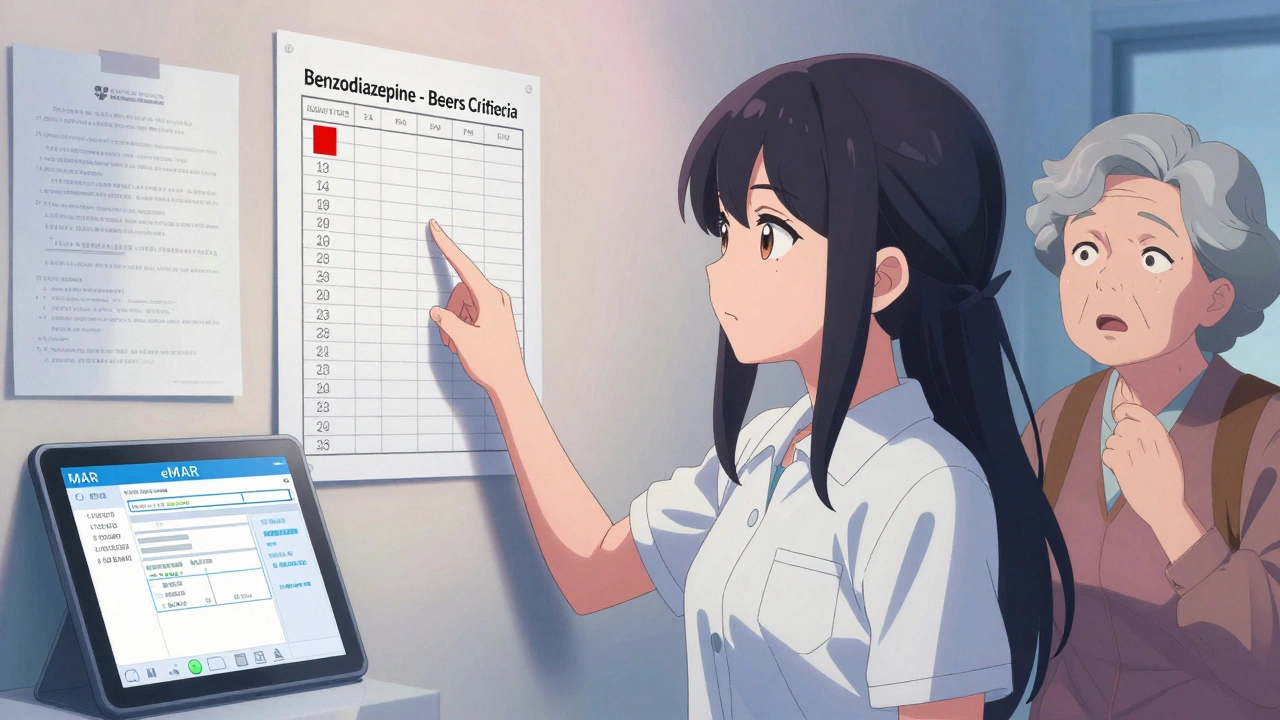
The American Geriatrics Society’s Beers Criteria® lists 34 drugs that are too risky for seniors - like benzodiazepines and certain antihistamines. Yet, 44% of Medicare patients still get them. Why? Because doctors aren’t trained in geriatric pharmacology. And families don’t know to ask.
The solution? Medication reconciliation. Every time a senior moves - from hospital to rehab to home - someone must sit down with all their meds, compare them, and remove duplicates or dangers. Done right, this prevents 67% of adverse events.
What You Can Do Today
You don’t need to be a medical expert to protect someone you love. Here’s your action plan:- Keep a master list - Write down every pill, vitamin, and supplement. Include dose, time, and reason. Update it weekly.
- Ask for a med review - Request a pharmacist or geriatrician to review all meds every 6 months.
- Use a pill organizer - But don’t trust it blindly. Check it daily.
- Learn the Beers Criteria - Search “Beers Criteria 2023” online. Know which drugs to question.
- Know your rights - You can request all medical records. You can demand incident reports. You can call the ombudsman anytime.
Medication safety isn’t just about hospitals and pharmacies. It’s about you - the family member who notices the change in their parent’s eyes, the caregiver who questions a rushed dose, the son who calls after midnight because something feels off.
That’s where change starts.
What should I do if a nursing home refuses to report a medication error?
If a facility refuses to file a report, immediately contact your state’s Long-Term Care Ombudsman at 1-800-677-1116. They are legally required to investigate. Document everything - dates, names, what was said - and send a written letter to the facility’s administrator. If harm occurred, also report to the FDA’s MedWatch program. Most facilities will comply once they know you’re prepared to escalate.
Can I report a medication error if my loved one is at home with a caregiver?
Yes. If the caregiver is employed by a home health agency, report the error to the agency’s supervisor and request a formal incident report. If it’s a private caregiver, document the error and contact the prescribing doctor immediately. For serious harm, report to the FDA MedWatch program. Even at home, medication errors are reportable - especially if they involve a professional provider.
What are the most dangerous medications for seniors?
According to the 2023 Beers Criteria®, the most dangerous include benzodiazepines (like Valium), anticholinergics (like Benadryl), certain NSAIDs (like ibuprofen long-term), and older antipsychotics (like haloperidol). These increase fall risk, confusion, and kidney damage. Even over-the-counter drugs like diphenhydramine are risky. Always ask: “Is this still necessary?” and “Are there safer alternatives?”
How do I know if a medication is duplicated?
Check the active ingredient, not the brand name. For example, Tylenol, Panadol, and Mapap all contain acetaminophen. If your loved one is taking two pills with the same active ingredient, that’s duplication. Use free tools like Medscape’s Drug Interaction Checker or ask a pharmacist to review all prescriptions. Always bring a full list to every doctor visit.
Are electronic systems like eMAR and barcode scanning effective?
Yes. Studies show barcode medication administration reduces errors by 86%, and eMAR systems cut prescribing mistakes by 48%. But they only work if staff use them correctly. In nursing homes, only 55% have barcode systems - meaning most errors still happen manually. If your loved one’s facility doesn’t use them, ask why - and demand improvement.
Palanivelu Sivanathan
Oh my GOD, I just read this and I’m shaking-like, physically shaking-because my grandma almost died last year from double-dosing on acetaminophen, and no one noticed until her liver started failing, and the nursing home said it was ‘just a clerical error’-like that’s a thing you say while someone’s on a ventilator???
I mean, seriously-how many more people have to die before we stop treating elderly care like a bureaucratic afterthought???
I’m not even mad anymore-I’m just… devastated. And tired. And done.
Why does it take a near-fatal mistake for someone to care???
And why do we act like this is normal???
It’s not normal.
It’s a crime.
And we’re all complicit.
Because we look away.
And we say, ‘It’s not my problem.’
But it is.
It’s always been ours.