
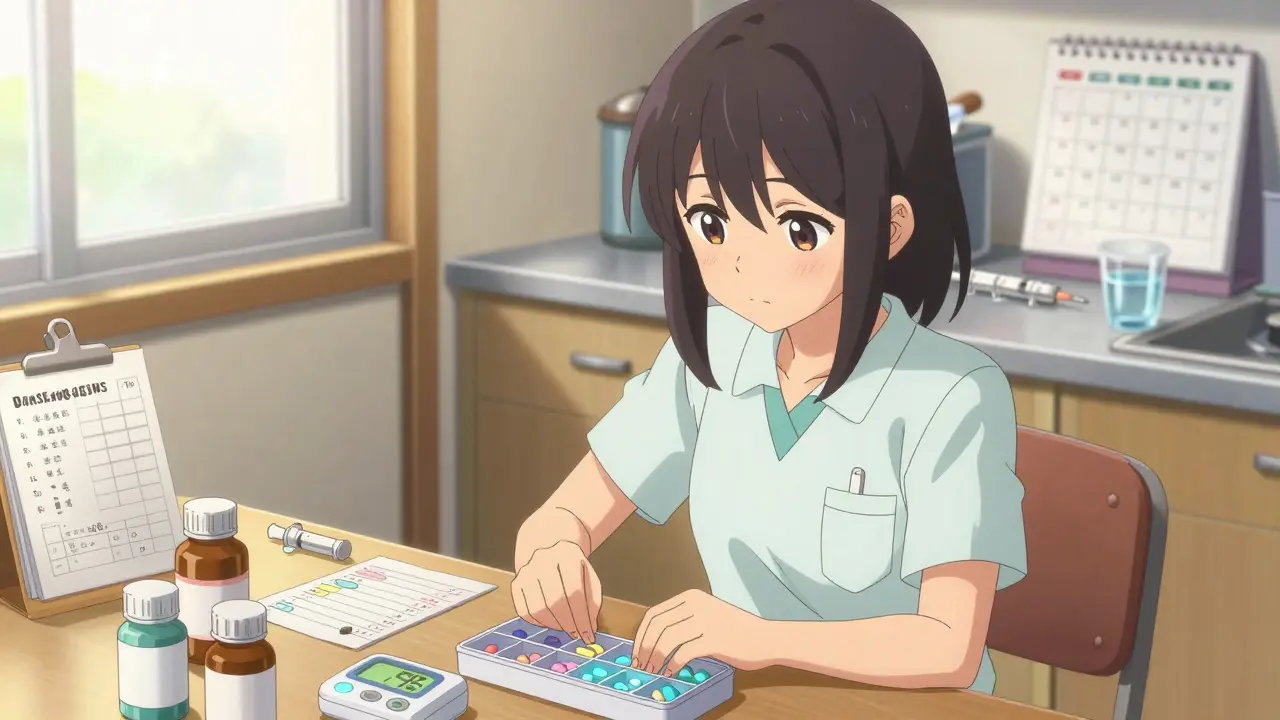
Every year, medication safety mistakes send hundreds of thousands of older adults to the hospital - and many of those errors happen right at home, where loved ones are being cared for by family members. You’re not alone if you’ve ever stared at a pile of pills, unsure whether your parent took their blood pressure medicine this morning, or if that new bottle is supposed to be taken with food. Medication errors aren’t rare. They’re common. And they’re preventable.
The reality is simple: when someone you care for is taking five or more medications - which 44% of older adults do daily - the risk of a dangerous mistake skyrockets. A single wrong dose, a missed schedule, or an unnoticed drug interaction can lead to falls, confusion, kidney damage, or worse. The good news? With a few clear, practical steps, you can cut that risk by more than half.
Build a Complete, Up-to-Date Medication List
The first and most powerful tool in your toolkit is a written list of every medication your loved one takes. Not just prescriptions. Not just the big ones. Everything. That includes over-the-counter painkillers, vitamins, herbal supplements, and even eye drops or creams. Many caregivers skip these because they seem "harmless," but that’s where trouble often hides.
For each medication, write down:
- Brand name and generic name (e.g., Lipitor vs. atorvastatin)
- Exact dosage (e.g., 500mg tablet, 10mL liquid)
- How often it’s taken (e.g., "twice daily at 8 AM and 8 PM")
- Why it’s prescribed (e.g., "for high blood pressure")
- Any known side effects (e.g., "dizziness when standing up")
This list doesn’t have to be fancy. A notebook, a Word doc, or even a notes app on your phone works. But it must be updated every time a doctor changes something - even if it’s just a new dose. The Mayo Clinic found that caregivers who kept this list reduced medication errors by 52%. That’s not a small win. That’s life-changing.
Use a Pill Organizer - But Choose the Right One
If your loved one takes multiple pills a day, a pill organizer isn’t optional. It’s essential. But not all organizers are created equal. A basic seven-day box with two compartments (AM/PM) is the minimum. For someone with memory issues, especially dementia, look for one with alarms or digital reminders. A 2023 survey on ALZConnected found that 63% of caregivers who used alarm-equipped organizers saw better adherence than those who didn’t.
Don’t just dump pills into it. Always double-check the labels before filling. A 2022 study from the CDC showed that 37% of errors came from misreading handwritten prescriptions. If the label says "take one tablet daily" but the pill looks different than last month, call the pharmacy. Don’t assume.
Also, never use a pill organizer for medications that need special handling - like insulin, liquid antibiotics, or pills that must be taken at exact times. These should stay in their original bottles with clear labels.
Measure Liquids Right - No More Spoons
If your loved one takes liquid medicine - whether it’s antibiotics, cough syrup, or seizure meds - never use a kitchen spoon. Seriously. A 2021 study in JAMA Pediatrics found that household spoons vary in size by 20% to 40%. That means you could be giving 40% too much… or 40% too little.
Always use the syringe or measuring cup that came with the medicine. If it’s missing, ask the pharmacist for one. They’ll give it to you for free. A calibrated oral syringe is the gold standard. It has clear markings in milliliters (mL), not teaspoons. And if the dose is less than 5 mL, use a 1 mL syringe - it’s more accurate.
Know the High-Risk Medications
Not all drugs are safe for everyone. The Beers Criteria - updated annually by experts - lists 30 medications that are too risky for most older adults. These include:
- Benzodiazepines (like Valium or Xanax) - increase fall risk
- Proton pump inhibitors (like omeprazole) - linked to bone loss and infections
- Anticholinergics (like diphenhydramine/Benadryl) - cause confusion and memory loss
- NSAIDs (like ibuprofen) - can damage kidneys or cause stomach bleeding
Dr. Michael Steinman’s 2021 study in the New England Journal of Medicine found that nearly half of older adults take at least one drug that does more harm than good. Ask your pharmacist: "Is this still necessary?" Many people stay on medications long after they’re needed.
Look for warnings on labels. Since September 2023, the FDA requires "high-risk medication" labels on 30 common drugs for seniors. If you see that warning, pause. Ask questions.

Get a Pharmacist Review - Twice a Year
Pharmacists are medication detectives. They know what interacts with what. And they’re legally required to help you - especially under Medicare Part D, which now mandates Medication Therapy Management (MTM) for people on eight or more medications.
Schedule a free 45-minute review every six months. Bring your full medication list. Ask:
- "Are all these still needed?"
- "Are there any dangerous interactions?"
- "Can any of these be switched to a cheaper or safer option?"
A 2022 study in the Journal of the American Geriatrics Society found that these reviews cut adverse events by 28%. One caregiver on FamilyCaregiver.org shared: "The pharmacist found three interactions I didn’t know about. One was causing my mom’s confusion. We stopped it - and she was herself again in a week."
Watch for Look-Alike, Sound-Alike Mistakes
Some drug names are dangerously similar. Hydroxyzine (for allergies) vs. hydrocortisone (a steroid cream). Zyrtec vs. Zoloft. Clonazepam vs. Clonidine. These mix-ups cause 15% of reported medication errors, according to the Institute for Safe Medication Practices.
When picking up a prescription, always read the label aloud to the pharmacist. Say: "Is this hydroxyzine or hydrocortisone?" Don’t just nod and walk away. If the name looks unfamiliar, ask. It’s better to look confused than to give the wrong pill.
Also, check the pill shape and color. If it looks different than last time, even if the name is the same, call the pharmacy. Generic brands change appearance often.
Sync Refills and Use Digital Tools
Missing a dose because you forgot to refill a prescription is one of the most common causes of hospitalization. CVS and Walgreens now offer free medication synchronization - meaning all your prescriptions are due on the same day each month. Ask your pharmacy if they offer it. It’s simple: you pick up everything at once, on a day that works for you.
Apps like Medisafe and CareZone can help too. They send alerts, track doses, and even notify you when refills are due. A 2023 Caregiver Action Network survey found that users of these apps had 32% fewer missed doses. But if your loved one is uncomfortable with tech, don’t force it. A printed calendar with checkmarks works just as well.
For caregivers over 65, 27% of those in a National Institute on Aging focus group said apps felt overwhelming. That’s okay. Use what works - paper, phone calls, or a simple alarm clock.

Check Expiration Dates - Every Week
Expired meds aren’t just useless. They can be dangerous. The FDA reports that 90% of caregivers don’t regularly check expiration dates. That’s a huge blind spot.
Set a weekly reminder: 10 minutes every Sunday. Look at all bottles. Toss anything expired. Liquid antibiotics, eye drops, and insulin expire fastest - often within 30 days after opening. If you’re unsure, call the pharmacy. They’ll tell you.
Store meds properly, too. Keep them in a cool, dry place - not the bathroom. Humidity ruins pills. Don’t leave them in a hot car or near a window. Ideal temperature: 68-77°F (20-25°C).
Prepare for Transitions - Hospital to Home
One of the riskiest times is when someone comes home from the hospital. A 2022 study by Dr. Joanne Lynn found that 62% of medication errors happen during this transition.
The CARE Act, now active in 47 states, requires hospitals to explain all medication changes to caregivers before discharge. But don’t wait for them to explain. Take notes. Ask: "What’s new? What’s stopped? What’s changed?" Get a written list. If you’re told a medication was discontinued, confirm it with your pharmacist.
Bring your medication list to every hospital visit. Don’t rely on memory. And if you’re not sure about a new prescription, don’t fill it until you’ve talked to your pharmacist.
What to Do If You Suspect an Error
Signs of a medication problem:
- Sudden confusion or drowsiness
- Unexplained bruising or bleeding
- Loss of appetite or nausea
- Weakness, dizziness, or falls
- Changes in urination or bowel habits
If you notice any of these, stop the medication immediately (if it’s safe to do so) and call the doctor or pharmacist. Don’t wait. Don’t assume it’s "just aging."
Keep a log: Date, time, symptom, medication taken. This helps doctors spot patterns fast.
Final Thought: You’re the Last Line of Defense
Medication safety isn’t about being perfect. It’s about being consistent. It’s about asking questions when something feels off. It’s about knowing that you hold the power to prevent harm - not just because you love someone, but because you’re trained, informed, and ready.
You don’t need to be a nurse. You just need to be careful. And you’re doing better than you think.
John Haberstroh
Love how this breaks it down - seriously, most people don’t realize that a kitchen spoon can be a death sentence when it comes to liquid meds. I once saw my neighbor give her dad 20mL of cough syrup with a tablespoon because "it looked about right." He ended up in the ER with respiratory depression. The FDA’s 40% variance stat? Real. Use the damn syringe. Always.
Also, pill organizers with alarms? Game-changer. My grandma’s old one had no alarm, so I swapped it for one with a voice reminder that says "IT’S TIME FOR YOUR BLUE PILL, MARGARET." She hates it. But she takes them on time. Win-win.