

When you start taking a statin to lower your cholesterol, you expect fewer heart attacks-not new aches and pains. But for many people, muscle cramps, soreness, or tingling in the legs show up after a few weeks or months. The big question isn’t just whether it’s a side effect-it’s what kind of side effect. Is it your muscles breaking down? Or are your nerves sending wrong signals? Mistaking one for the other can lead to stopping a life-saving drug-or keeping it when you shouldn’t.
Statin Myopathy: When Your Muscles Are the Problem
Statin-associated myopathy isn’t just soreness. It’s a real, measurable issue in the muscle tissue itself. The most common signs are deep, dull aches in the thighs, hips, or shoulders-not sharp pain, but a constant heaviness that makes climbing stairs or standing up from a chair harder than it used to be. You might not even notice the weakness right away. Many patients assume it’s just aging, until they realize they’re walking slower or falling more often. Unlike a pulled muscle, this doesn’t come from overdoing it. It starts slowly, usually within the first few months of starting a statin, and gets worse if you keep taking it. The good news? It usually gets better when you stop. What’s happening inside your muscles? Statins block HMG-CoA reductase, the enzyme your liver uses to make cholesterol. But your muscles use that same enzyme too-and they’re about 40 times more sensitive to it than your liver. When that enzyme is suppressed, your muscles make less coenzyme Q10, which is critical for energy production. Without enough Q10, muscle cells struggle to function. Calcium leaks out of storage sites, proteins don’t get modified properly, and mitochondria-the powerhouses of the cell-start to fail. This leads to muscle damage, even if you don’t feel intense pain. The key diagnostic clue? Creatine kinase (CK). In true statin myopathy, CK levels rise above four times the upper limit of normal. But here’s the catch: most cases-up to 90%-have only mild or normal CK levels. That’s why doctors often miss it. If you’re tired, weak, and on a statin, but your blood test looks normal, don’t assume it’s nothing. The diagnosis is based on three things: timing (did symptoms start after starting the statin?), response (did they improve after stopping?), and recurrence (did they come back when you restarted?) Risk factors? Age over 65, being female, having kidney disease, taking other meds like fibrates or certain antibiotics, or carrying the HLA-DRB1*11:01 gene variant. If you’re on simvastatin 80mg and have the SLCO1B1 gene variant, your risk of severe myopathy jumps 4.5 times.Statin Neuropathy: When Your Nerves Are the Culprit
Now picture this: your feet feel like they’re wrapped in cotton. You get burning sensations at night. A light touch on your ankles feels sharp or electric. These aren’t muscle problems-they’re nerve problems. This is peripheral neuropathy: damage to the nerves that carry sensation from your hands and feet to your brain. Unlike myopathy, which affects strength and movement in the hips and thighs, neuropathy hits the toes and fingers first. It follows a “stocking-glove” pattern-worse at the ends of limbs. You might not feel pain, but you feel tingling, numbness, or even pain from something that shouldn’t hurt, like bed sheets. The big controversy? No one agrees if statins cause this. Some studies say yes. Others say no. A 2019 case-control study of over 600 people found that those taking statins were actually less likely to develop polyneuropathy than those who didn’t. Other research suggests statins might reduce inflammation that damages nerves. So why do some patients report symptoms? Possible mechanisms? Statins lower LDL cholesterol, which carries vitamin E-a powerful antioxidant that protects nerve membranes. Less LDL might mean less vitamin E reaching your nerves. Statins also reduce coenzyme Q10, which nerves need for energy. And since cholesterol is a key building block of nerve insulation (myelin), lowering it too much might thin the protective coating around nerves. But here’s the critical point: neuropathy has many common causes. Diabetes, vitamin B12 deficiency, alcohol use, thyroid disease, and even autoimmune conditions are far more likely culprits than statins. If you have numb feet, you need to rule those out first. Don’t assume the statin is to blame. To confirm neuropathy, you need an electrodiagnostic test: nerve conduction studies and electromyography (EMG). These measure how fast signals travel through nerves and how well muscles respond. In statin-related neuropathy (if it exists), you’d see reduced sensory nerve action potentials-signs of axonal damage. But in many cases, the results are normal, or show something else entirely.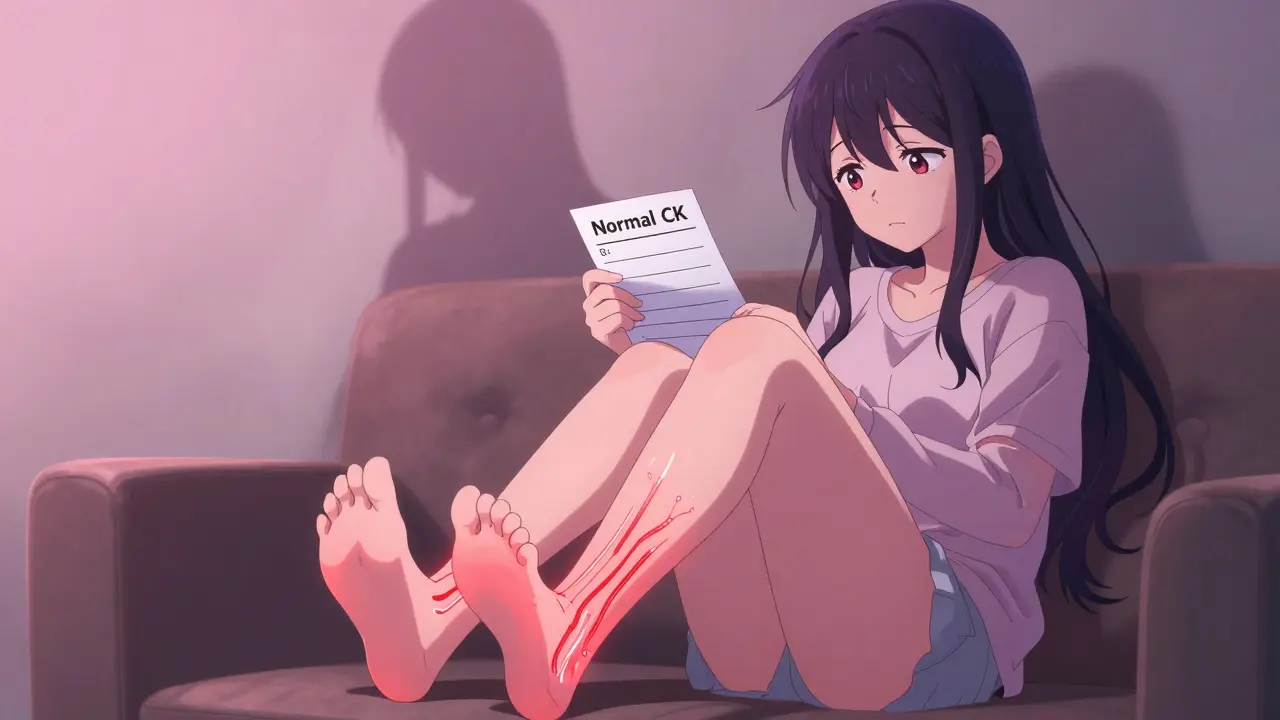
How to Tell the Difference: Key Clues
Here’s how to separate the two:- Location: Myopathy = hips, thighs, shoulders. Neuropathy = feet, hands, toes.
- Symptoms: Myopathy = weakness, heaviness, cramping during movement. Neuropathy = tingling, burning, numbness, sensitivity to touch.
- CK levels: Myopathy = often elevated (even mildly). Neuropathy = always normal.
- Testing: Myopathy = physical exam for proximal weakness, CK blood test. Neuropathy = nerve conduction studies, EMG.
- Response to stopping: Myopathy = symptoms improve in weeks to months. Neuropathy = may not improve, or may worsen if caused by something else.
What to Do If You Have Symptoms
Don’t stop your statin on your own. Stopping without a plan increases your risk of heart attack or stroke. Instead:- See your doctor. Describe exactly what you feel-where, when, how it started, and what makes it better or worse.
- Get a CK test. If it’s over 4x normal, myopathy is likely.
- If CK is normal but symptoms persist, ask about nerve testing (EMG/nerve conduction).
- Rule out other causes: check your blood sugar, B12, thyroid, and alcohol use.
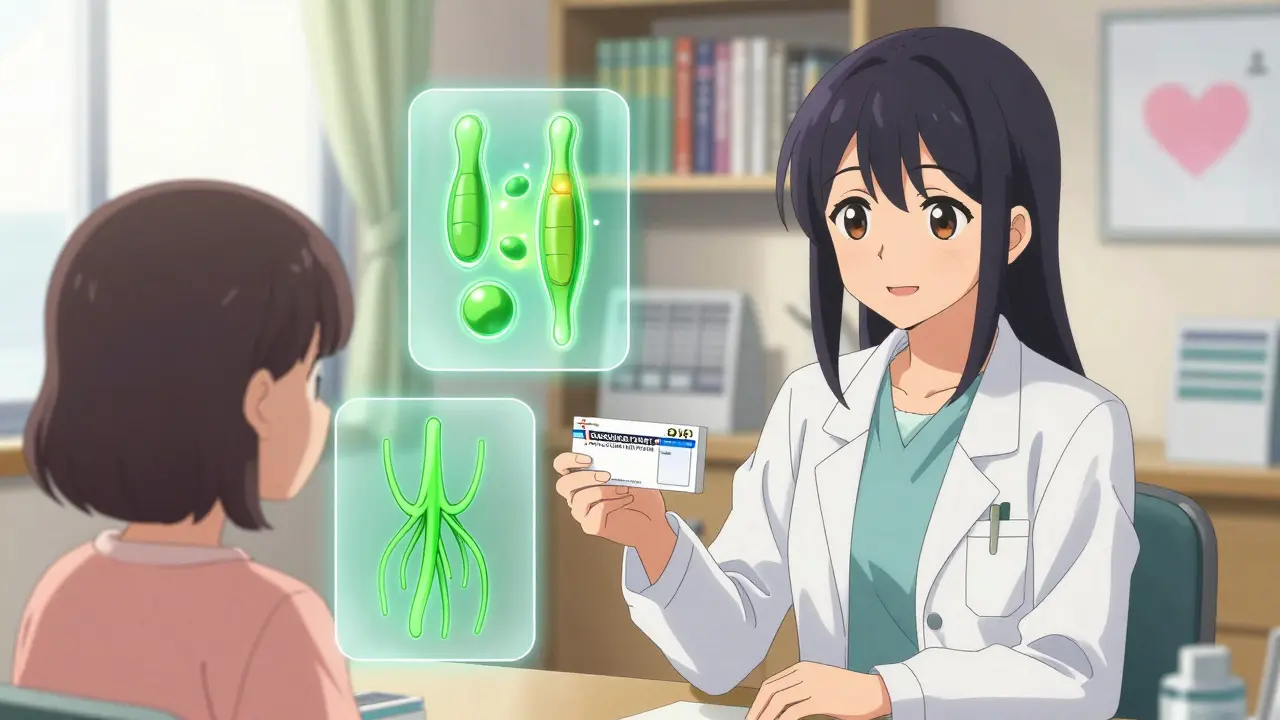
- If myopathy is confirmed, your doctor might switch you to a different statin-hydrophilic ones like pravastatin or rosuvastatin are less likely to cause muscle issues. About 60% of people tolerate a switch.
- If neuropathy is suspected but unproven, don’t stop the statin unless other causes are ruled out. The evidence linking statins to neuropathy is weak.
What Comes Next: Alternatives to Statins
If you truly can’t tolerate statins, you still have options. The goal isn’t to avoid medication-it’s to avoid heart disease. Ezetimibe reduces cholesterol absorption in the gut. PCSK9 inhibitors (like evolocumab or alirocumab) are injectable drugs that can cut LDL by 60% or more. Both are proven to reduce heart attacks and strokes, even without statins. A 2022 American College of Cardiology guideline says: if you’re statin-intolerant, use non-statin therapies-not no therapy. Coenzyme Q10 supplements? A 2015 JAMA trial with 44 patients found no benefit over placebo for muscle symptoms. So don’t waste your money on it.Why This Matters More Than You Think
Statin myopathy affects 7 to 29% of people in real-world settings-not the 1-5% seen in clinical trials. That’s because trials exclude older patients, those on multiple meds, or anyone with prior muscle issues. Real people have real lives. Many patients are told their symptoms are “just in their head” or “normal aging.” But weakness that creeps up over months isn’t aging-it’s a warning sign. And if you’re one of the 1 in 10,000 who develops rhabdomyolysis-a rare but dangerous breakdown of muscle that can damage kidneys-you need to know the signs: dark urine, extreme fatigue, severe pain. The bottom line? Muscle cramps on statins aren’t always the same. One is a muscle problem, fixable by stopping the drug. The other is a nerve problem, possibly unrelated-and stopping the statin won’t help. Getting the diagnosis right means keeping your heart safe without sacrificing your quality of life.Can statins cause muscle cramps?
Yes, statins can cause muscle cramps, but not always for the same reason. Most often, it’s due to statin-associated myopathy-a muscle disorder caused by reduced energy production in muscle cells. Less commonly, some people report nerve-related symptoms like tingling or burning, which may be neuropathy. However, the link between statins and neuropathy is unclear and contradicted by some studies.
How do I know if my muscle pain is from statins?
Look for three signs: 1) Symptoms started after beginning the statin, 2) Pain is in your thighs, hips, or shoulders-not your feet or hands, and 3) You feel weakness when climbing stairs or rising from a chair. A blood test for creatine kinase (CK) can help-if it’s elevated more than four times normal, it’s likely statin-related myopathy. Symptoms should improve within weeks of stopping the drug.
Can statins cause nerve damage?
The evidence is mixed. Some patients report numbness or burning in their feet, which could suggest neuropathy. Proposed reasons include lower vitamin E or coenzyme Q10 levels. But large studies, including one from 2019, found statin users had a lower risk of neuropathy than non-users. Most experts agree that other causes-like diabetes or B12 deficiency-are far more likely. Nerve testing is needed to confirm neuropathy.
Should I stop my statin if I have muscle cramps?
No, don’t stop without talking to your doctor. Stopping statins increases your risk of heart attack or stroke. Instead, get tested: check your CK levels and rule out other causes of muscle or nerve problems. If it’s myopathy, your doctor may switch you to a different statin or add a non-statin drug like ezetimibe or a PCSK9 inhibitor. You don’t have to choose between your heart and your muscles.
Are there statins that don’t cause muscle problems?
Yes. Hydrophilic statins like pravastatin and rosuvastatin are less likely to enter muscle cells, so they cause fewer muscle side effects than lipophilic ones like simvastatin or atorvastatin. Switching statins helps about 60% of people who had muscle issues before. Your doctor can help pick one that’s better tolerated.
Can I take CoQ10 supplements to prevent statin muscle pain?
A 2015 JAMA study tested CoQ10 in 44 people with statin-related muscle pain. Those taking CoQ10 had no better results than those taking a placebo. While the theory makes sense-statins lower CoQ10-the supplement doesn’t reliably fix the problem. Save your money and focus on proven strategies like switching statins or using non-statin medications.
anthony epps
Been on simvastatin for 3 years. Started getting cramps in my thighs last winter. Thought it was just getting old. Turns out my CK was 5x normal. Stopped it and within 3 weeks I could climb stairs again. No magic supplement, just quit the drug.