
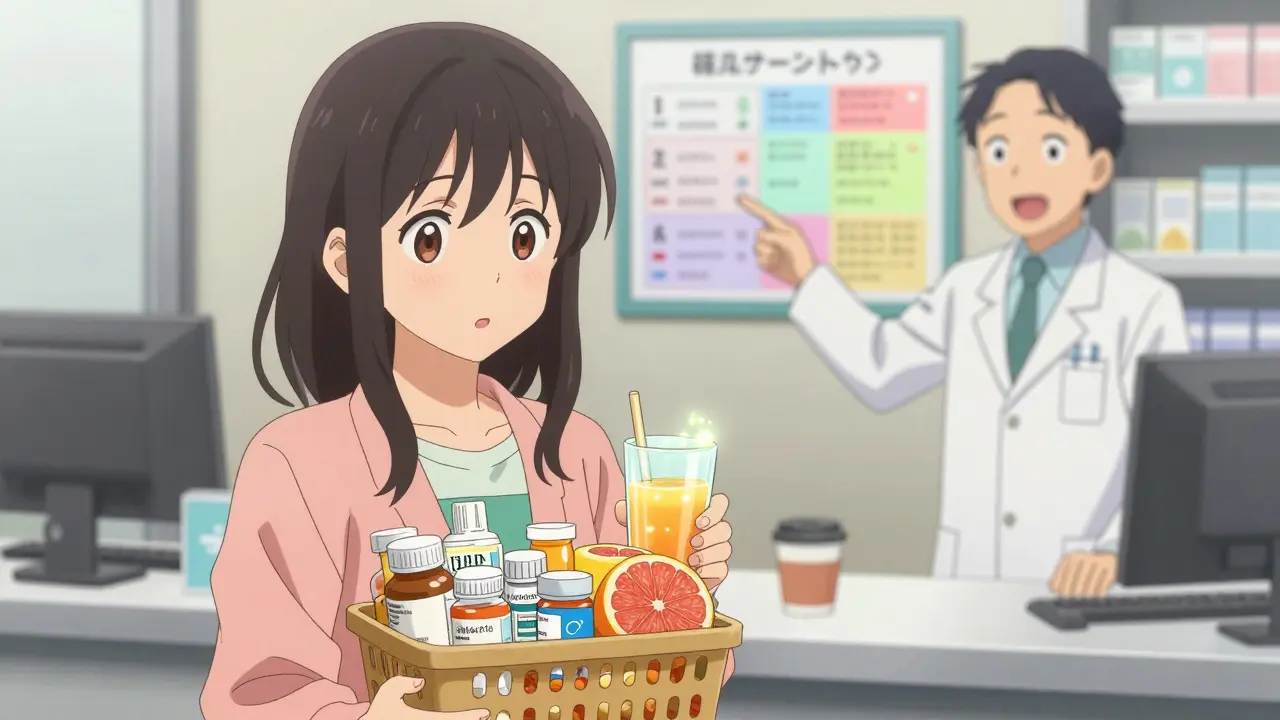
Medication Interaction Checker
Medication Interaction Checker
Check potential interactions between your medications, supplements, and common foods or drinks. This tool uses common interaction data to help you identify potential risks. Always consult with your pharmacist or doctor for personalized medical advice.
Every year, over a million people in the U.S. end up in the hospital because of medication errors-and a big chunk of those are due to unexpected medication interactions. You might think your doctor covered everything when they handed you that prescription. But here’s the truth: pharmacists are the real experts when it comes to how your pills, supplements, and even your morning coffee might clash. And most of the time, they won’t bring it up unless you ask.
Why Medication Interactions Are More Common Than You Think
You’re not alone if you’ve never heard of a drug interaction before. A 2022 University of Utah Health survey found that only 24.6% of patients could name even one food or drink that interferes with their meds. That’s not because people aren’t trying-it’s because the information rarely comes up unless you push for it. Interactions happen when something you take changes how another substance works in your body. It could be another prescription, an over-the-counter painkiller, a vitamin, grapefruit juice, alcohol, or even a herbal supplement like St. John’s Wort. Some interactions are mild-like reduced effectiveness. Others can be deadly. For example, mixing certain antidepressants with migraine meds can trigger serotonin syndrome, a condition that spikes your body temperature and heart rate to dangerous levels. That’s not a theory. The FDA recorded over 1,200 cases of this in 2021 alone. Even something as simple as taking Tums with a Hepatitis C drug can make the treatment useless. Or taking warfarin with cranberry juice? That can turn a routine blood thinner into a bleeding risk. And grapefruit? It doesn’t just ruin your breakfast-it can boost the level of some statins in your blood by up to 1,500%, raising your chance of muscle damage or kidney failure.What Pharmacists Know That Doctors Often Don’t Have Time to Tell You
Doctors diagnose and prescribe. Pharmacists know what happens after the prescription leaves the office. They’re trained to spot interactions before they happen. Every time you drop off a script, the pharmacy’s computer checks for red flags. But that’s just the first step. The real safety net? A conversation. A 2023 report from the American Society of Health-System Pharmacists found that only 38.2% of patients get a full discussion about interactions when picking up their meds. That means over 60% of people walk out without knowing if their new antibiotic will mess with their birth control, or if their calcium supplement will block their thyroid medicine. Pharmacists don’t just read labels. They know how timing matters. Taking levothyroxine (a thyroid drug) with calcium or iron? That can cut absorption by 30-50%. But if you take them four hours apart? The problem disappears. That’s the kind of detail your pharmacist can give you-right at the counter.7 Essential Questions to Ask Your Pharmacist
Don’t wait for them to ask. Walk in prepared. Here’s what you need to say:- Does this medication interact with any other drugs I’m taking-even the ones I buy over the counter? This includes painkillers, sleep aids, antacids, and cold meds. Many people don’t realize that Tylenol and Advil can interact with blood pressure pills or blood thinners.
- What about supplements or vitamins? I take fish oil, magnesium, and a multivitamin. Supplements aren’t harmless. Vitamin K can cancel out warfarin. Calcium can block antibiotics like ciprofloxacin. Even common ones like vitamin D can interfere with steroids.
- Are there foods or drinks I need to avoid? Grapefruit juice is the big one-but it’s not the only one. Dairy can reduce absorption of some antibiotics. Alcohol can turn metronidazole into a nightmare, causing vomiting, flushing, and a racing heart. Even chocolate can interfere with some antidepressants.
- Can I drink alcohol while taking this? Nearly half of all adults take meds that react badly with alcohol. It’s not just about getting drunk. Even one drink can raise your risk of dizziness, liver damage, or overdose.
- Is there anything I should avoid doing? Like going in the sun or driving? Some meds make you super sensitive to sunlight. You can get a bad sunburn after just 10 minutes. Others cause drowsiness that’s worse than alcohol. Ask about photosensitivity and dizziness risks.
- Will I need any blood tests or monitoring while on this? Some drugs need regular checks-like liver enzymes for statins or INR levels for warfarin. If your pharmacist says yes, ask when and where.
- What signs should I watch for if something’s wrong? Don’t just be told “call your doctor if you feel bad.” Ask for specifics: “If I get unexplained bruising, muscle pain, or sudden confusion, is that a red flag?”
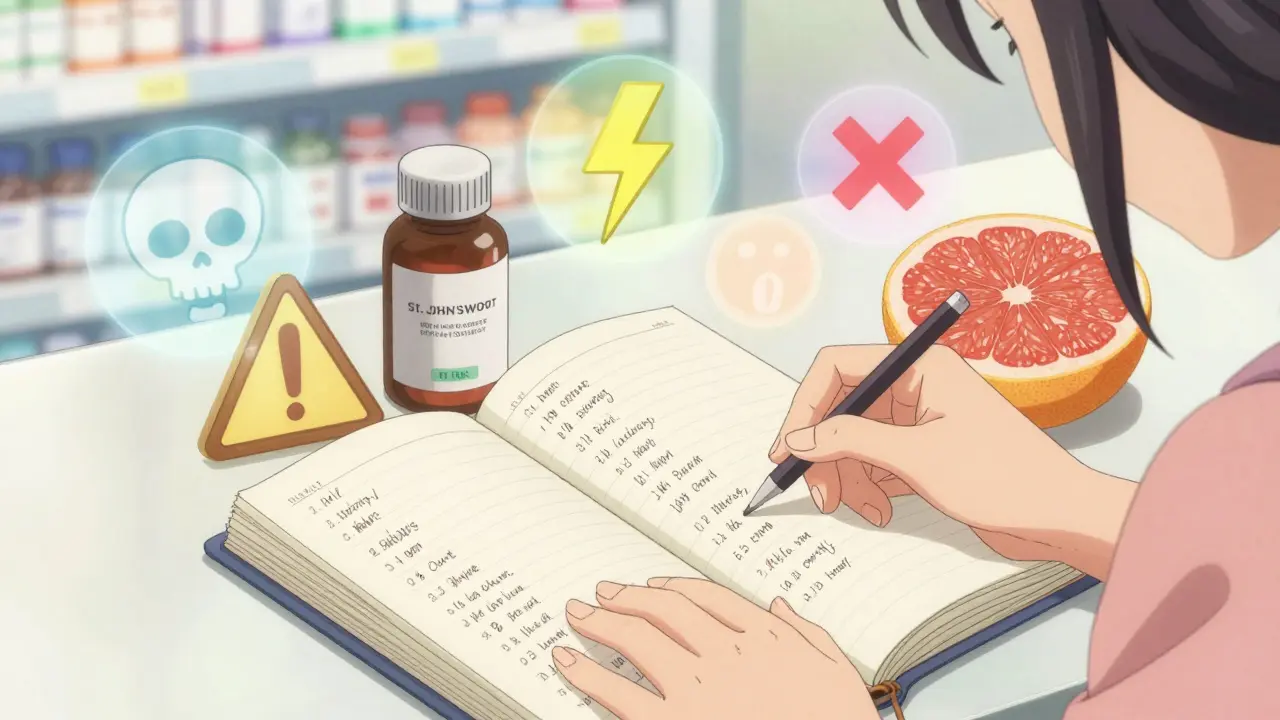
What to Bring to Your Pharmacy Visit
You wouldn’t go to a mechanic without your car keys. Don’t go to the pharmacy without your full list. Bring:- All prescription bottles (or a list with names, doses, and how often you take them)
- Every supplement, vitamin, or herbal product you use-even if you think it’s “natural” and safe
- Over-the-counter meds you take regularly (like aspirin, ibuprofen, or antacids)
- A list of any allergies or past reactions to meds
- Your phone, so you can show them your pharmacy app if you use one
What Happens When You Don’t Ask
A 2023 review of 1,247 patient reviews on Healthgrades found that 63.8% of people who had bad reactions to meds said they weren’t warned about interactions. Common complaints:- “I didn’t know grapefruit juice was off-limits until I got sick.”
- “My pharmacist didn’t ask what else I was taking.”
- “I took my thyroid pill with my calcium supplement-and it didn’t work for weeks.”
How to Keep Track After the Visit
After you leave the pharmacy, update your list. Write down:- What you were told to avoid
- What time to take each med
- What symptoms to watch for
- Who to call if something feels off
What’s Changing in 2026
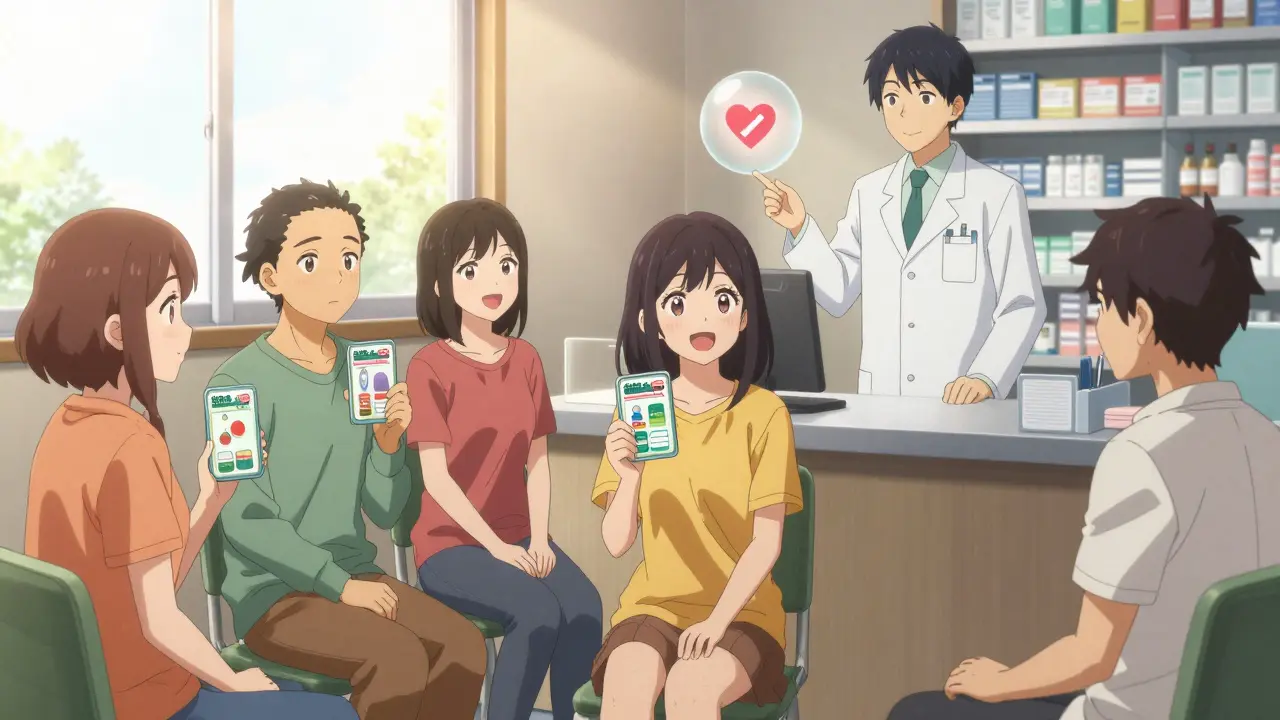
Pharmacies are starting to use tools that show your personal interaction risks on a simple visual chart-like a “medication passport.” Some apps now let you scan your pills and get instant alerts. The FDA now lets you report bad reactions directly through their app. And for the first time in 2023, genetic testing is being used to predict how your body will handle certain drugs. But none of that replaces a real conversation. Technology helps. But it doesn’t replace a pharmacist who looks you in the eye and says, “Let’s make sure this won’t hurt you.”Don’t assume someone else is watching out for you. You’re the only one who knows your whole story-the supplements you take, the wine you drink, the times you forget a pill. Be the person who asks the questions. Because when it comes to your health, silence isn’t safety. It’s risk.
Can I just check medication interactions online instead of asking my pharmacist?
Online tools can help, but they’re not foolproof. Apps and websites only catch about 63% of clinically significant interactions. They don’t know your full history-like whether you take calcium supplements at night or drink grapefruit juice every morning. Pharmacists have access to your complete record and can give personalized advice based on your body, lifestyle, and other conditions. Never rely on an app alone.
Do I need to tell my pharmacist about herbal supplements?
Yes, absolutely. Herbal products like St. John’s Wort, garlic pills, or ginkgo biloba can interact with prescription drugs just like regular medications. St. John’s Wort, for example, can make birth control, antidepressants, and blood thinners less effective. These aren’t regulated like drugs, so their strength and ingredients can vary. Your pharmacist needs to know exactly what you’re taking-even if you think it’s “natural.”
What if I forget to take my medication? Does that increase interaction risk?
Yes. Missing doses can throw off your body’s balance and make interactions more likely. For example, if you take warfarin irregularly, your blood clotting levels become unpredictable. If you skip your statin and then take it with grapefruit juice later, your risk of side effects spikes. Always ask your pharmacist what to do if you miss a dose-don’t guess.
Can my pharmacist help if I can’t afford my meds?
Yes. If cost is making you skip doses or switch between brands, your pharmacist can help. Many have access to copay cards, patient assistance programs, or generic alternatives that won’t change your interaction risk. Sometimes switching from a brand to a generic version is safe and saves money. But only your pharmacist can confirm whether the switch is safe for your specific meds.
Why don’t pharmacists always tell me about interactions upfront?
Many pharmacies are rushed. Pharmacists are often juggling 20+ prescriptions at once. They rely on automated systems to flag major risks, but they can’t explain every possible interaction unless you ask. It’s not negligence-it’s a system under pressure. That’s why you need to speak up. Your health is worth the extra two minutes.
Should I ask about interactions every time I pick up a new prescription?
Yes. Even if you’ve taken the same meds for years, something new can change everything. A new blood pressure pill, a different painkiller, or even a new supplement can create a risk you didn’t have before. Always assume any new med could interact-and ask every time.
What if I don’t understand the answer my pharmacist gives?
Say so. Ask them to explain it again in simpler terms. You can say, “Can you explain that like I’m 10?” or “Can you give me an example?” Most pharmacists are happy to clarify. If they seem rushed or dismissive, ask to speak with another pharmacist or schedule a short consultation. You have the right to understand your meds.
Beth Templeton
Pharmacists aren't magic. They're overworked and underpaid. You still need to read the damn leaflet.