
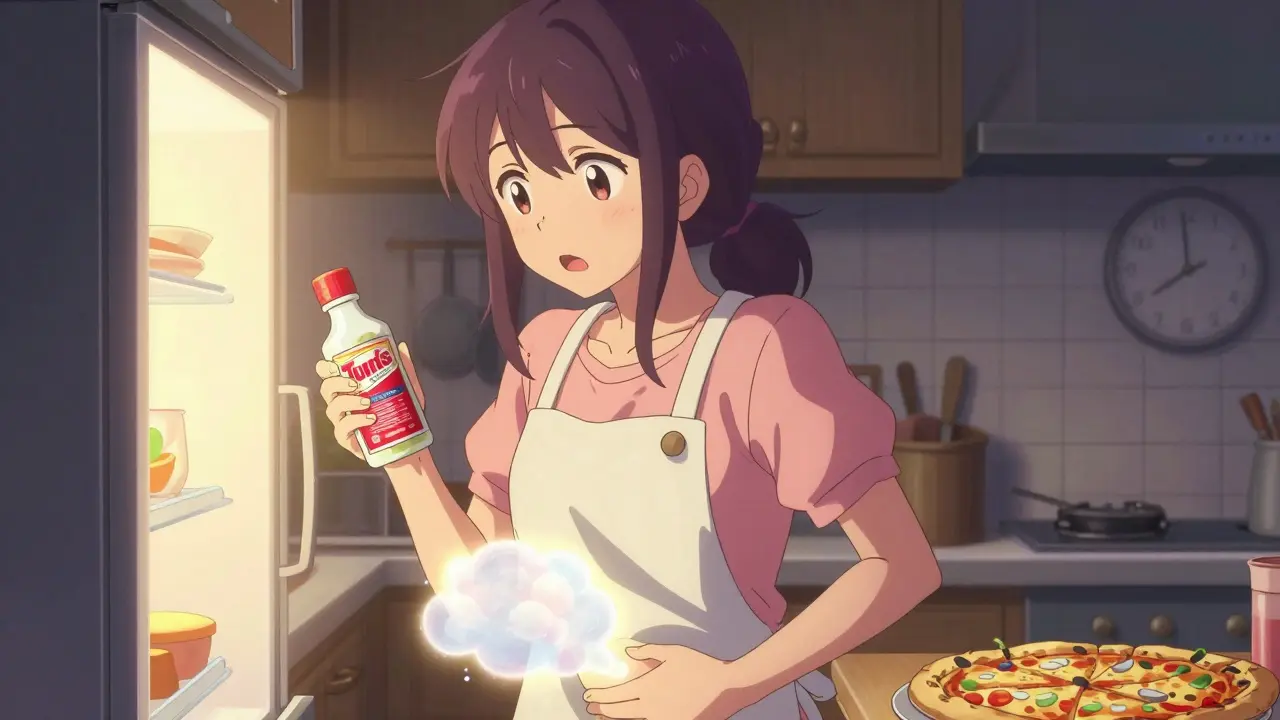
What’s really going on when you get heartburn?
Heartburn isn’t a disease-it’s a symptom. That burning feeling behind your breastbone? It’s stomach acid creeping up into your esophagus. Your stomach is built to handle acid. Your esophagus isn’t. When this happens often-two or more days a week-it’s likely GERD. But for most people, it’s just occasional discomfort after a big meal, spicy food, or late-night snack. That’s where OTC heartburn meds come in. There are three main types: antacids, H2 blockers, and PPIs. Each works differently. Each has a time and place. And using the wrong one can make things worse.
Antacids: Fast but fleeting relief
If you’ve ever popped a Tums after eating too much pizza, you’ve used an antacid. These are the oldest and simplest heartburn remedies. They work by neutralizing acid right where it is-like pouring baking soda into a fizzy drink. Calcium carbonate, magnesium hydroxide, and aluminum hydroxide are the common ingredients. Tums, Rolaids, and Maalox are household names.
Here’s the catch: they work fast, but they don’t last. You’ll feel relief in under a minute. But within 30 to 60 minutes, the acid comes back. That’s why people end up taking three or four tablets in an hour. It’s not wrong-it’s just not sustainable for frequent heartburn.
Antacids are perfect for occasional heartburn: once a week, maybe twice. But they’re useless if you’re getting heartburn every night. And they can cause side effects. Calcium-based antacids might lead to constipation or rebound acid production. Magnesium-based ones can cause diarrhea. And if you’re on other meds, antacids can interfere. Take them at least two hours before or after any other pill.
H2 blockers: Slower, steadier, and good for predictable heartburn
H2 blockers-like Pepcid AC and Tagamet HB-don’t neutralize acid. They tell your stomach to make less of it. They block histamine, a chemical that signals acid-producing cells to kick into gear. Think of it like turning down the volume on your stomach’s acid factory instead of putting out the fire.
They take longer to work-about an hour. But once they do, they last 8 to 12 hours. That makes them ideal for planned heartburn: before a big dinner, after drinking alcohol, or if you know you’ll be lying down soon. Many people take them at bedtime to prevent nighttime heartburn.
Studies show H2 blockers reduce acid by 60-70%. That’s good, but not as strong as PPIs. And here’s something most people don’t know: they lose effectiveness after 2-3 weeks of daily use. Your body gets used to them. That’s why they’re not meant for long-term daily use. If you’re taking Pepcid every day for a month, you’re probably better off switching to a PPI-or seeing a doctor.
PPIs: The heavy lifters for frequent heartburn
Proton pump inhibitors-Prilosec OTC, Nexium 24HR, Prevacid 24HR-are the most powerful OTC heartburn meds. They don’t just reduce acid. They shut down the acid pumps in your stomach cells. That’s why they suppress 90-98% of acid production.
But here’s the big twist: they don’t work right away. You won’t feel relief the first day. It takes 2 to 3 days of daily use to build up full effect. That’s why people give up on them too soon. They take one pill, feel nothing, and think it’s broken. Nope. You have to take it consistently-every morning, 30 to 60 minutes before breakfast-for 14 days straight to see real results.
PPIs are meant for frequent heartburn: two or more days a week. They’re not for occasional discomfort. And they’re not for emergency relief. If you’re having sudden, severe heartburn, reach for an antacid. Save the PPI for when it’s happening regularly.
But there’s a cost. Long-term use carries risks. The FDA warns about possible links to low magnesium, vitamin B12 deficiency, kidney problems, and even bone fractures. One study found a 35% higher risk of hip fracture in people who took PPIs daily for over a year. Another showed a 1.7x higher chance of C. diff infection. These aren’t common-but they’re real. That’s why the label says: “Do not use for more than 14 days without talking to your doctor.”

Which one should you pick?
It’s not about which is “best.” It’s about which fits your situation.
- Occasional heartburn (less than once a week): Antacids. Quick, cheap, effective for a single episode.
- Predictable heartburn (1-2 times a week): H2 blockers. Take it 30-60 minutes before meals or bedtime. Works well for planned triggers.
- Frequent heartburn (2+ days a week): PPIs. Take daily for 14 days. Don’t skip doses. Don’t expect instant relief.
Many people mix them. Use a PPI for daily control, then grab an antacid if breakthrough symptoms hit. That’s actually recommended by gastroenterologists. About 68% of frequent users do exactly that.
What no one tells you about using these meds
Timing matters more than you think.
Antacids? Take them when you feel the burn. No need to plan.
H2 blockers? Take them 30-60 minutes before you expect trouble. Taking them after the burn starts? Less effective.
PPIs? You must take them before food. Ideally, 30-60 minutes before breakfast. Why? That’s when your stomach’s acid pumps are waking up. If you take them after eating-or worse, with orange juice-they won’t absorb right. The coating can break down. The pill becomes useless.
Also: don’t crush, chew, or split PPI tablets. They’re enteric-coated for a reason. They’re designed to dissolve in the intestine, not the stomach. If you break the coating, you’ll get no relief-and maybe stomach upset.
When to stop and see a doctor
OTC meds are great for mild, short-term issues. But they’re not a substitute for diagnosis.
See a doctor if:
- Your heartburn keeps coming back after 14 days of PPI use
- You have trouble swallowing, unexplained weight loss, or vomiting blood
- You’re over 50 and just started getting heartburn
- You’re taking PPIs for more than 3 months without medical advice
- You’re on other meds like blood thinners, anti-seizure drugs, or antibiotics-PPIs and H2 blockers can interfere
Heartburn can be a sign of something bigger: ulcers, hiatal hernias, or even esophageal cancer. If OTC meds aren’t working, it’s not you failing-it’s your body asking for help.
The real cost of cheap relief
Antacids cost $3-$6 a pack. H2 blockers are $10-$15. PPIs? Brand names run $20-$25. But generic versions-like those from Curist or store brands-are $5 or less. You’re not saving money by choosing the cheapest option. You’re saving by choosing the right one.
Buying a $20 PPI and taking it for 3 months because you didn’t know how to use it? That’s wasted money. And worse, it’s wasted risk.
Most people don’t realize how often they’re overusing PPIs. One study found 43% of users go past the 14-day limit. That’s not just risky-it’s unnecessary. Most heartburn can be managed with lifestyle changes: smaller meals, no lying down after eating, cutting back on coffee and alcohol.
What’s next for heartburn meds?
There’s new stuff coming. Potassium-competitive acid blockers (P-CABs), like vonoprazan, are already used in Japan and Europe. They work faster than PPIs and may have fewer long-term risks. But as of late 2023, none are approved for OTC use in the U.S.
Meanwhile, the FDA is watching closely. In 2022-2023, they issued 17 warning letters to manufacturers for unclear safety labels. They’re asking: Is it safe to let people buy PPIs like candy?
For now, the answer is yes-but only if you use them right. Antacids for quick fixes. H2 blockers for predictable flare-ups. PPIs for frequent heartburn-and only for two weeks at a time.
Final thought: Don’t treat symptoms. Treat the pattern.
Heartburn isn’t random. It’s a clue. What are you eating? When? How late? Are you stressed? Are you lying down right after dinner?
Medication can help. But understanding your triggers? That’s the real cure. Use OTC meds as tools-not crutches. And if you’re still struggling after 14 days? Talk to someone who can help.
Can I take antacids and PPIs together?
Yes, it’s safe and often recommended. Use the PPI for daily acid control and the antacid for sudden breakthrough symptoms. Just make sure to take the antacid at least two hours before or after the PPI to avoid interference with absorption.
Why does my PPI not work the first day?
PPIs don’t neutralize acid-they shut down the acid pumps in your stomach. Those pumps need time to be fully inhibited. It takes 2 to 3 days of daily use to reach maximum effect. Don’t give up after one dose.
Is it okay to take H2 blockers every day?
Not long-term. H2 blockers lose effectiveness after 2-3 weeks of daily use. Your body adapts. If you need daily relief beyond that, switch to a PPI-or talk to your doctor. Daily H2 blockers are meant for short-term, predictable triggers, not chronic conditions.
Can OTC heartburn meds cause long-term damage?
PPIs, if used for more than a year without medical supervision, are linked to risks like low magnesium, vitamin B12 deficiency, kidney issues, and bone fractures. H2 blockers have fewer long-term risks but can lose effectiveness. Antacids are generally safe but can cause digestive side effects like constipation or diarrhea. Always follow label instructions.
What’s the cheapest effective option?
Generic antacids like calcium carbonate (store-brand Tums) cost under $5. Generic H2 blockers like famotidine (Pepcid AC) are around $8 for a 30-day supply. Generic PPIs like omeprazole are now under $5 for 14 tablets. The cheapest option is the one you use correctly-not the one you buy because it’s cheap.
Sheryl Dhlamini
I used to take PPIs like candy until I started getting weird muscle cramps and felt like my bones were turning to dust. Then I switched to H2 blockers before dinner-and guess what? No more midnight burning, and my doctor said my magnesium levels are back to normal. Life-changing. Seriously.