
When you're pregnant, falling asleep might seem easy-until you can't breathe, your stomach burns, or you wake up every hour wondering why your body feels like it's working against you. Sleep isn't just about rest anymore. It becomes a battle against physiological changes your body didn't ask for. Obstructive sleep apnea (OSA) affects 10.5% of pregnant women by the third trimester, and that number jumps to nearly 27% if you're overweight. Untreated, it doesn't just leave you tired-it raises your risk of preeclampsia by more than double, gestational diabetes by 70%, and the chance of needing a C-section by over 20%. This isn't normal fatigue. This is a medical issue that needs attention.
Why Sleep Gets Harder During Pregnancy
Your body changes fast during pregnancy, and your airway is no exception. Hormones like progesterone relax the muscles in your throat, making it easier for your airway to collapse when you lie down. At the same time, fluid retention swells the tissues in your nose and throat. Your growing uterus pushes up on your diaphragm, leaving less room for your lungs to expand. By the third trimester, your neck circumference may increase by 2-4 cm, which alone is enough to trigger sleep apnea in many women.Then there’s reflux. The same hormones that relax your throat also relax the valve between your stomach and esophagus. Lying flat lets stomach acid creep up, burning your chest and throat. You might think propping yourself up with a few pillows helps-but if you stack them under your head, you’re actually bending your neck and worsening airway obstruction. The right position matters more than you think.
Diagnosing Sleep Apnea: Don’t Rely on Snoring Alone
Many women assume snoring is just part of being pregnant. But not all snorers have sleep apnea. In fact, studies show only about 12.3% of pregnant women who report snoring actually meet the clinical criteria for OSA. That’s why self-diagnosis doesn’t work. The American College of Obstetricians and Gynecologists now recommends screening all pregnant women using the STOP-Bang questionnaire at the 28-week visit. It asks about snoring, tiredness, observed breathing pauses, high blood pressure, BMI, age, neck size, and gender. A score of 3 or higher means you should get tested.The gold standard test is a sleep study-either in-lab polysomnography or a home sleep apnea test (HSAT). These measure how often your breathing stops or slows, how low your oxygen drops, and how often you wake up. A normal AHI (Apnea-Hypopnea Index) is under 5. If it’s 15 or higher, you have moderate to severe sleep apnea. If it’s between 5 and 14, it’s mild. The key? Don’t wait until you’re exhausted. If you’re waking up gasping, have morning headaches, or your partner says you stop breathing, get checked before 28 weeks. Every week counts.
CPAP: The Most Effective Treatment
If you’re diagnosed with moderate or severe sleep apnea, CPAP (Continuous Positive Airway Pressure) is the first-line treatment-and it works. Studies show CPAP reduces your AHI by 78% on average. More importantly, it lowers your risk of preeclampsia by 30% and gestational hypertension by 35% when started between 24 and 28 weeks.But it’s not always easy. Many women stop using it because of discomfort. The mask can feel claustrophobic. Nasal dryness is common. Facial swelling makes standard masks leak. That’s why modern devices now have pregnancy-specific settings. ResMed’s AirSense 11 Pregnancy Mode, cleared by the FDA in 2022, automatically adjusts pressure based on your changing breathing patterns. The AirTouch F20 Pregnancy Edition, launched in 2023, uses a softer silicone cushion designed for swollen facial tissue. Humidifiers set to 37°C help keep nasal passages moist.
Adherence is the real challenge. Only about 62% of pregnant women stick with CPAP past four weeks. But in clinics that offer hands-on support-like a 30-minute fitting session, weekly check-ins, and access to a sleep coach-adherence jumps to 82%. Use nasal pillows instead of full-face masks if your nose is congested. Try a heated hose to prevent condensation. And don’t give up after the first bad night. Most women adapt within 7-14 days.
Positioning: The Simple Fix You Might Be Doing Wrong
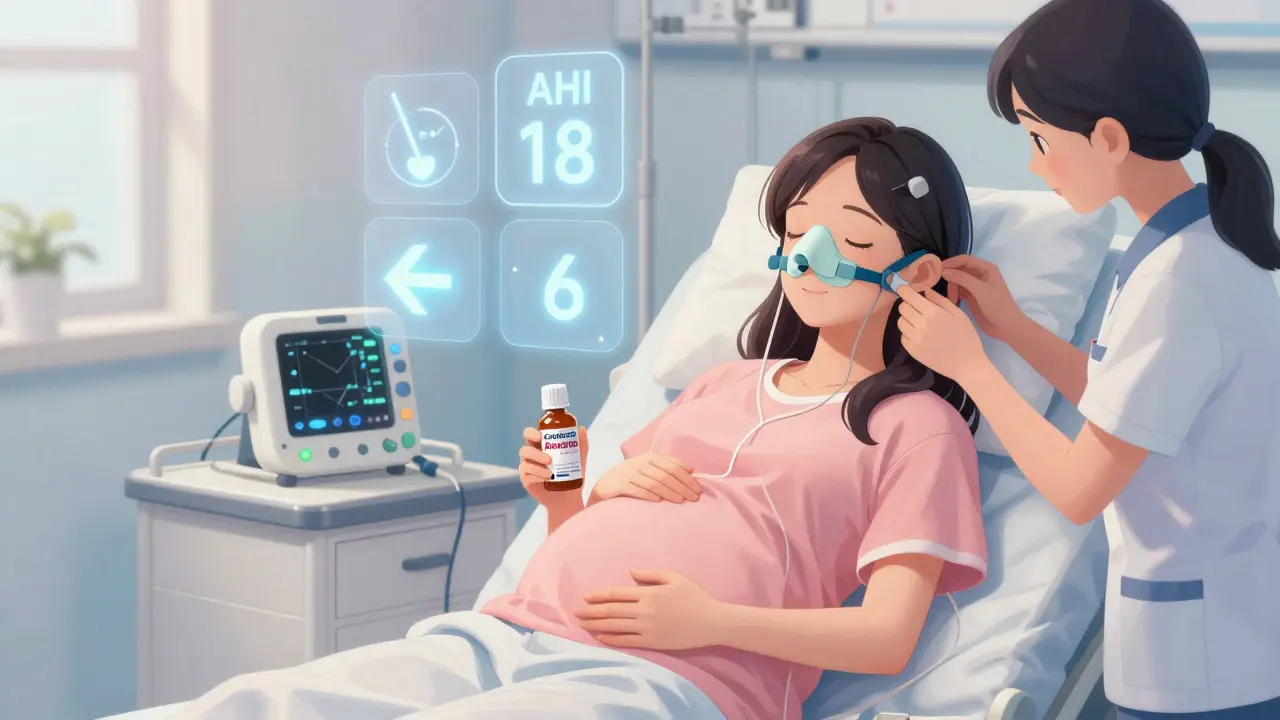
If you have mild sleep apnea or are waiting to start CPAP, position matters more than you think. Sleeping on your back is the worst option-it increases airway collapse by up to 50%. The left side is ideal. Why? It takes pressure off the vena cava, improves blood flow to the placenta, and reduces the chance of your uterus pushing against your diaphragm.But you can’t just roll to your side and hope for the best. You need support. A full-body pregnancy pillow-like the Leachco Full Body Pillow Pro-holds your knees, belly, and back in alignment. Studies show this alone can reduce your AHI by 22.7% in mild cases. Combine it with elevating your upper body. Don’t use stacked pillows under your head. Instead, use a wedge pillow under your torso, angled at 15-30 degrees. This lifts your chest, opens your airway, and keeps stomach acid down.
One user on Reddit said: “Finally a pillow that keeps me on my side without sliding-and my AHI dropped from 18 to 6 in 2 weeks.” That’s not luck. That’s biomechanics.
Managing Reflux Without Making Apnea Worse
Heartburn is common, but how you handle it can make sleep apnea worse. Many women try to sleep with their head higher to stop the burn. But if you just prop up your head, you’re bending your neck and tightening your airway. That’s like putting a kink in a hose.The right way? Elevate your entire upper body. Use a wedge pillow under your torso, not under your head. Keep your head, neck, and spine in a straight line. Avoid eating within three hours of bedtime. Skip spicy, fatty, or acidic foods. Drink water between meals, not with them.
For relief, choose Gaviscon Advance. It forms a protective foam barrier on top of stomach acid without being absorbed into your bloodstream-unlike antacids with aluminum or magnesium, which aren’t recommended in pregnancy. A 500ml bottle costs around $15 and lasts weeks. Use it 30 minutes after dinner and again before bed if needed.
What Doesn’t Work (and Why)
Some solutions you’ve seen online aren’t safe or proven for pregnancy. Mandibular advancement devices (mouthpieces that push your jaw forward) reduce apnea in non-pregnant people-but they’re not recommended during pregnancy. Why? Your jaw and TMJ are already changing due to hormones. Forcing your jaw into a new position could cause lasting pain or damage. The Society of Anesthesia and Sleep Medicine explicitly advises against them.Similarly, weight loss isn’t recommended during pregnancy. But staying within the Institute of Medicine’s guidelines helps. If you were normal weight before pregnancy, aim for 11.5-16 kg total gain. If you were overweight, aim for 5-9 kg. Gaining too much increases pressure on your airway. Focus on balanced meals, not restriction.
What Happens After Baby Arrives?
Many women assume their sleep apnea disappears after delivery. It often improves-but not always. A 2023 study found that 58% of women who had OSA during pregnancy developed chronic high blood pressure within 10 years, even if their sleep apnea resolved. That’s why some clinics, like Brown Health, recommend a follow-up sleep study at 12 weeks postpartum. If you still snore, feel tired, or have high blood pressure after delivery, don’t ignore it. Pregnancy-induced OSA can be a warning sign of future cardiovascular issues.Real Talk: What Women Actually Experience
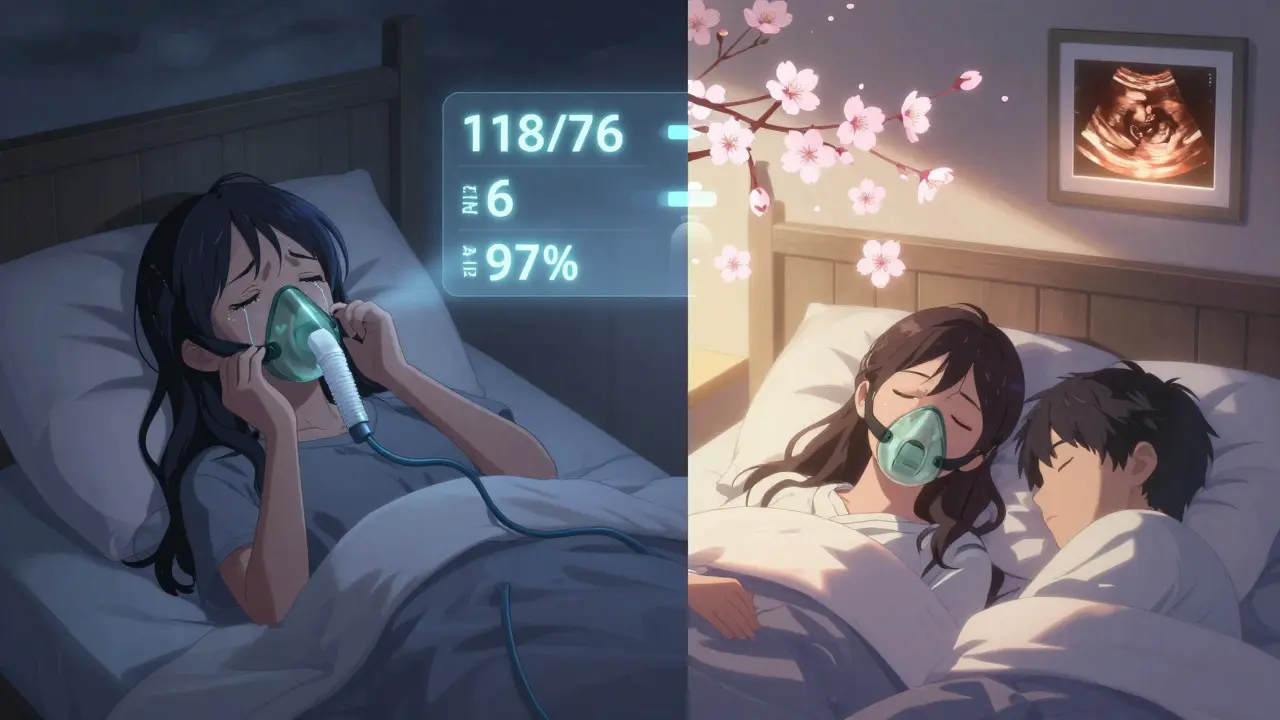
On SleepAdvisor.org, 78% of women using CPAP during pregnancy reported improved energy. 63% said morning headaches disappeared. But 41% complained about mask leaks. 33% said the machine woke their partner. 29% couldn’t stay in position.One woman in Philadelphia said: “I cried the first night. It felt like a torture device. But after two weeks, I slept like I hadn’t in months. My blood pressure went from 145/95 to 118/76.”
Another: “I didn’t think I needed help. I just thought I was tired because I was pregnant. Then I had a pre-eclampsia scare at 32 weeks. My doctor said, ‘Your sleep study showed severe OSA. This wasn’t fatigue. This was a medical emergency.’”
That’s the reality. Sleep apnea during pregnancy isn’t about comfort. It’s about safety-for you and your baby.
What You Can Do Today
- Ask your OB-GYN for a sleep screening at your next visit-even if you feel fine.
- If you snore, wake up gasping, or feel exhausted despite 8+ hours of sleep, get tested.
- Start sleeping on your left side with a full-body pillow and a wedge under your torso.
- Stop eating 3 hours before bed. Avoid caffeine after noon.
- If CPAP is recommended, don’t delay. Starting between 24-28 weeks gives you the best chance to prevent complications.
- Use a humidifier with your CPAP. Choose nasal pillows if your nose is swollen.
- Try Gaviscon Advance for reflux-not regular antacids.
Is sleep apnea common during pregnancy?
Yes. About 10.5% of pregnant women in their third trimester have obstructive sleep apnea, and that number rises to nearly 27% in those with a BMI over 30. It’s not rare-it’s underdiagnosed.
Can I use a mouthguard for sleep apnea while pregnant?
No. Mandibular advancement devices are not recommended during pregnancy. Hormonal changes can affect your jaw and temporomandibular joint, and these devices may cause lasting discomfort or damage. CPAP and positional therapy are safer and better studied.
Do pregnancy pillows really help with sleep apnea?
Yes-for mild cases. Using a full-body pillow to maintain left-side positioning can reduce your apnea-hypopnea index (AHI) by over 22%. But if your AHI is above 15, you’ll still need CPAP. Pillows help, but they don’t replace medical treatment.
How long does it take to get used to CPAP during pregnancy?
Most women adapt within 7-14 days. The first few nights are tough-mask leaks, dry nose, feeling claustrophobic. But clinics with follow-up support (like checking in on day 3 and day 7) see 92% of patients using it consistently after two visits. Don’t quit after one bad night.
Should I get a sleep study after giving birth?
If you had sleep apnea during pregnancy, yes. Even if symptoms disappeared, 58% of women develop chronic high blood pressure within 10 years. A follow-up sleep study at 12 weeks postpartum helps catch early signs of long-term cardiovascular risk.
Suzette Smith
Okay but have we talked about how CPAP machines are basically tiny alien devices that invade your personal space? I used one for two weeks and my husband started sleeping in the guest room. Not because he’s mad, but because the noise sounds like a dying robot squirrel. I get the medical stuff, but why does it have to feel like I’m being interrogated by a sleep police drone?