
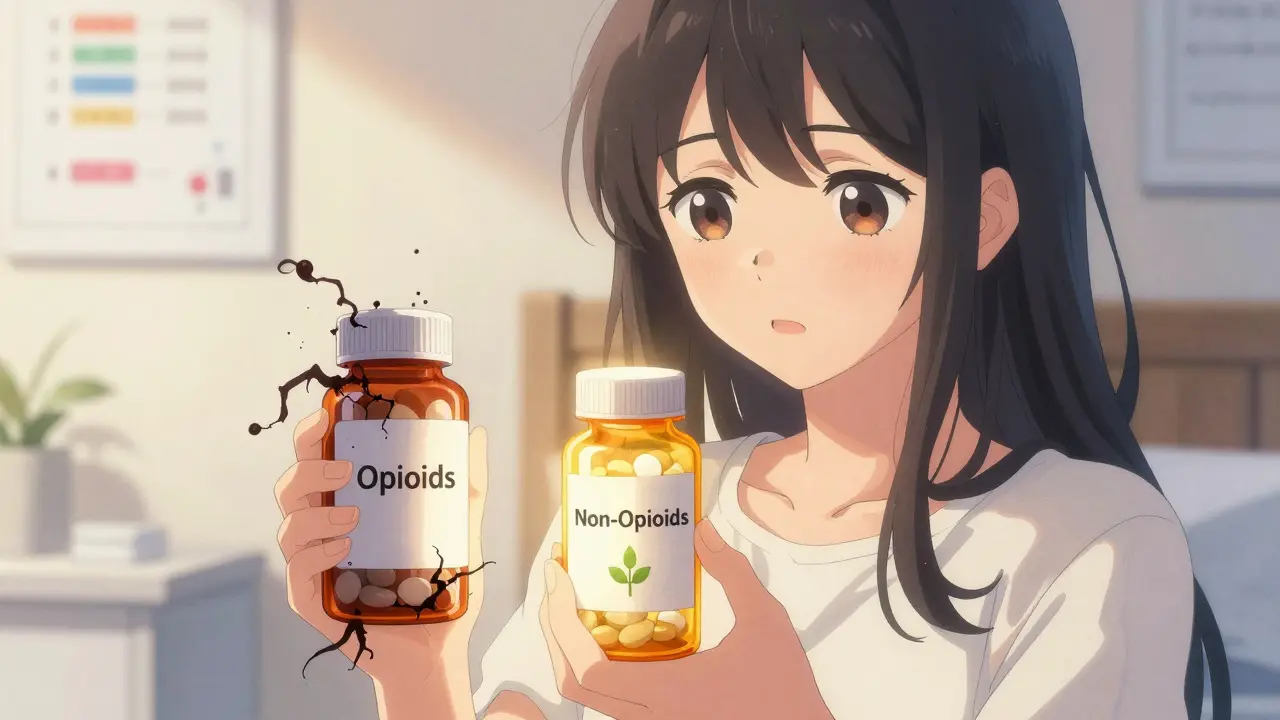
When you hurt - whether it’s a bad back, a sprained ankle, or chronic joint pain - the first thing you think about is relief. But not all pain meds are created equal. For decades, opioids like oxycodone and hydrocodone were the go-to solution. Now, doctors are changing their minds. Why? Because the risks often outweigh the benefits - especially for long-term pain. Meanwhile, non-opioid options like ibuprofen, acetaminophen, and even new FDA-approved drugs are proving just as effective, with far fewer dangers.
Why Opioids Are No Longer First Choice
Opioids work by binding to receptors in your brain and spinal cord, blocking pain signals. They’re powerful. But they also hijack your brain’s reward system. That’s why they’re so addictive. The CDC declared the opioid crisis a public health emergency in 2017. By 2021, over 80,000 Americans died from opioid overdoses. While the U.S. epidemic is the most visible, the pattern is global. In the UK, prescription opioid use has risen steadily, and so have hospital admissions for dependence.Here’s the hard truth: opioids don’t work better than non-opioids for chronic pain - and they’re much riskier. A major 2018 study called the SPACE trial followed 240 people with chronic back or knee pain for a full year. Half got opioids. Half got non-opioid meds like acetaminophen and NSAIDs. At the end of the year, pain levels were actually lower in the non-opioid group. Function didn’t improve more with opioids. But side effects? Way worse. Constipation, dizziness, nausea - those were common. And the risk of addiction? Real.
The 2022 CDC Clinical Practice Guideline says it plainly: non-opioid therapy should be the preferred treatment for subacute and chronic pain. Opioids? Only if everything else fails. And even then, start low, go slow, and never use them long-term without a clear plan.
The Hidden Dangers of Long-Term Opioid Use
Most people think the biggest danger of opioids is overdose. That’s true - but it’s not the only one. Long-term use quietly damages your body in ways you might not notice until it’s too late.A 2017 study of nearly 300,000 patients found that people taking opioids for more than 180 days over 3.5 years had a 2.66 times higher risk of having a heart attack. Even daily doses as low as 120 mg of morphine equivalents increased heart attack risk by 58%. That’s not a small number. It’s a red flag.
Why? Opioids cause inflammation, raise blood pressure, and slow heart rate. They also suppress breathing - a silent killer, especially at night. And they don’t just affect your heart. They can weaken your immune system, mess with your hormones, and cause severe constipation that leads to bowel obstructions. One study of 11,693 patients found current opioid users had a 28% higher chance of heart attack than non-users - even after adjusting for age, smoking, and other risk factors.
And then there’s dependence. Withdrawal isn’t just uncomfortable - it’s brutal. Sweating, shaking, nausea, insomnia, anxiety. Many people keep taking opioids not because they’re in pain, but because they can’t stand the withdrawal. That’s addiction. And it doesn’t care if you’re a nurse, a teacher, or a retired veteran. It happens to anyone.
How Non-Opioids Stack Up - And Why They Win
Non-opioid pain relievers include NSAIDs (like ibuprofen and naproxen), acetaminophen (paracetamol), and now, newer drugs like Journavx. These don’t touch your brain’s reward system. They don’t cause euphoria. They don’t lead to dependence.And they work. The SPACE trial already showed that. But let’s look at kids. In 2024, a major review in Pediatrics analyzed five clinical trials on children with acute pain - fractures, surgery, dental work. In every single trial, ibuprofen or acetaminophen worked just as well as morphine or codeine. But the opioid groups had way more side effects: vomiting, drowsiness, dizziness, even low oxygen levels. One study found over half of kids on codeine or tramadol got nauseous or constipated. No parent wants that.
For adults, the same pattern holds. A VA study of over 10,000 patients concluded: opioids were not superior to non-opioid approaches in terms of efficacy but were associated with significant side effects. That’s the bottom line. You’re not getting better pain control. You’re just getting more nausea, more drowsiness, more risk.
And now there’s Journavx. Approved by the FDA in March 2024, it’s the first new non-opioid painkiller in decades. It works differently - targeting inflammation at the source, not the brain. In two trials with 874 patients after surgery, Journavx reduced pain better than placebo. And when compared to opioids? No head-to-head trial yet, but its safety profile is clean: no respiratory depression, no addiction risk, no withdrawal. It’s not a magic bullet - but it’s a powerful tool in the toolbox.
What About NSAIDs and Acetaminophen? Are They Safe?
Yes - if you use them right.NSAIDs like ibuprofen and naproxen are great for inflammation-related pain: arthritis, sprains, menstrual cramps. But they’re not harmless. Long-term or high-dose use can cause stomach ulcers, kidney damage, and raise blood pressure. If you’re over 65, have kidney disease, or take blood thinners, talk to your doctor before using them daily.
Acetaminophen (paracetamol) is gentler on the stomach but hard on the liver. Taking more than 4,000 mg a day - even a few extra pills over time - can cause liver failure. Many cold and flu meds contain acetaminophen. If you’re stacking them, you could be overdosing without knowing it. Always check the label.
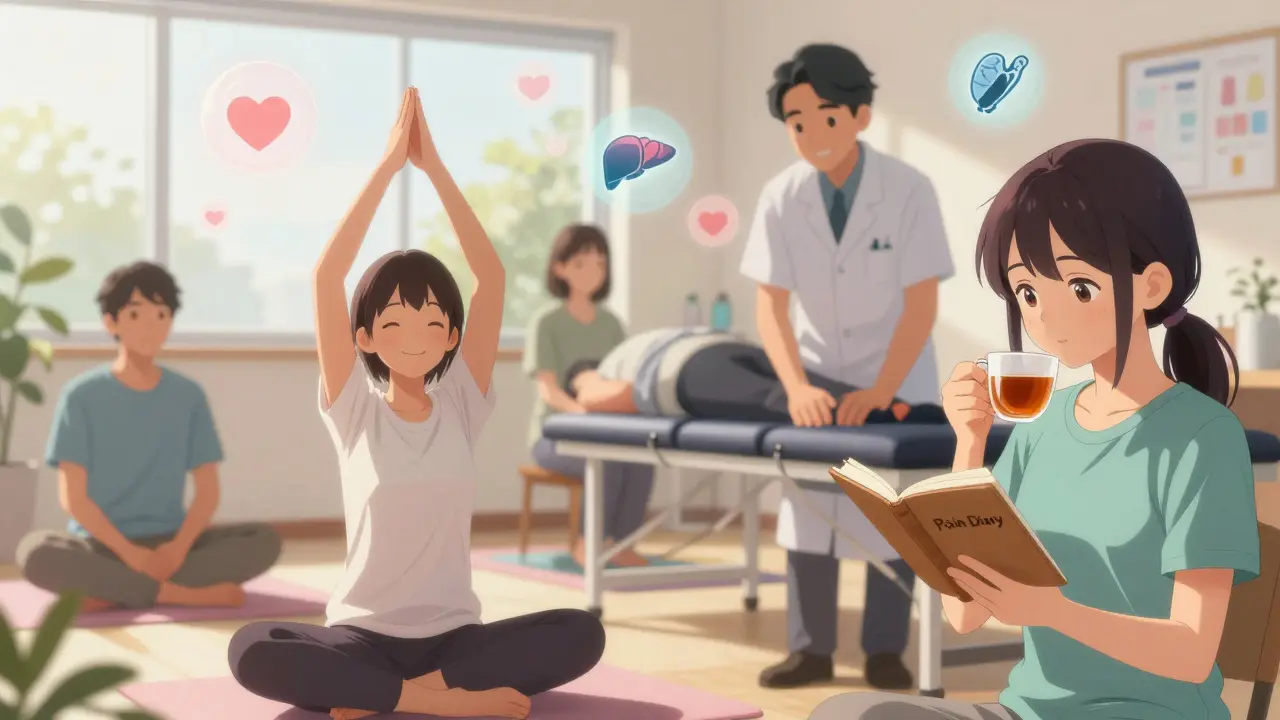
The key isn’t avoiding these drugs - it’s using them wisely. Short-term? Fine. Daily for months? Maybe not. Combine them with physical therapy, heat, ice, or exercise. That’s multimodal pain management. And it’s the new gold standard.

What the Guidelines Say - And What Doctors Are Doing
Major medical groups are aligned. The American College of Physicians, the CDC, the VA, and even the California Medical Board all say the same thing: try non-opioid treatments first. For chronic pain, opioids should be a last resort - not a first step.Doctors who still prescribe opioids long-term are being watched. In the UK, the NHS has tightened prescribing rules. Prescriptions for strong opioids have dropped by 15% since 2020. More GPs are referring patients to pain clinics, physiotherapists, and psychological support. Because pain isn’t just physical. It’s emotional. It’s sleep. It’s stress. Treating it requires more than a pill.
The message is clear: non-opioid pain relief is now the standard of care. If your doctor pushes opioids without trying safer options first, ask why. You have the right to know the risks - and the alternatives.
What You Can Do Today
You don’t need to suffer. You also don’t need to risk your life for relief. Here’s what works:- For acute pain (after injury or surgery): Start with ibuprofen or acetaminophen. Add ice or heat. Move gently if you can.
- For chronic pain (arthritis, back pain): Try physical therapy, weight management, or low-impact exercise like swimming or cycling. These reduce pain better than pills over time.
- If you’re on opioids: Don’t quit cold turkey. Talk to your doctor about tapering. Ask about non-opioid alternatives. You might feel better without them.
- Check your meds: Many OTC products contain acetaminophen. Don’t double-dose.
- Use pain diaries: Track what helps and what doesn’t. That gives you and your doctor real data - not guesswork.
The goal isn’t to eliminate all pain. It’s to live well despite it. And that’s possible - without opioids.
Are opioids ever safe for long-term pain?
Opioids are rarely safe for long-term non-cancer pain. The risks - addiction, overdose, heart damage, hormonal disruption - far outweigh the benefits for most people. The CDC and other medical bodies now recommend opioids only after non-opioid treatments have failed, and even then, only at the lowest effective dose for the shortest possible time. For chronic pain, they’re not a sustainable solution.
Can I just switch from opioids to ibuprofen?
Not without medical supervision. Stopping opioids suddenly can cause severe withdrawal. Your doctor needs to help you taper off slowly while introducing other pain relief methods - like NSAIDs, physical therapy, or nerve-targeted meds. Never switch on your own.
Is Journavx available in the UK?
As of late 2025, Journavx is approved in the U.S. but not yet available in the UK or EU. The MHRA (Medicines and Healthcare products Regulatory Agency) is reviewing it, but approval timelines vary. In the meantime, existing non-opioid options like NSAIDs, paracetamol, and topical treatments remain the standard.
What’s the safest painkiller for seniors?
For most older adults, low-dose acetaminophen is the safest first choice - if liver function is normal. NSAIDs like naproxen can be used occasionally but carry higher risks for stomach bleeding and kidney issues. Avoid opioids entirely unless for end-of-life or cancer pain. Always check for interactions with other meds like blood thinners or diuretics.
Do non-opioid painkillers work for severe pain?
Yes - often better than opioids. Studies show NSAIDs and acetaminophen work well for post-surgical pain, fractures, and even severe arthritis. Newer drugs like Journavx are designed for acute severe pain without opioid risks. For breakthrough pain, combining non-opioids with non-drug therapies (like nerve blocks or TENS units) often gives the best results.
Why do some doctors still prescribe opioids?
Some still do because they were trained that way, or because patients expect them. Others may lack access to pain specialists or physical therapy. But guidelines have changed. More doctors are now trained in non-opioid approaches. If your doctor pushes opioids without explaining why, ask for the evidence - and ask about alternatives.
Janette Martens
ok but like... opioids are evil??? what about my grandma who needs her oxycodone to even sit up??? you people act like pain is a choice. #CanadaStrong