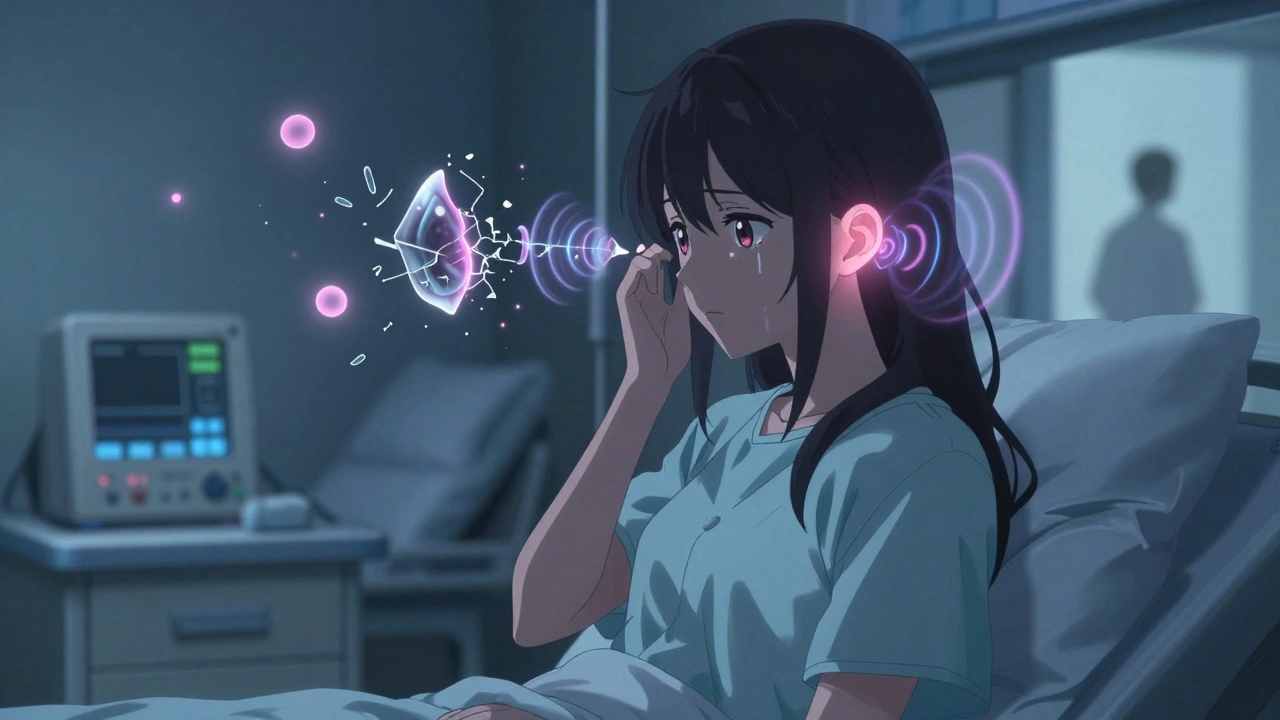
When you take an aminoglycoside, a class of powerful antibiotics used for serious infections like sepsis or pneumonia. Also known as gentamicin, tobramycin, or amikacin, these drugs save lives—but they can also quietly damage your ears. Unlike most side effects, aminoglycoside ototoxicity doesn’t go away when you stop the medicine. It’s often permanent, and many people don’t notice it until it’s too late.
This isn’t just about hearing loss. ototoxicity, the damage to the inner ear caused by certain drugs can wreck your balance too. You might feel dizzy, unsteady, or like the room is spinning—symptoms that get mistaken for aging or fatigue. The inner ear has tiny hair cells that pick up sound and movement. Once these are destroyed by aminoglycosides, antibiotics that accumulate in the inner ear fluid and kill those hair cells over time, they don’t grow back. That’s why doctors monitor kidney function and hearing during treatment. If your kidneys can’t clear the drug fast enough, it builds up and increases the risk.
Some people are more vulnerable. Older adults, people with kidney problems, or those already on other ototoxic drugs like loop diuretics or chemotherapy agents face higher danger. Even a short course—like five days for a severe infection—can be enough. And because the damage is often silent at first, you might not know until you can’t hear high-pitched sounds, struggle in noisy rooms, or start falling when you turn your head.
There’s no magic way to prevent it completely, but you can reduce your risk. Ask your doctor if there’s a safer alternative. If you must take an aminoglycoside, request baseline hearing tests before starting and check-ins during treatment. Keep track of ringing in your ears, muffled hearing, or dizziness—and speak up immediately. Don’t wait for it to get worse. These drugs are powerful tools, but they’re not risk-free. The same antibiotics that cure life-threatening infections can also steal your ability to hear your child’s voice or walk without stumbling.
Below, you’ll find real-world insights from people who’ve dealt with these side effects, guidance on spotting early warning signs, and how other medications and conditions can make things worse. This isn’t theoretical. It’s about protecting something you can’t afford to lose.