
Aminoglycoside Ototoxicity Risk Calculator
This calculator assesses your personal risk of developing hearing loss or balance problems from aminoglycoside antibiotics based on genetic factors, medical history, and lifestyle. The results can help you and your healthcare provider make informed decisions about treatment.
Based on your inputs, your estimated risk of developing significant hearing loss or balance issues from aminoglycoside therapy is low. However, you should still undergo baseline hearing testing and monitor for early symptoms.
Recommendations:
- Request baseline high-frequency audiometry before starting treatment
- Report any ringing in your ears or muffled hearing immediately
- Avoid loud environments during and for 2 weeks after treatment
- Monitor for symptoms daily
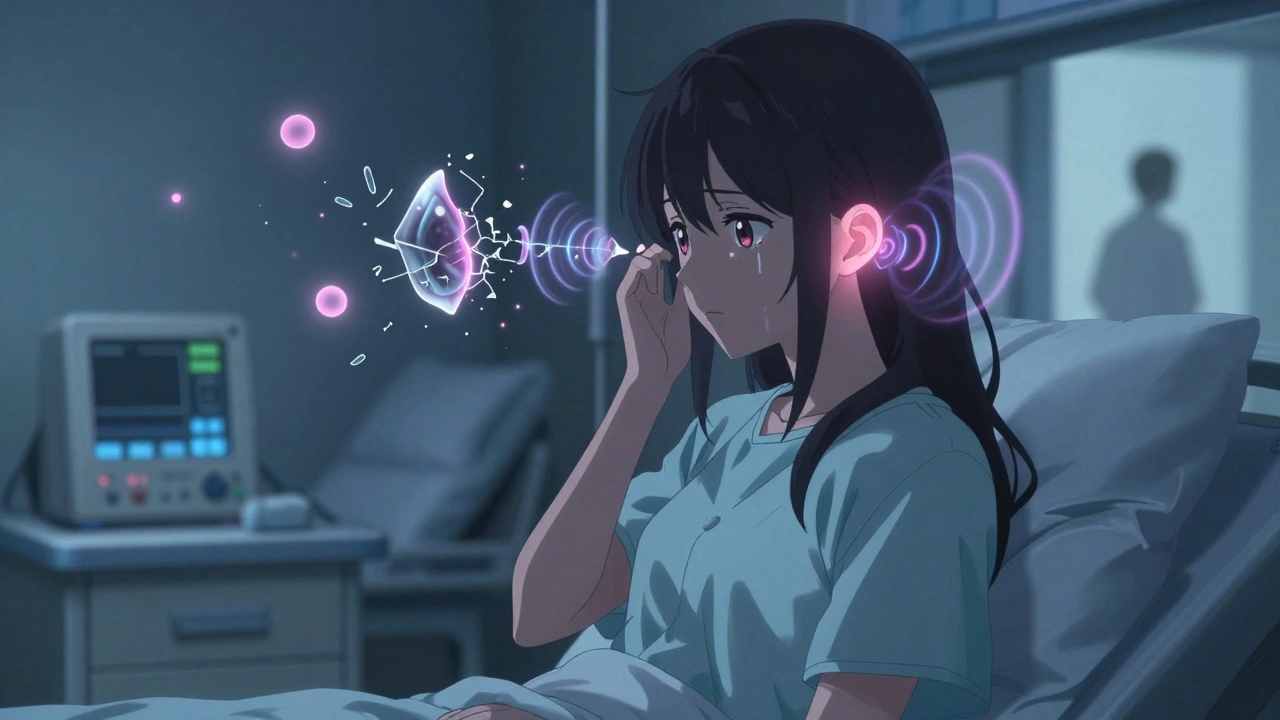
When you’re fighting a serious infection-like sepsis, multidrug-resistant tuberculosis, or a stubborn urinary tract infection-doctors reach for powerful antibiotics. Aminoglycosides like gentamicin, amikacin, and tobramycin are among the most effective. But for every life they save, they can quietly steal something just as vital: your hearing and balance. This isn’t rare. It’s not a side effect you hear about on TV ads. It’s a hidden danger that affects 20% to 47% of patients who get these drugs, often without warning.
How Aminoglycosides Damage Your Inner Ear
These antibiotics don’t just target bacteria. Once they enter your bloodstream, they find their way into the inner ear through the blood-labyrinth barrier, mostly via the stria vascularis. In some cases, they slip in through the round window membrane, especially if there’s an infection nearby. Inside the cochlea, they latch onto the delicate hair cells that turn sound waves into electrical signals your brain understands. These cells don’t regenerate. Once they’re gone, the hearing loss is permanent.The damage starts at the base of the cochlea, where high-frequency sounds are processed. That’s why patients often first notice trouble hearing birds chirping, children’s voices, or the letter ‘s’ in speech. It’s subtle at first. Then it spreads. The same process hits the vestibular system-those fluid-filled canals in your inner ear that help you stay balanced. About 15% to 30% of people on long-term aminoglycoside therapy end up with dizziness, unsteadiness, or even falls.
The mechanism isn’t simple. Aminoglycosides trigger a chain reaction: they overactivate NMDA receptors, flood cells with nitric oxide, and create a storm of free radicals. This leads to oxidative stress, which turns on cell death pathways. Unlike cisplatin, which mostly causes apoptosis (programmed cell death), aminoglycosides trigger both apoptosis and necrosis-messier, faster destruction. The hair cells don’t just fade away; they die violently.
Why Some People Are More at Risk
Not everyone who gets aminoglycosides loses their hearing. Genetics play a huge role. If you carry a mutation in your mitochondrial DNA-specifically the A1555G or C1494T variants in the 12S rRNA gene-you’re far more vulnerable. These mutations make your mitochondria behave like sponges for aminoglycosides, pulling them in and accelerating damage. The T1095C mutation can increase gentamicin-induced cell death by 47% compared to normal cells.That’s why genetic screening tools like OtoSCOPE® exist. They test for these mutations with over 94% accuracy. But here’s the problem: only a fraction of hospitals use them. In the U.S., just 37% have formal ototoxicity protocols. In low-income countries, it’s worse-often under 20%. So most people get these drugs without knowing if their body is ticking time bomb.
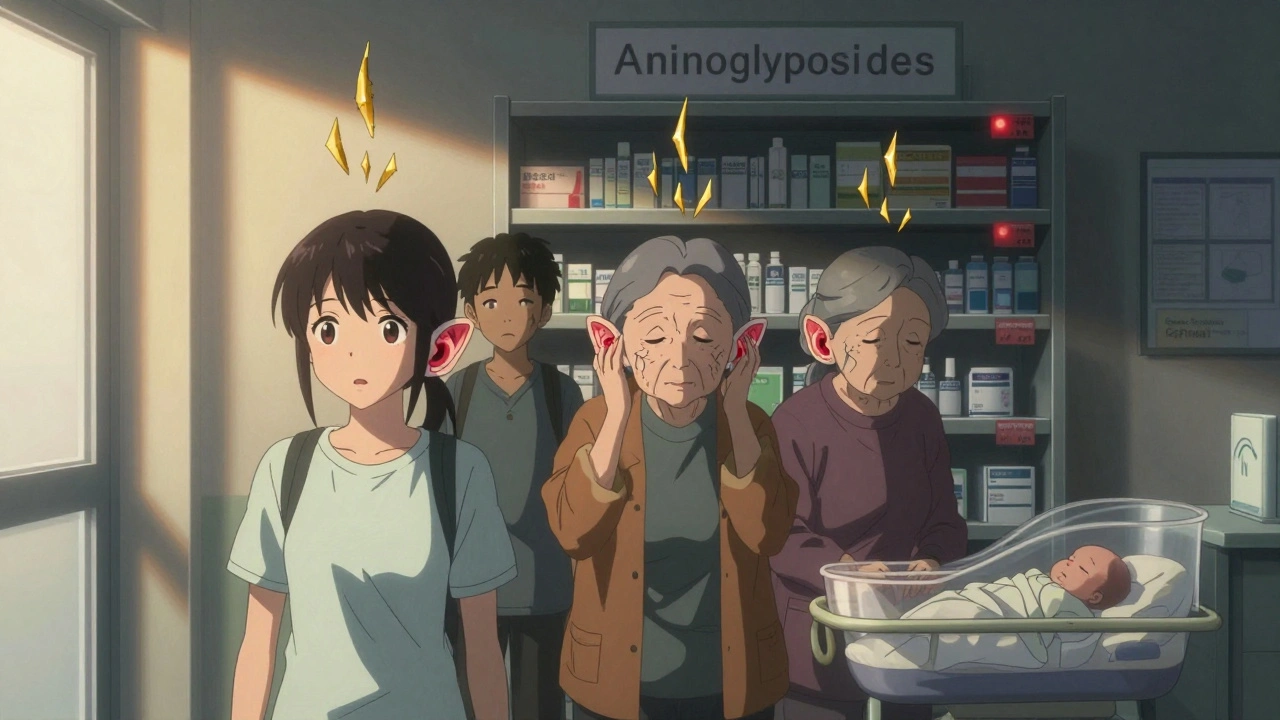
Other risk factors pile on. If you already have high-frequency hearing loss, you’re 3.2 times more likely to lose even more hearing after treatment. Noise exposure? It’s a multiplier. Loud sounds in the two months before or after aminoglycoside use can boost ototoxicity by 38% to 52%. Even a single night at a concert or a week of construction noise can make the difference between temporary and permanent damage.
And inflammation? It makes things worse. Endotoxins from infections can increase aminoglycoside uptake in the inner ear by 63%. So if you’re sick with a severe bacterial infection, your body’s own immune response might be helping the drug destroy your hearing.
What the Data Shows: Real Patient Stories
Behind the statistics are real lives. A 2022 survey of 217 patients on the Hearing Loss Association of America forum found that 89% were never warned about the risk before starting treatment. Seventy-four percent said their hearing loss made daily life harder-conversations became exhausting, social events avoided, jobs threatened.On Reddit’s r/audiology, 78% of 142 reported cases ended in permanent hearing loss. Sixty-three percent still had tinnitus years later. One case from Johns Hopkins involved a 34-year-old woman treated with gentamicin for urosepsis. After 10 days, she lost all balance function. It took 14 months of vestibular rehab just to walk without holding onto walls.
And it’s not just adults. Aminoglycosides are still used in newborns with sepsis, despite known risks. In neonatal ICUs, hearing loss from these drugs is one of the leading preventable causes of deafness.
Monitoring: The Only Tool We Have Right Now
There’s no cure once the damage is done. That’s why monitoring is critical. Standard hearing tests (0.25-8 kHz) miss early damage. High-frequency audiometry (9-16 kHz) catches it 5 to 7 days earlier. The American Speech-Language-Hearing Association recommends baseline testing within 24 hours of starting treatment, then every 48 to 72 hours.Therapeutic drug monitoring helps too. Keeping peak and trough levels in the safe range reduces ototoxicity risk by 28%. But again-this isn’t standard everywhere. In high-income countries, 63% of tertiary hospitals do it. In low-resource settings, it’s 18%.
Even when protocols exist, they’re often ignored. Nurses are overworked. Doctors assume the patient will notice if they lose hearing. But patients don’t always realize what’s happening until it’s too late. By the time they say, “I can’t hear my grandkids anymore,” the damage is irreversible.
What’s Being Done to Fix This
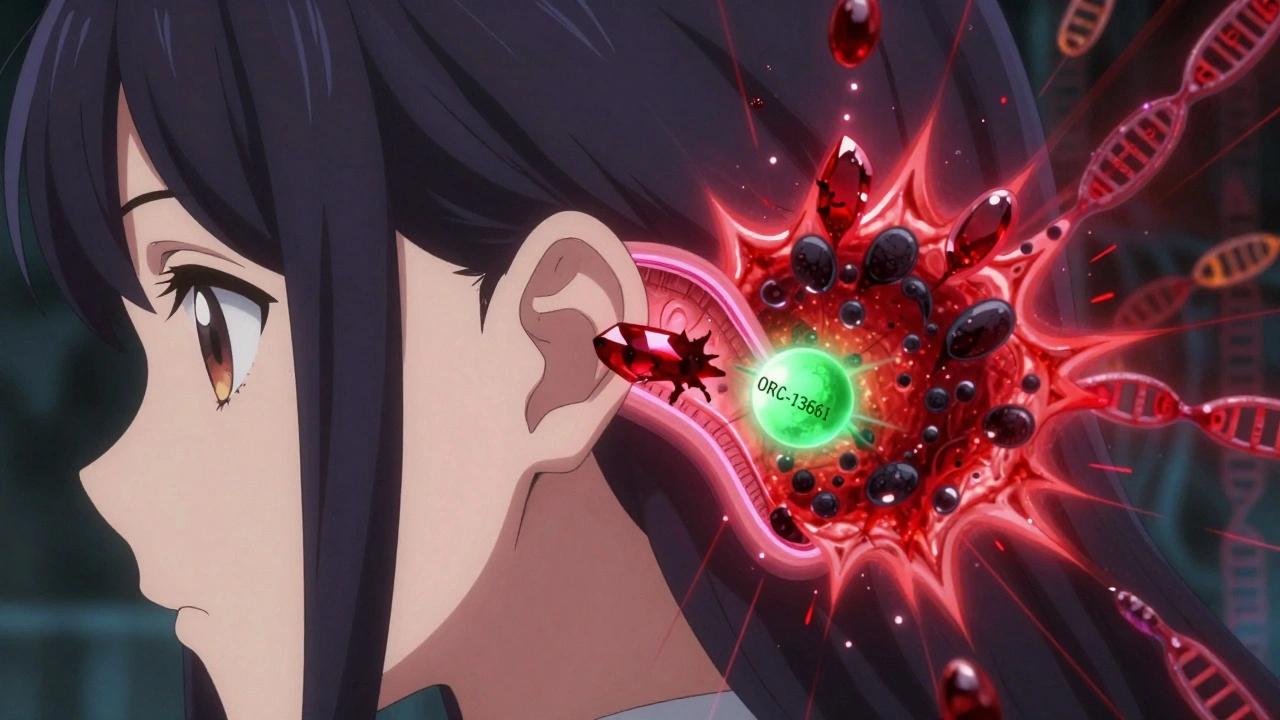
There’s hope. Researchers are racing to find ways to protect the ear without weakening the antibiotic’s power. One promising drug, ORC-13661, received FDA Fast Track designation in 2023. In Phase II trials, it preserved 82% of hair cells when given with amikacin. It’s not a cure, but it could be a shield.Other approaches target the MET channels in hair cells-the very entry points aminoglycosides use. Transtympanic injections (directly into the middle ear) of protective compounds have shown success in animal studies, preserving hearing by 25-30 dB across frequencies.
Gene therapy is on the horizon. The Hearing Restoration Project, backed by $28.7 million from the Oak Foundation, is testing ways to edit mitochondrial mutations in mice. Early results show a 67% drop in ototoxicity. If this works in humans, we could one day screen for genetic risk and prevent damage before the first dose.
The Bigger Picture: Profit vs. Protection
The global market for aminoglycosides is growing-projected to hit $3.15 billion by 2029, driven by antibiotic resistance. Meanwhile, the ototoxicity monitoring equipment market is growing at 8.7% annually. Companies like Otometrics and Interacoustics are making tools that work. But who pays for them?The FDA mandated black box warnings in 2021. The EMA requires genetic screening for long-term use. But enforcement? Patchy. In many hospitals, the cost of testing is seen as a barrier. In places where TB and sepsis run rampant, doctors have no choice but to use these drugs-even if they know the cost.
The real tragedy isn’t the science. It’s the gap between what we know and what we do. We have the tools to prevent most of this damage. We have the genetic tests. We have the monitoring protocols. We have the experimental protectants. But unless hospitals prioritize hearing protection as seriously as infection control, thousands more will lose their hearing-and their balance-before anyone even notices.
What You Can Do
If you or someone you love is about to start aminoglycoside therapy:- Ask if genetic screening is available. Even if it’s not routine, request it.
- Insist on baseline high-frequency audiometry before treatment starts.
- Ask for daily or every-other-day hearing checks during treatment.
- Report any ringing in the ears, muffled hearing, or dizziness immediately-even if it seems mild.
- Avoid loud environments during and for two weeks after treatment.
- If you have a history of hearing loss, tell your doctor. You’re at higher risk.
These aren’t just suggestions. They’re survival steps. Aminoglycosides save lives. But they shouldn’t steal the ones you already have.
Can aminoglycoside hearing loss be reversed?
No. Once the hair cells in the inner ear die from aminoglycoside exposure, they do not regenerate. The hearing loss and vestibular damage are permanent. This is why prevention and early detection are critical-there is no cure after the fact.
Which aminoglycosides are most ototoxic?
Gentamicin and tobramycin are among the most ototoxic, with high rates of both hearing and balance damage. Amikacin is slightly less damaging but still carries significant risk. Streptomycin is more likely to affect balance than hearing. The risk depends on dose, duration, and individual genetics-not just the drug itself.
How long does it take for aminoglycosides to cause hearing loss?
Hearing loss can begin as early as 3 to 5 days after starting treatment, especially in genetically susceptible individuals. In many cases, damage becomes detectable on high-frequency audiometry within 5 to 7 days. Symptoms like tinnitus or muffled hearing may appear before the patient notices obvious hearing loss.
Is it safe to take aminoglycosides if I already have hearing loss?
It’s riskier. Patients with pre-existing high-frequency hearing loss are 3.2 times more likely to develop additional, more severe hearing loss after aminoglycoside treatment. If you have existing hearing loss, your doctor should consider alternative antibiotics or implement aggressive monitoring. Never assume your current hearing loss protects you-it doesn’t.
Can melatonin protect against aminoglycoside ototoxicity?
The evidence is mixed. Some studies suggest melatonin’s antioxidant properties might help reduce damage. But others, including a 2005 study, found it worsened ototoxicity by constricting blood vessels in the inner ear, reducing blood flow when it’s needed most. Until more research confirms its role, melatonin should not be used as a protective measure during aminoglycoside treatment.
Are there alternatives to aminoglycosides?
Yes, but they’re not always available. Fluoroquinolones, carbapenems, or newer beta-lactam/beta-lactamase inhibitor combinations may be options depending on the infection. However, for multidrug-resistant infections-especially TB or Gram-negative sepsis-aminoglycosides are often the last effective option. The key is using them only when necessary and with proper monitoring.
Chris Park
Let me break this down for you: the pharmaceutical industry doesn't care if you go deaf. They know 80% of patients won't connect the dots between gentamicin and tinnitus until it's too late. The FDA's 'black box warning'? A PR stunt. The real profit is in selling antibiotics to desperate hospitals while avoiding liability by burying ototoxicity data in footnotes. They don't want you to know about ORC-13661 because it's not patented yet-and if it were, they'd price it at $20,000 a dose. This isn't medical negligence. It's capitalism with a stethoscope.