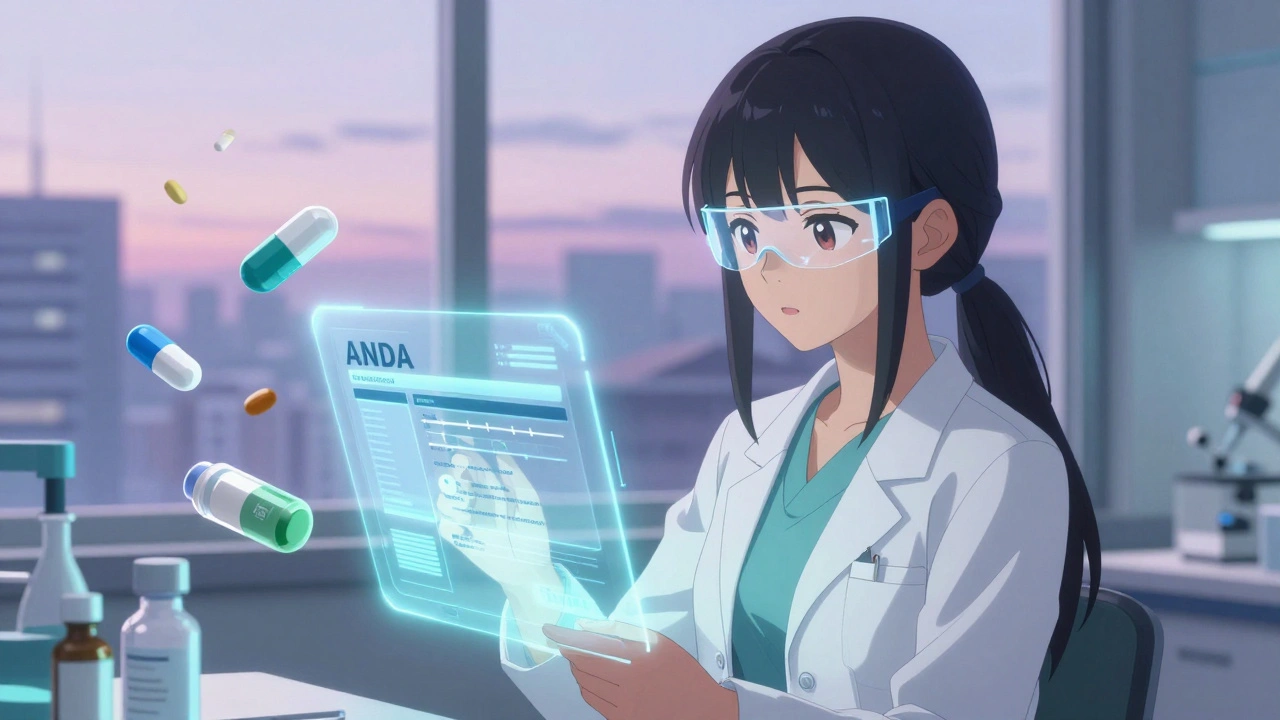
When you hear FDA generic approval timeline, the official process the U.S. Food and Drug Administration follows to authorize generic versions of brand-name drugs. Also known as ANDA pathway, it’s the quiet engine behind most prescriptions you fill at the pharmacy. It’s not just paperwork—it’s science, legal hurdles, and manufacturing checks all rolled into one. Most people assume generics are approved fast, but the truth? It can take anywhere from a few months to over five years, depending on patents, lawsuits, and whether the drug is even worth copying.
The real bottleneck isn’t the FDA’s speed—it’s the patent exclusivity, the legal protection that keeps other companies from making copies until a brand-name drug’s patent expires. Also known as market exclusivity, it’s why you might wait years after a drug launches before seeing a cheaper version. Once that clock runs out, generic makers submit an ANDA—Abbreviated New Drug Application. This isn’t a full clinical trial. Instead, they prove their version is bioequivalent, meaning it delivers the same amount of active ingredient into your bloodstream at the same rate as the brand-name drug. Also known as AB-rated, this is the gold standard for generic approval. If the numbers match within strict limits, the FDA says yes. But if the drug is highly variable—like blood thinners or epilepsy meds—the testing gets way more complex. That’s where replicate study designs, advanced methods used to test drugs with unpredictable absorption rates. Also known as RSABE, these designs help cut down sample sizes and still meet FDA standards come in. These aren’t just academic exercises—they’re what make some generics possible at all.
And it’s not just about science. Legal battles between brand and generic companies can delay approval for years. Sometimes, a brand company files a patent lawsuit that triggers a 30-month stay, freezing the entire process. Other times, the FDA gets backed up. Or the generic maker can’t prove consistent quality across batches. That’s why some drugs have dozens of generics on the market while others have none—even after patents expire. The FDA generic approval timeline isn’t a fixed clock. It’s a maze of legal, scientific, and manufacturing factors. What you get in your pill bottle isn’t luck—it’s the result of a system that’s often slow, sometimes broken, but still the most trusted in the world.
Below, you’ll find real-world examples of how this plays out—from veterans getting affordable meds through VA formularies, to how biosimilars in Europe moved faster than in the U.S., to why some drugs like atazanavir need extra care when traveling. These aren’t theoretical discussions. They’re stories of people who waited, switched, or had to find workarounds because the timeline didn’t match their needs. What you’re about to read isn’t just about approval dates. It’s about access, cost, and what happens when the system doesn’t move fast enough for real lives.