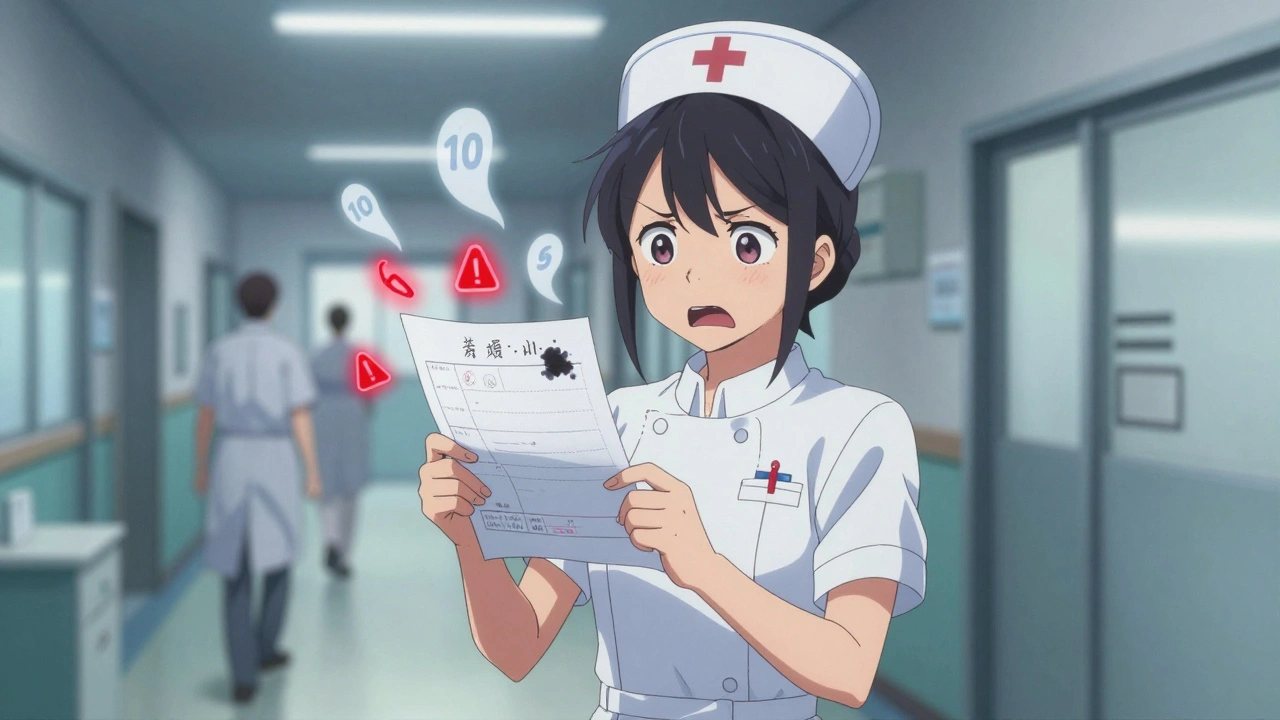
When a doctor writes a prescription by hand, it’s not just a note—it’s a illegible prescription, a written order for medication that can’t be clearly read by pharmacists or patients. Also known as unreadable prescriptions, it’s one of the oldest yet still dangerous problems in healthcare. Every year, tens of thousands of people in the U.S. are harmed because a pharmacist misread a drug name, dosage, or frequency. This isn’t rare. It’s routine. And it’s not just about bad penmanship—it’s about outdated systems that haven’t caught up to modern safety standards.
These errors don’t happen in a vacuum. They connect directly to prescription errors, mistakes in writing, transcribing, or filling medication orders that lead to patient harm. A quick scribble of "5 mg" might look like "50 mg". "Zoloft" can be mistaken for "Zyrtec". Even "take once daily" becomes "take three times daily"—and someone ends up in the ER. These aren’t hypotheticals. Studies from the Institute of Medicine show that medication errors injure over 1.5 million Americans annually, and a large chunk of them start with a hard-to-read script. The problem hits hardest for seniors, kids, and people on multiple drugs, where one wrong digit can mean the difference between treatment and overdose. That’s why medication safety, the practice of preventing harm from drugs through clear communication and system checks isn’t just a buzzword—it’s a survival skill.
It’s not just the doctor’s fault. Pharmacies still rely on human eyes to decode messy handwriting, and even the most careful pharmacist can misread a symbol or abbreviation. That’s why pharmacy mistakes, errors made during dispensing or counseling due to unclear orders or miscommunication are so common. You might think electronic prescriptions fixed this, but many doctors still use paper—especially in small clinics, rural areas, or when systems fail. Even when e-prescribing is used, copy-paste errors and default dosages create new risks. The truth? The system still expects humans to be perfect when they’re wired to make mistakes. That’s why knowing how to protect yourself matters more than ever.
If you or someone you care about takes regular medication, don’t wait for a mistake to happen. Always ask the pharmacist to read back the label. Take a photo of the prescription before leaving the office. Keep a written list of all your meds—even the vitamins. If a pill looks different than last time, ask why. These aren’t extra steps—they’re safety nets. The posts below show real cases where bad handwriting led to hospital stays, missed treatments, and even deaths. They also show how patients, families, and pharmacists are fighting back—with better tools, clearer rules, and smarter habits. You don’t need to be a doctor to stop an error. You just need to be awake.