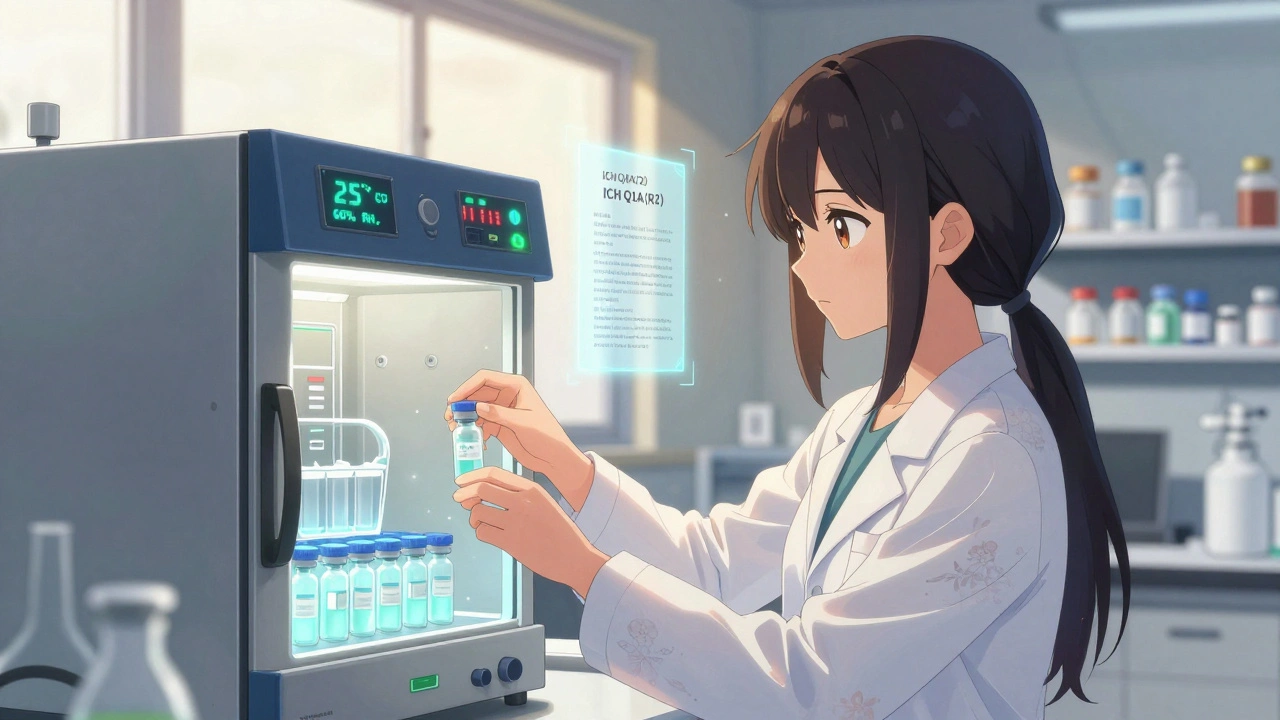
When you take a pill, you expect it to work exactly as it should. That reliability comes from pharmaceutical stability, the ability of a drug to maintain its chemical structure, potency, and safety over time under specified conditions. Without it, your medicine could lose strength, turn toxic, or simply stop working—no matter how fresh the expiration date looks. This isn’t just a lab concern. It’s something that affects every bottle in your medicine cabinet, every vaccine in a clinic fridge, and every inhaler you carry while traveling.
Drug degradation, the process by which medications break down due to environmental factors happens faster than most people realize. Heat, humidity, and light are the big three culprits. A pill sitting in a hot bathroom can lose potency in weeks. Eye drops exposed to direct sunlight? They may become useless—or even harmful. And it’s not just about old pills. Even brand-new drugs can degrade if stored wrong. That’s why humidity-proof storage, using sealed containers with desiccants to control moisture matters, especially in tropical climates. It’s not a luxury. It’s a necessity.
Then there’s light-sensitive medications, drugs like nitroglycerin, certain antibiotics, and eye drops that react to UV and fluorescent light. Clear bottles? Bad idea. Storing them on a windowsill? Even worse. Many of these drugs come in amber glass for a reason. If you’ve ever noticed a pill changing color or a liquid turning cloudy, that’s degradation in action. It’s not just about effectiveness—it’s about safety.
What you find below is a collection of real-world guides that show how pharmaceutical stability impacts daily life. You’ll learn how to protect your meds from tropical humidity, why some drugs need special light-blocking packaging, how to spot when a pill has gone bad, and why storing insulin in the fridge isn’t optional. You’ll also see how regulatory bodies like the FDA track these issues, how veterans’ formularies ensure stability in bulk supplies, and how travelers manage their prescriptions across time zones and climates. These aren’t theoretical discussions. They’re practical fixes for problems people actually face.