
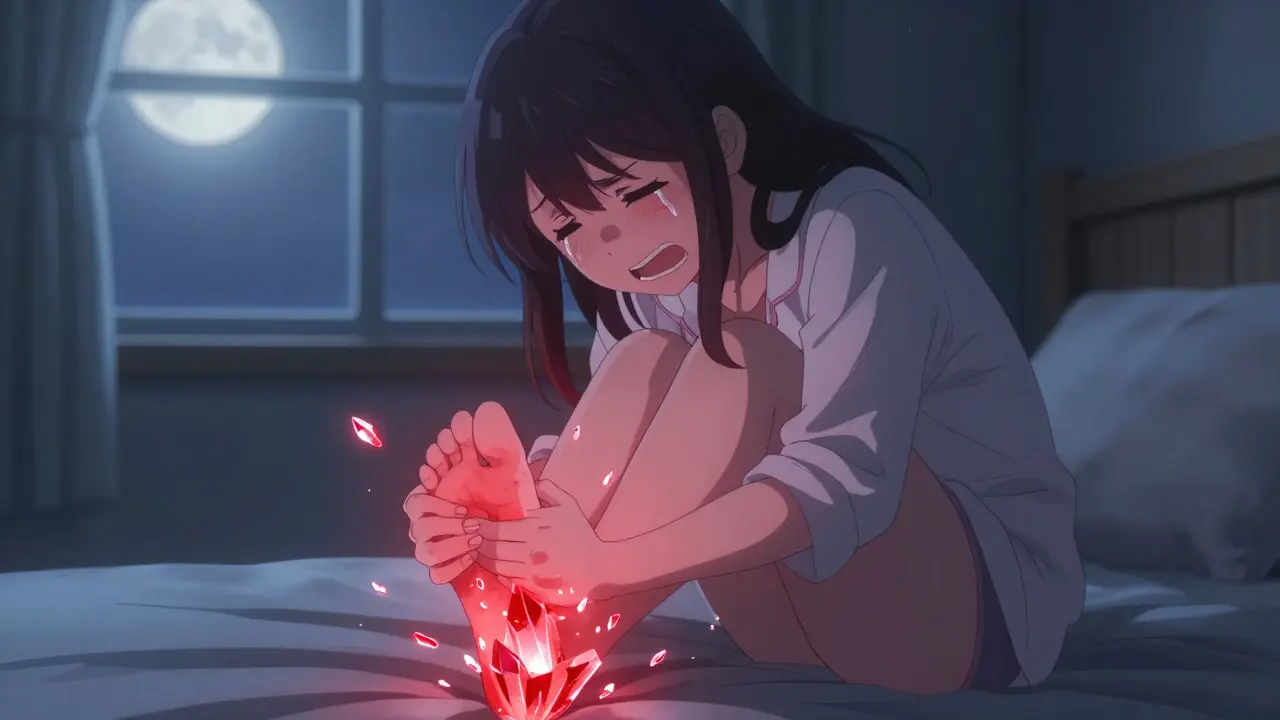
When your big toe suddenly swells up, turns red, and feels like it’s on fire - even the weight of a bedsheet hurts - you’re likely experiencing a gout attack. This isn’t just bad luck or a one-time flare. Gout is a chronic condition driven by a simple but powerful chemical imbalance: too much uric acid in your blood. And when that level crosses 6.8 mg/dL, crystals form in your joints. Those crystals don’t just sit there. They trigger your immune system like an alarm, and what follows is one of the most painful inflammatory responses the human body can produce.
Why Uric Acid Builds Up - And Why It Hurts
Uric acid isn’t a villain by itself. It’s a waste product from breaking down purines, which are found in your cells and in certain foods. Most people handle it just fine. But if your kidneys don’t flush it out well - which happens in 9 out of 10 gout cases - it piles up. Less than 10% of cases come from making too much, usually due to genetics or conditions like leukemia.
Here’s the twist: humans are one of the only animals that can’t break down uric acid fully. We lost the enzyme uricase millions of years ago. That’s why gout is so common in us - and rare in dogs or cats.
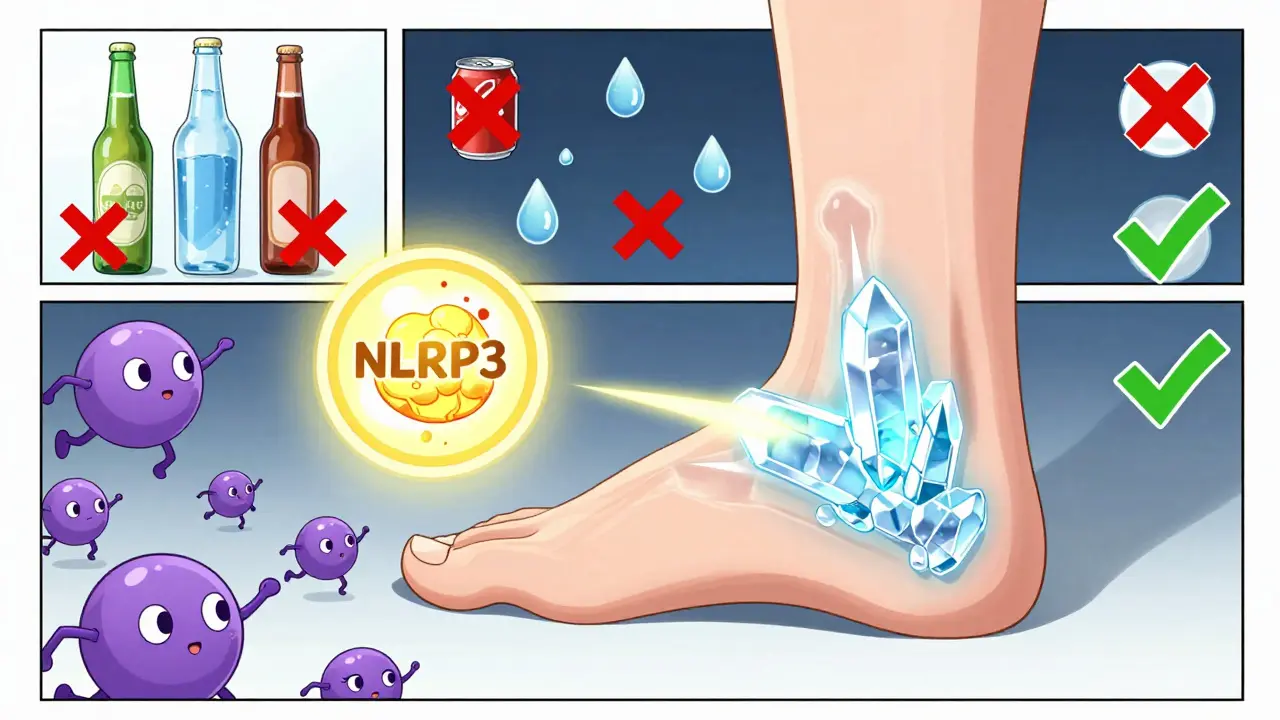
When uric acid levels stay high, it forms sharp, needle-like crystals of monosodium urate. These don’t just sit quietly. They get picked up by immune cells called macrophages. Those cells activate something called the NLRP3 inflammasome - a molecular alarm system that releases interleukin-1β. That’s the chemical that turns your joint into a war zone: swelling, heat, redness, and pain so intense you can’t sleep.
What Actually Triggers a Gout Flare
Many people think eating a steak or drinking a beer will immediately cause a gout attack. That’s not quite right. It’s not the food itself - it’s the change in uric acid levels.
Here’s what really sets off a flare:
- Dehydration: If you’re not drinking enough water, your urine output drops below 1.5 liters a day. Your kidneys can’t flush out uric acid, and concentration spikes.
- Alcohol: Beer is the worst offender. Each 12-ounce serving increases your risk by 49%. Spirits raise risk too - by 15% per serving. Wine? Less impact. The purines in beer and the way alcohol blocks kidney excretion both play a role.
- Fructose: Sugary sodas and sweetened drinks don’t contain purines, but they crash ATP in your liver, forcing your body to break down more purines and dump more uric acid. A daily soda can raise uric acid by 20-30%.
- Rapid changes in uric acid: This is the biggest surprise. Starting or changing urate-lowering meds like allopurinol can trigger flares. Why? Because even lowering uric acid too fast makes crystals shift and break loose. That’s why doctors now always pair new gout meds with low-dose colchicine for the first 6 months.
- Joint trauma: A stubbed toe, a long walk, or even surgery can jostle crystals loose in a joint that’s already primed to react.
- Medications: Thiazide diuretics (water pills) and low-dose aspirin (75-325 mg/day) reduce kidney clearance of uric acid. If you’re on these and have gout, talk to your doctor.
How Gout Medicines Work - And When to Use Them
Gout treatment has two phases: stopping the flare and preventing the next one.
During an Attack: Quench the Fire
If you’re in pain, you need fast relief. The three main options:
- NSAIDs: Indomethacin (50 mg three times a day) or naproxen are first-line. They reduce inflammation fast. But if you have kidney disease, stomach ulcers, or heart issues, they’re risky.
- Colchicine: Taken at 0.6 mg every hour until you feel relief or get diarrhea (max 3 doses). Lower doses (0.6 mg once or twice daily) are used for prevention, not acute pain. Side effects? Diarrhea in 10-20% of people. It’s not fun, but it works.
- Corticosteroids: Oral prednisone (30-40 mg daily for 5 days) or a joint injection. Great if you can’t take NSAIDs or colchicine. Works almost as fast.
Important: Don’t start or change your long-term gout meds during an attack. That’s when flares get worse.
Long-Term: Lower the Level, Stop the Attacks
This is where most people fail. Gout isn’t cured when the pain stops. It’s controlled when your blood uric acid stays below 6 mg/dL - and ideally below 5 mg/dL if you have tophi (those lumpy deposits under the skin).
- Allopurinol: First choice. Start at 100 mg daily. Increase by 100 mg every 4-6 weeks until you hit target. Most people need 300-600 mg. Some need up to 800 mg. It blocks uric acid production.
- Febuxostat: If allopurinol causes rash or you’re allergic, this is the next step. 40-80 mg daily. Works similarly but costs more.
- Probenecid: Only if your kidneys are healthy (GFR >50 mL/min). It helps your kidneys flush out uric acid. Not for people with kidney disease.
Key point: You must take these daily - even when you feel fine. Stop them, and uric acid climbs back up in 2-4 weeks. Flares return. And with each flare, joint damage gets worse.
Why Prophylaxis Is Non-Negotiable
Starting allopurinol or febuxostat without protection is like lighting a match near a gas leak. The 2007 CONFIRMS trial showed that people on low-dose colchicine (0.6 mg once or twice daily) had 50-75% fewer flares in the first 6 months than those who didn’t.
That’s why guidelines now say: Always start prophylaxis with urate-lowering therapy. It’s not optional. It’s the standard of care.
Diet and Lifestyle: What Actually Helps
Yes, diet matters - but not like you think.
- Avoid: Organ meats (liver, kidney), shellfish (shrimp, mussels), and sugary drinks. A 3-ounce serving of liver has 300-500 mg of purines - enough to spike uric acid.
- Do eat: Low-fat dairy. One serving a day cuts gout risk by 43%. Yogurt and milk may help your kidneys excrete uric acid.
- Hydrate: Drink at least 2 liters of water daily. More if you’re active or in heat. Urine should be pale yellow.
- Lose weight: Every 10 pounds lost can drop uric acid by 1-2 mg/dL. No crash diets - gradual loss works best.
- Limit alcohol: One beer a day is okay for some. But if you’re prone to flares, skip it. Spirits are less risky than beer, but still not safe.

Monitoring and Long-Term Outlook
Check your serum uric acid every 2-5 weeks while adjusting meds. Once you hit target (under 6 mg/dL), check every 6 months. Don’t guess. Test.
Here’s the hopeful part: if you keep uric acid below 5 mg/dL for a year, 70% of people with tophi see them shrink or vanish. Joints heal. Attacks stop. You can live without pain - but only if you stick with the plan.
Most people stop their meds after a few months because they feel fine. That’s the biggest mistake. Gout isn’t gone. It’s just quiet. And it waits.
What’s New in Gout Treatment
Researchers are testing drugs that block the NLRP3 inflammasome - the actual trigger of inflammation. Dapansutrile, a pill in phase III trials, reduced flare duration by 40% compared to placebo. It’s not available yet, but it’s the first drug targeting gout’s root cause - not just the uric acid level.
Early studies also suggest gut bacteria may play a role. Some probiotics seem to break down purines before they turn into uric acid. While not proven, it’s a promising area.
The message is clear: Gout is manageable. Not curable. But controllable. With the right meds, the right habits, and the discipline to stick with them, you can go from bedridden to pain-free - and stay there.
Anil bhardwaj
I've had gout for years and honestly? The biggest game-changer was just drinking more water. I started carrying a 2L bottle everywhere. Pale yellow urine = no flares. Simple as that. No meds needed.
Also, low-fat yogurt daily. Weird, but it works.