
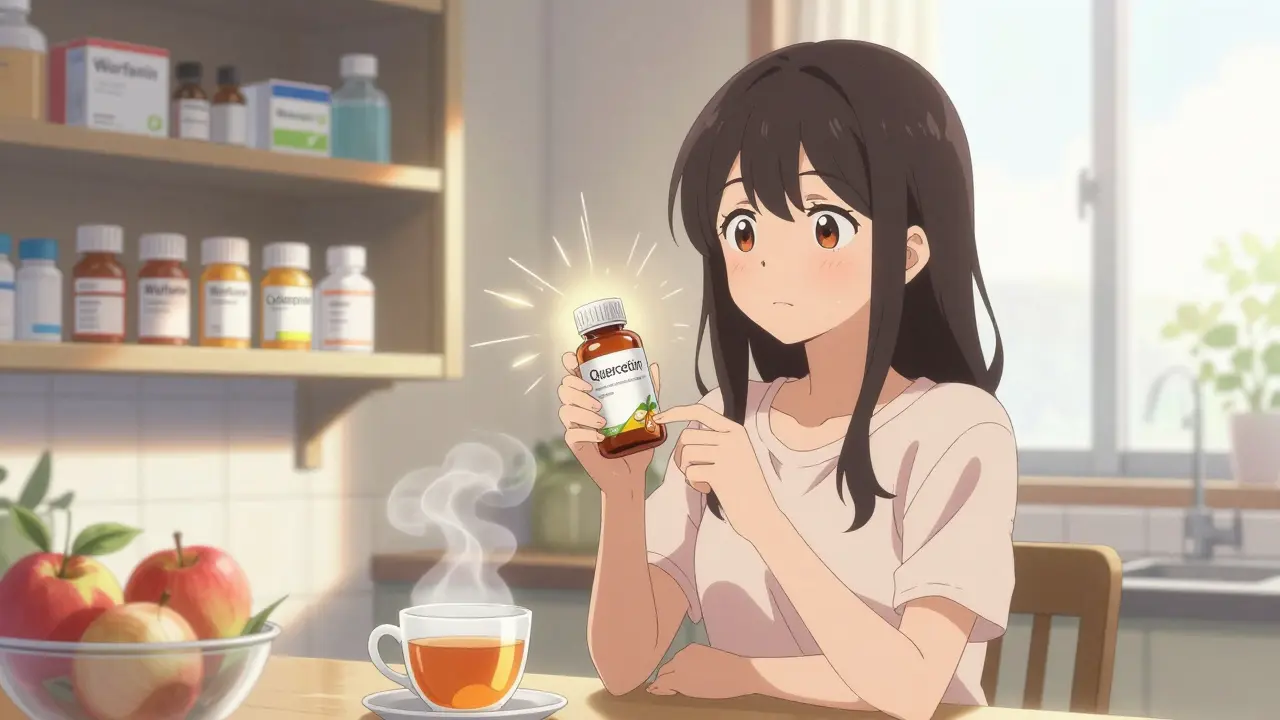
Quercetin Medication Interaction Checker
Enter your prescription medication and quercetin dosage to see potential interaction risk. Based on article findings from European Food Safety Authority and FDA guidelines.
Note: This tool is for informational purposes only. Always consult your healthcare provider before making changes to your medication or supplement regimen.
Many people take quercetin supplements thinking they’re just getting a natural antioxidant from onions, apples, or berries. But when you start popping high-dose pills-500 mg, 1,000 mg, even more-you’re not just eating food anymore. You’re introducing a powerful chemical that can interfere with how your body processes prescription drugs. And that’s not theoretical. It’s happening right now, in kitchens and medicine cabinets across the UK and beyond.
What Quercetin Actually Does to Your Liver
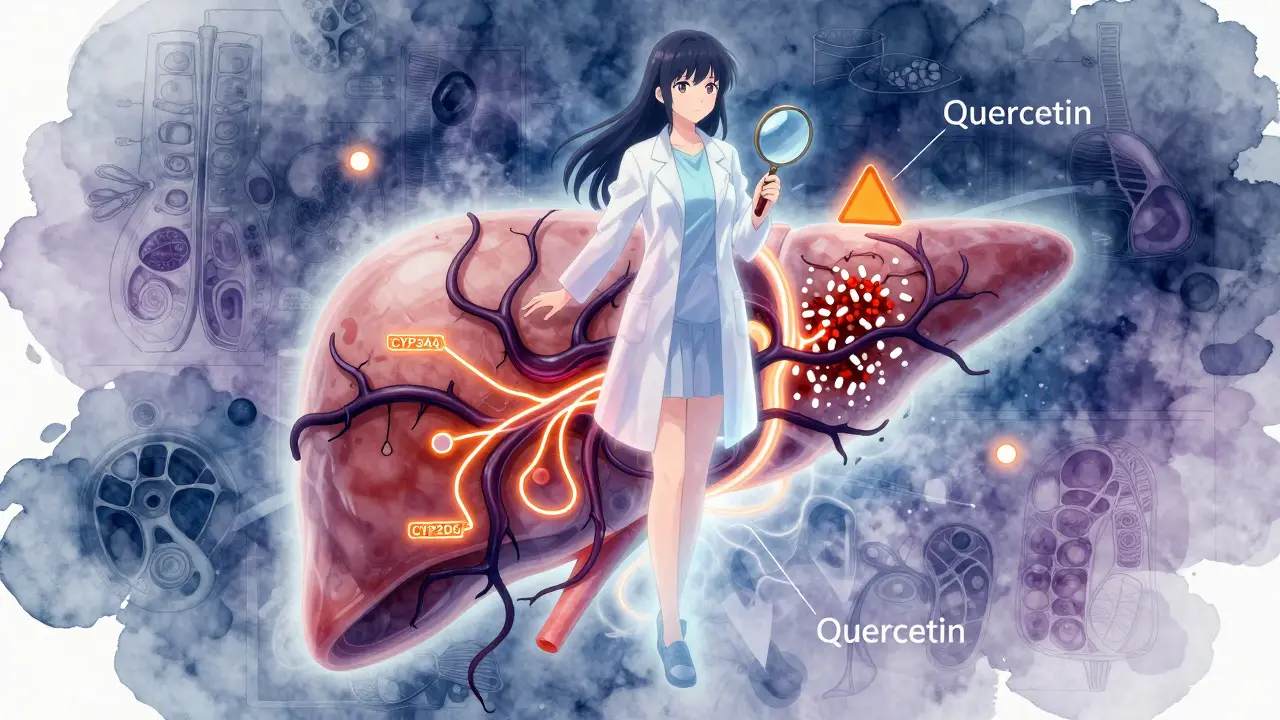
Quercetin isn’t just a plant pigment. It’s a potent inhibitor of enzymes in your liver and gut that break down medications. These are called CYP enzymes-specifically CYP3A4, CYP2D6, and CYP2C19. Think of them as the body’s main drug-clearing crew. When quercetin gets in the way, drugs don’t get broken down as quickly. That means they build up in your bloodstream.Studies show quercetin can reduce the breakdown of certain drugs by 40% to 85%, depending on the enzyme. For example, if you’re taking a medication like abemaciclib (used for breast cancer), quercetin can raise its blood levels by 25-35%. That might sound small, but for drugs with a narrow safety window, even a 20% increase can mean serious side effects-or worse.
It’s not just liver enzymes. Quercetin also blocks transporters like OATP1B1 and BCRP, which help move drugs into and out of cells. This means it doesn’t just slow down metabolism-it can also mess with how much of the drug even gets into your system in the first place. The result? Unpredictable, sometimes dangerous, changes in drug levels.
Which Medications Are Most at Risk?
Not all drugs are affected the same way. But some are especially vulnerable. Here are the ones you need to watch out for:- Blood thinners: Warfarin, apixaban, rivaroxaban. Quercetin can raise their levels by 20-45%, increasing bleeding risk. The American Society of Health-System Pharmacists says to avoid quercetin entirely if you’re on these.
- Immunosuppressants: Cyclosporine, tacrolimus. These are critical after organ transplants. A 30-50% rise in levels can cause kidney damage or toxicity.
- Heart medications: Diltiazem, verapamil, amiodarone. Higher levels can slow your heart rate dangerously.
- Antidepressants and antipsychotics: Fluoxetine, sertraline, risperidone. These are metabolized by CYP2D6, which quercetin strongly blocks.
- Pain relievers: Acetaminophen. Even this common drug can see a 20-30% increase in blood levels, raising liver stress risk.
- Cancer drugs: Abemaciclib, abrocitinib, and others. These are designed with tight dosing windows. Quercetin can push them into toxic range.
If you’re on any of these, or if you’ve ever been told your medication has a "narrow therapeutic index," you need to treat quercetin like a drug-not a vitamin.
Why Supplements Are Riskier Than Food
You can eat a whole bowl of apples and onions without worrying. That’s because the quercetin in food comes bound to sugars (glycosides like rutin), which your body absorbs slowly and converts into less active forms. But supplements? They’re pure, concentrated quercetin aglycone-the most potent form.Research from the Chinese Pharmaceutical Journal shows quercetin glycosides (the kind in food) are only about 30-40% as effective at inhibiting enzymes. So a 500 mg supplement isn’t like eating 500 mg of onions. It’s like taking a pharmaceutical-grade blocker with no buffer.
And people are taking a lot of it. In the U.S. alone, nearly 18 million adults use quercetin supplements. Over 40% of them take more than 500 mg daily. That’s not a little extra. That’s a pharmacological dose. And it’s rising fast-global sales hit $387 million in 2022, up nearly 13% each year since 2018.
Who’s Most at Risk?
It’s not just about what you take-it’s about who you are.Older adults are at higher risk. Studies show people over 65 clear quercetin metabolites 25-40% slower than younger people. That means the stuff lingers longer, building up over time. If you’re 70 and taking a statin, a beta-blocker, and a quercetin pill, you’re stacking up effects you might not even feel until something goes wrong.
People with liver or kidney problems are also more vulnerable. If your body can’t clear drugs efficiently, adding a blocker like quercetin is like turning up the volume on a song that’s already too loud.
And then there’s polypharmacy. If you’re taking five or more medications, the chances of a bad interaction go up exponentially. Quercetin doesn’t just affect one enzyme-it hits multiple pathways at once. That’s why experts call it especially dangerous for people on complex drug regimens.
What the Experts Say
The European Food Safety Authority (EFSA) warned in 2018 that doses above 1,000 mg/day of quercetin pose "potential concerns" for interactions with drugs that have narrow therapeutic windows. The FDA followed up in 2020, listing quercetin as a dietary supplement of concern and urging drug manufacturers to test for interactions at concentrations matching high-dose supplement use.Dr. Basheer Kerem from Hebrew University pointed out that quercetin doesn’t just act in the liver-it blocks enzymes in the gut too. That means even before a drug enters your bloodstream, it’s already being held back. That’s why some studies show a 2.3-fold increase in drug exposure (like midazolam) when taken with quercetin.
And yet, most people don’t know. The FDA’s adverse event database has only 147 reported cases of quercetin-drug interactions between 2015 and 2022. But experts estimate that 90-95% of these go unreported. Why? Because patients don’t connect their supplement to their side effects. Doctors don’t always ask about supplements. And when you feel fine, you assume nothing’s wrong.
What You Should Do
If you’re taking quercetin supplements and any prescription medication, here’s what to do:- Stop taking it. If you’re on a blood thinner, immunosuppressant, or cancer drug, quit immediately. There’s no safe level for these.
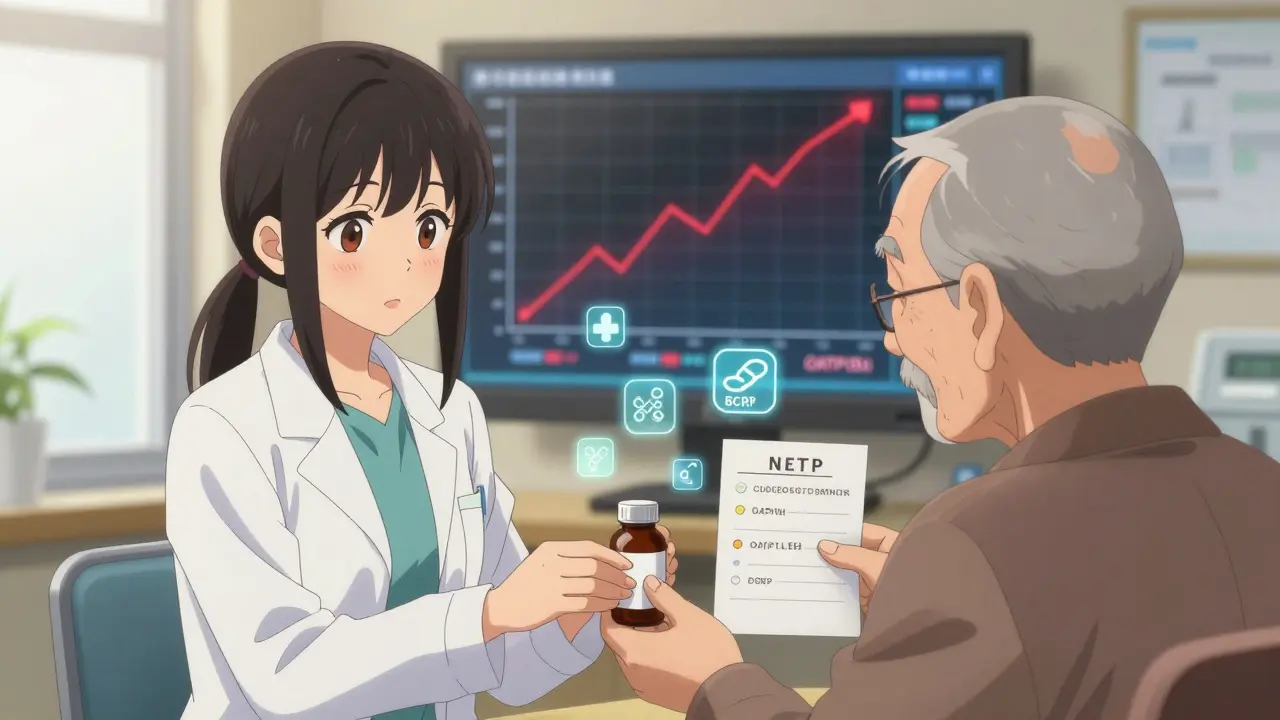
- Talk to your pharmacist. They’re trained to spot interactions. Bring your full list of meds and supplements-every pill, every capsule.
- Ask about alternatives. If you’re taking quercetin for inflammation or allergies, there are other options. Vitamin C, bromelain, or even low-dose NSAIDs (if appropriate) may work without the risk.
- If you must take it, space it out. Some research suggests separating quercetin from your medication by 4-6 hours can cut interaction risk by 30-50%. But this isn’t a guarantee. It’s a band-aid, not a solution.
- Check your dosage. Anything over 500 mg/day is considered high-risk. Most supplements are 500 mg or 1,000 mg. If you’re taking more than one capsule a day, you’re in danger zone.
There’s no such thing as a "safe" quercetin dose if you’re on medications. The science is clear: the supplement industry doesn’t test for interactions. The FDA doesn’t require it. And your doctor might not know unless you tell them.
The Bigger Picture
Quercetin is a perfect example of why "natural" doesn’t mean "safe." We’ve been sold the idea that if it comes from a plant, it’s harmless. But plants make chemicals to defend themselves-and those same chemicals can interfere with human biology.The real problem? Regulation. Under DSHEA (the 1994 law that governs supplements), companies don’t need to prove safety or interaction risk before selling quercetin. They don’t have to warn you. They don’t have to label it properly. And until 2024, when the FDA plans to require interaction warnings on high-risk supplements, you’re left guessing.
It’s not about fear. It’s about awareness. You wouldn’t mix alcohol with your painkillers. You wouldn’t take antibiotics without finishing the course. So why treat a supplement like it’s harmless?
Quercetin isn’t evil. But when it meets the wrong medication, it can turn quiet, invisible, and deadly. And no one’s telling you that.
Can I take quercetin with my blood pressure medication?
It depends on the medication. Quercetin can interfere with drugs like diltiazem, verapamil, and amiodarone, which are metabolized by CYP3A4. If you’re on one of these, even a 500 mg quercetin supplement could raise your drug levels enough to cause dizziness, slow heart rate, or low blood pressure. If you’re unsure, ask your pharmacist to check your specific drug. Don’t assume it’s safe just because it’s "natural."
Is quercetin safe if I only take it once a week?
Maybe-but not if you’re on a high-risk medication. Quercetin and its metabolites can stick around in your system for days, especially in older adults or those with liver issues. Even weekly use can build up enough to interfere with drugs metabolized by CYP2D6 or CYP3A4. There’s no proven safe frequency for supplement users on prescription meds. The safest choice is to avoid it entirely.
What if I’m taking quercetin for allergies or inflammation?
There are safer alternatives. Vitamin C, bromelain, or curcumin (with piperine) have similar anti-inflammatory effects without the same level of enzyme inhibition. If you’re not on medications, quercetin may be fine-but if you are, switch to something with less interaction risk. Don’t risk your health for a supplement that’s not essential.
How do I know if quercetin is affecting my meds?
Watch for new or worsening side effects: unusual bruising, dizziness, nausea, confusion, irregular heartbeat, or muscle pain. If you started quercetin and then noticed these, stop it immediately and contact your doctor. Blood tests can sometimes show elevated drug levels, but symptoms are often the first clue. Don’t wait for a lab result-your body tells you before the numbers do.
Are there any supplements that are safer than quercetin?
Yes. Vitamin C, zinc, and omega-3s have minimal interaction risk with most medications. If you want antioxidant or anti-inflammatory support, these are better choices. Even turmeric (curcumin) has a much lower risk profile than quercetin-though it’s still wise to check with your pharmacist if you’re on blood thinners or diabetes meds. Always prioritize supplements with proven safety records over trendy ones with hidden risks.
Final Thought
You don’t need quercetin to be healthy. You get enough from your diet. But if you’re taking it as a supplement while on medication, you’re playing Russian roulette with your liver, your heart, and your safety. The science is clear. The warnings are there. What’s missing is the conversation.Ask your pharmacist. Tell your doctor. Don’t assume it’s harmless. And if you’re unsure-skip it. Your meds are the priority. Not the supplement.
Lana Kabulova
I took 1000mg of quercetin for my allergies last winter... and then my blood pressure dropped so hard I passed out in the grocery store. Turns out I was on a beta-blocker. No one warned me. No one. Not my doctor, not the label, not even the YouTube guy who sold me the bottle. I’m lucky I didn’t die.