
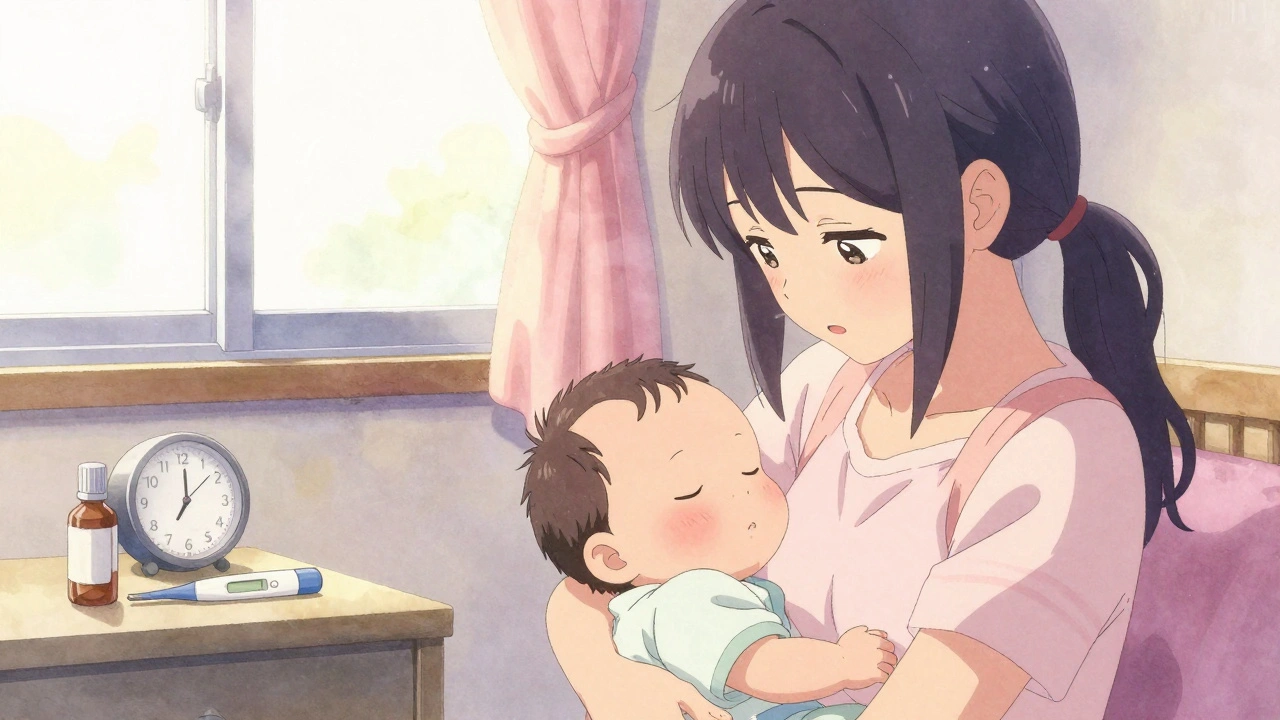
It’s common for kids to develop a fever after getting their shots. Many parents panic the moment their child’s temperature climbs, reaching for the bottle of acetaminophen or ibuprofen right away. But giving fever reducers too soon after vaccination might actually reduce how well the vaccine works. This isn’t just a theory-it’s backed by multiple studies and major health organizations. The key isn’t to avoid fever reducers entirely. It’s about timing.
Why Fever After Vaccines Happens
Fever isn’t a side effect you need to eliminate. It’s your child’s body doing exactly what it’s supposed to do: responding to the vaccine. Vaccines contain harmless pieces of viruses or bacteria that train the immune system. When the body detects these, it turns on its defenses. One of those defenses is raising the body’s temperature. That’s how it fights off infections-and how it learns to recognize real threats later.According to the Children’s Hospital of Philadelphia, about 1 in 3 babies develop a fever after common vaccines like Prevnar 13 (pneumococcal) or Pediarix (DTaP-IPV-HepB). The MenB vaccine is even more likely to cause fever-up to 50% of infants get a temperature above 102°F after this shot. Fever usually shows up within 12 hours and lasts no more than 1-2 days. Most of the time, it’s mild and goes away on its own.
The Problem with Giving Fever Reducers Too Early
In the early 2000s, it was routine to give acetaminophen before or right after vaccines to keep kids comfortable. Parents thought they were helping. But research changed that. A landmark 2009 study in The Lancet found that children who received fever reducers before vaccination had lower antibody responses to several vaccine components. Later studies confirmed it: giving medicine too early weakens the immune system’s ability to build strong, lasting protection.One Polish study compared two groups: one that got acetaminophen right after the shot (three doses over 24 hours), and another that only got it if fever developed after 6-8 hours. The group that got medicine early had significantly lower antibody levels. The group that waited? Their immune response was just as strong as kids who got no medicine at all.
Experts from the CDC, the American Academy of Pediatrics, and the Children’s Hospital of Philadelphia all agree: don’t give fever reducers before or immediately after vaccination. The goal isn’t to prevent fever-it’s to protect your child’s immune response.
When It’s Okay to Give Fever Reducers
You’re not supposed to just let your child suffer. If the fever is high or your child is uncomfortable, it’s fine-and even recommended-to use medicine. But wait. The evidence shows that giving acetaminophen or ibuprofen at least 4 hours after vaccination doesn’t interfere with the immune response. That’s the magic window.Here’s what to do:
- Wait 4 hours after the vaccine before giving any fever reducer.
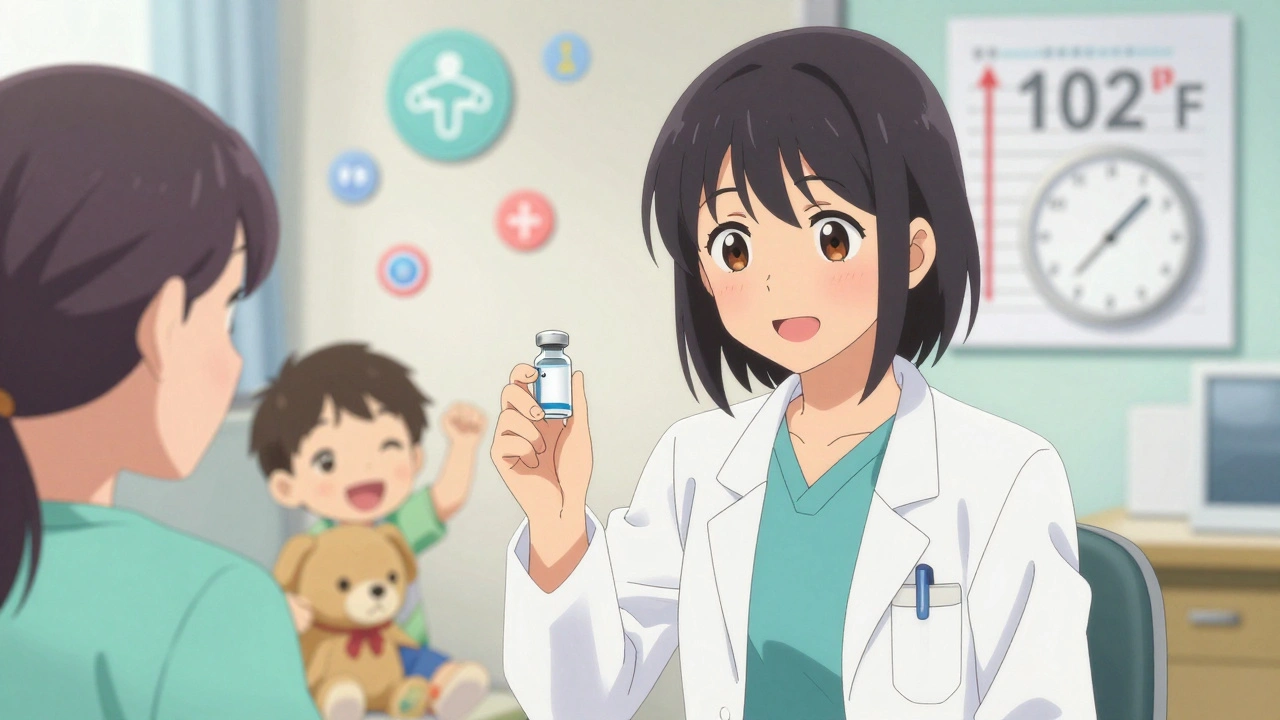
- Only give medicine if the temperature is above 102°F (39°C). Low-grade fevers (100-102°F) don’t need treatment-they’re helping.
- Use acetaminophen (Tylenol) or ibuprofen (Advil, Motrin), but never aspirin. Aspirin in children under 20 is linked to Reye syndrome, a rare but dangerous illness.
- Follow weight-based dosing. For a baby 6-11 months old (18-23 lbs), that’s 1.25 mL of acetaminophen or 2.5 mL of ibuprofen.
Keep in mind: infants under 12 weeks old should not get acetaminophen without a doctor’s advice. And ibuprofen isn’t approved for babies under 6 months. If your baby is younger than 3 months and has a fever, call your pediatrician right away.
The One Big Exception: MenB Vaccine
Not every vaccine follows the same rules. The MenB vaccine (meningococcal B) is different. It causes fever in a large number of infants-and sometimes that fever is high enough to trigger seizures or extreme distress. Because of this, the UK’s National Health Service (NHS) recommends giving liquid paracetamol (acetaminophen) after the MenB shots at 8 weeks and 16 weeks. This is the only vaccine where prophylactic fever reducers are officially advised.Even then, it’s not given before the shot. It’s given after, as a preventive measure against a known high-risk reaction. This exception exists because the risk of a dangerous fever outweighs the small potential reduction in immune response. For all other vaccines, this rule doesn’t apply.
What About Other Symptoms?
Fever isn’t the only thing parents worry about. Redness, swelling, or soreness at the injection site is normal. So is fussiness or sleepiness. You don’t need medicine for these. A cool, damp cloth on the arm can help with soreness. Holding and comforting your child helps more than you think. Keep them hydrated-offer breast milk, formula, or water if they’re old enough. Don’t overdress them or pile on blankets. Let their body regulate its temperature.What If My Child Already Got Medicine Too Soon?
If you gave acetaminophen or ibuprofen within the first few hours after vaccination, don’t panic. One dose likely won’t ruin the vaccine’s effectiveness. The studies show that repeated, scheduled doses over 24 hours are what cause the biggest drop in antibodies. If you gave one dose by mistake, your child is still protected. The immune system is resilient. Just make sure you don’t repeat it for future shots.What About Pre-Existing Fever?
If your child already has a low-grade fever before their appointment-say, from a cold-don’t cancel the vaccine. The CDC says mild illnesses don’t affect how well vaccines work. Even if your child has a slight cough or runny nose, they can still get vaccinated. Only delay shots if they have a moderate or high fever (over 102°F) or are very unwell. In those cases, wait until they’re better.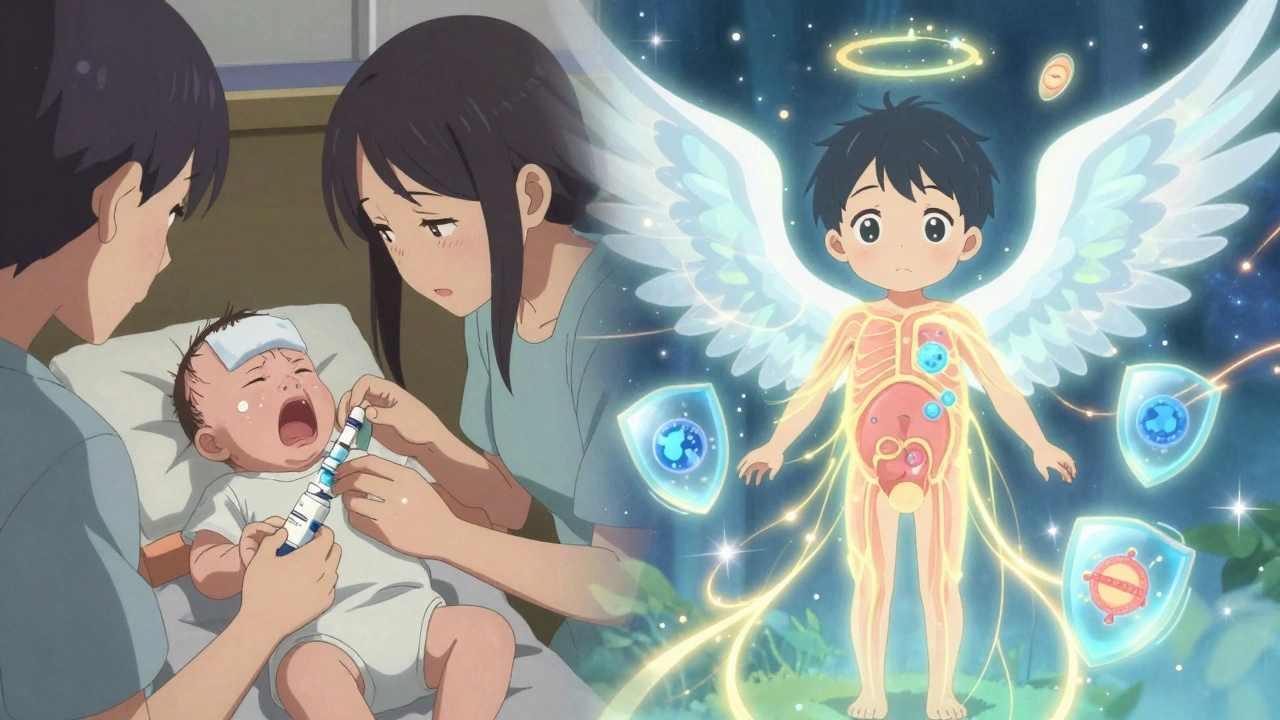
Medication Dosing Quick Reference
Always check the label and your pediatrician’s advice. These are general guidelines based on weight:
| Age | Weight | Acetaminophen (Tylenol) | Ibuprofen (Advil, Motrin) |
|---|---|---|---|
| 6-11 months | 18-23 lbs (8-10 kg) | 1.25 mL (160 mg/5 mL) | 2.5 mL (100 mg/5 mL) |
| 12-23 months | 24-35 lbs (11-16 kg) | 1.875 mL (160 mg/5 mL) | 3.75 mL (100 mg/5 mL) |
Do not give more than 4 doses of either medicine in 24 hours. Always use the measuring device that comes with the bottle. Kitchen spoons aren’t accurate.
What Happens If Antibody Levels Are Lower?
You might be wondering: if the immune response is slightly weaker, does that mean the vaccine doesn’t work? The answer is no. Even with reduced antibody levels, most children still develop protection above the threshold needed to prevent disease. Vaccines are still incredibly effective-even if the response isn’t perfect.Think of it like studying for a test. If you take a break halfway through to nap, you might not remember every detail. But you’ll still pass. That’s what’s happening here. The body still learns. It just might take a little longer or build a slightly smaller defense. And in most cases, that’s enough.
Final Rule: Wait, Watch, Then Act
The simplest way to remember this: Don’t give fever medicine right after the shot. Wait 4 hours. Only give it if your child is truly uncomfortable or has a high fever.Most kids do just fine without any medicine at all. If they’re eating, drinking, and responding to you, they’re probably okay. Fever is a sign their body is working-not failing. Your job isn’t to eliminate it. It’s to support them while their immune system does its job.
For future vaccines, keep a note on your phone: "Wait 4 hours. Check temp. Only give medicine if over 102°F." It’s a small habit that makes a big difference in how well your child’s vaccines work.
Can I give my child fever medicine before their vaccine appointment?
No. Giving fever reducers like acetaminophen or ibuprofen before vaccination can reduce how well the vaccine works. Studies show children who get these medicines before shots develop lower antibody levels. It’s best to wait until after the vaccine and only use medicine if a fever develops and the child is uncomfortable.
How long after a vaccine should I wait before giving fever medicine?
Wait at least 4 hours after vaccination before giving any fever reducer. Research shows that giving medicine after this window doesn’t interfere with the immune response. If your child develops a fever above 102°F and seems uncomfortable, that’s the right time to reach for acetaminophen or ibuprofen.
Is it safe to give Tylenol after the MenB vaccine?
Yes. Unlike other vaccines, the MenB vaccine has a high risk of causing high fevers in infants. The NHS and other health agencies recommend giving liquid paracetamol (acetaminophen) after the 8-week and 16-week MenB shots to reduce the risk of dangerous fever spikes. This is the only vaccine where this is officially advised.
What if my baby is under 12 weeks old and has a fever after a vaccine?
Call your pediatrician immediately. Infants under 12 weeks should not receive acetaminophen without medical advice. A fever in a young baby can be a sign of serious infection, even if it’s after a vaccine. Never give medicine without talking to your doctor first.
Can I give ibuprofen to my 4-month-old after vaccines?
No. Ibuprofen is not approved for infants under 6 months old. For babies under 6 months, acetaminophen is the only recommended fever reducer-but even that should be used carefully and only if the fever is high (over 102°F) and the child is uncomfortable. Always check with your pediatrician before giving any medication to an infant.
Do I need to give fever medicine every time my child gets a vaccine?
No. Most children don’t need any fever medicine at all after vaccines. Fever is a normal part of the immune response. Only give medicine if the temperature is above 102°F and your child is fussy, irritable, or having trouble sleeping. Many kids feel fine with no treatment at all.
Will skipping fever medicine make my child feel worse?
Not necessarily. Mild fevers don’t hurt children-they help them. Studies show that children who don’t get fever reducers after vaccines often feel just as well as those who do. Comfort measures like holding, offering fluids, and keeping the room cool are more effective than medicine for low-grade fevers. Your child’s immune system is doing its job.
Deborah Jacobs
I remember when my daughter got her 12-month shots and spiked a fever of 103.5. I was a mess-toddler crying, me pacing, Google open on my phone like a witch’s grimoire. But I waited. Four hours. No meds. She slept through the night, woke up giggling, and I realized: her body was fighting, not failing. I didn’t need to fix it. I just needed to hold her.
Now I tell every new parent I meet: fever isn’t the enemy. Fear is.
Also, please stop giving Tylenol like it’s candy. It’s not a comfort blanket. It’s a tool. Use it wisely.