
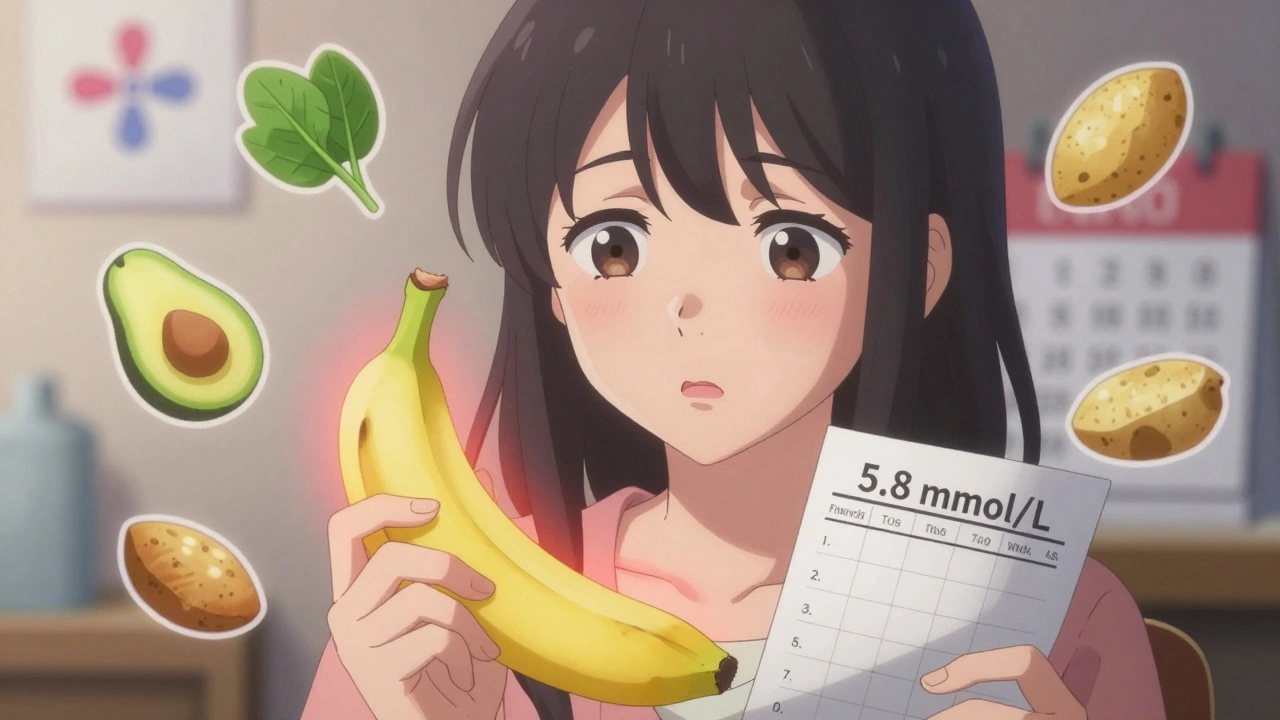
Potassium Intake Calculator for ACE Inhibitor Users
How to Use This Tool
Enter the foods you've eaten today to calculate your potassium intake. Your ACE inhibitor medication increases your risk of high potassium levels (hyperkalemia). This tool helps you stay within safe limits based on your health condition.
Based on your selected risk level, your safe daily potassium limit is displayed below.
Your Daily Intake
Important Notes
- Potassium levels above 5.0 mmol/L are warning signs
- Levels above 5.5 mmol/L are medical emergencies
- Always discuss your diet with your healthcare provider
- Regular blood tests are essential even if you feel fine
When you're taking an ACE inhibitor for high blood pressure, heart failure, or kidney disease, you're doing something good for your heart. But there's a quiet risk hiding in plain sight: your dinner plate. Many of the foods praised as healthy-bananas, potatoes, spinach, avocados-are packed with potassium. And when your body can't flush out that extra potassium because of your medication, levels can climb dangerously high. This is called hyperkalemia, and it’s not just a lab result-it can cause irregular heartbeats, muscle weakness, or even cardiac arrest.
Why ACE Inhibitors Raise Potassium Levels
ACE inhibitors work by blocking a hormone system in your body called RAAS. That system normally tells your kidneys to release aldosterone, a hormone that helps your body get rid of potassium. When ACE inhibitors shut down that signal, your kidneys hold onto more potassium instead of flushing it out. It’s not a bug-it’s how the drug works. But for some people, that’s enough to push potassium into the danger zone.Studies show that between 10% and 24% of people on ACE inhibitors develop high potassium levels. That number jumps to over 30% if you already have kidney problems, diabetes, or are over 75. If your kidneys aren’t filtering well-say, your eGFR is below 60-your body loses its main tool for getting rid of potassium. And that’s when even normal eating can become risky.
Which Foods Are the Biggest Risks?
You don’t need to cut out all fruits and veggies. But you do need to know which ones pack the most potassium-and how much you can safely eat.- Bananas: One medium banana = 422 mg potassium
- Oranges and orange juice: One medium orange = 237 mg; 1 cup juice = 496 mg
- Baked potato: One medium potato with skin = 926 mg
- Spinach (cooked): 1 cup = 839 mg
- Avocado: 1 cup sliced = 708 mg
- Tomatoes and tomato products: 1 medium tomato = 292 mg; 1 cup tomato sauce = 909 mg
- Sweet potatoes: 1 medium = 542 mg
- Coconut water: 16 oz = 1,150 mg
- Beans and lentils: 1 cup cooked = 600-700 mg
These aren’t “bad” foods. They’re nutritious. But if you’re on an ACE inhibitor and your kidneys aren’t working at full capacity, eating large portions of these daily can be like pouring gasoline on a small fire.
Who’s at the Highest Risk?
Not everyone on ACE inhibitors needs to stress about potassium. But if you fall into any of these groups, you’re in the danger zone:- People with chronic kidney disease (eGFR below 45)
- Diabetics, especially those with protein in their urine
- People over 75
- Those with heart failure (NYHA Class III or IV)
- Anyone taking other potassium-raising drugs-like potassium-sparing diuretics (spironolactone, eplerenone), trimethoprim/sulfamethoxazole, or NSAIDs
A 2021 study found diabetic patients on ACE inhibitors had a 47% higher chance of developing hyperkalemia than non-diabetics. That’s not a small bump-it’s a red flag. And if you’re taking two or more of these risk factors together, your chances multiply.

How to Monitor Your Potassium Levels
You can’t feel high potassium until it’s too late. That’s why blood tests are non-negotiable.Before you start an ACE inhibitor, your doctor should check your potassium and kidney function. Then:
- Test again 7 to 14 days after starting or changing the dose
- Test every 4 months if you’re stable
- Test immediately if you feel weak, tired, or have heart palpitations
A potassium level above 5.0 mmol/L is a warning sign. Above 5.5? That’s an emergency. Many doctors will pause or lower your ACE inhibitor dose if potassium climbs even slightly, especially if your kidney function is declining.
What You Can Eat Instead
You don’t have to give up flavor or nutrition. Just swap out the high-potassium options for safer ones:- Instead of bananas: Apples, berries, grapes, pineapple
- Instead of potatoes: White rice, pasta, noodles, cabbage
- Instead of spinach: Lettuce, cucumber, green beans, zucchini
- Instead of avocado: Olive oil, butter, low-fat cheese
- Instead of tomato sauce: Low-sodium broth, herbs, lemon juice
- Instead of coconut water: Water, unsweetened tea, sparkling water
Even better-learn to cook with low-potassium methods. Boiling vegetables like potatoes or spinach for 10 minutes and discarding the water can reduce potassium by up to 50%. That’s a simple trick that makes a big difference.
When Medication Alone Isn’t Enough
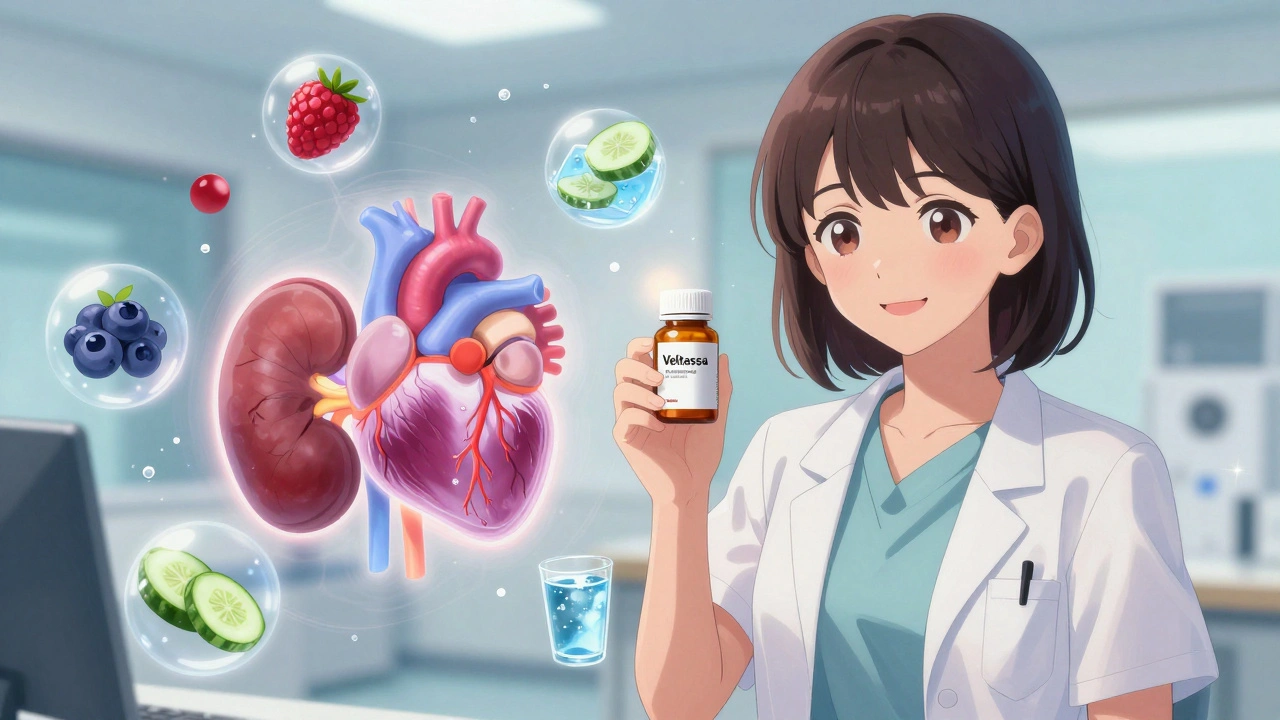
If diet and monitoring still aren’t enough to keep your potassium safe, new tools exist. Two FDA-approved potassium binders-patiromer (Veltassa) and sodium zirconium cyclosilicate (Lokelma)-can grab excess potassium in your gut and flush it out in your stool. Clinical trials show they reduce the need to stop ACE inhibitors by over 40%.These aren’t magic pills. You still need to watch your diet. But for patients who can’t live without their ACE inhibitor-and who keep hitting high potassium levels-these binders are a game-changer. They’re not cheap, and they require daily dosing, but they keep people alive and off dialysis.
Common Mistakes Patients Make
Most people don’t realize how sneaky potassium can be. Here are the top errors:- Thinking “natural” means safe-coconut water, protein powders, and herbal teas can be loaded with potassium
- Believing you can eat high-potassium foods if you skip them another day-potassium builds up slowly, so daily intake matters
- Not telling your doctor about supplements or over-the-counter meds-many salt substitutes contain potassium chloride
- Skipping blood tests because “I feel fine”-hyperkalemia often has no symptoms until it’s life-threatening
A 2022 study found 68% of patients couldn’t name three high-potassium foods. That’s not their fault-it’s a failure of education. Many doctors assume patients know this stuff. They don’t.
What Works: Real-Life Strategies
The best way to avoid hyperkalemia? Personalized support.Studies show that when patients meet with a renal dietitian and get laminated food charts or use apps like Renal Diet Helper, their potassium levels stay stable 34% more often than those who just get a pamphlet. One Reddit user shared that after drinking 16 oz of coconut water (1,150 mg potassium) while on lisinopril, their potassium spiked to 6.1. They ended up in the ER. Now they use an app to scan every new food.
Community programs like the Kidney Education Evaluation Program (KEEP) found that patients who got both written materials AND face-to-face coaching had 42% better adherence to potassium limits than those who only got paper.
Small changes stick when they’re practical. Don’t try to overhaul your diet overnight. Start by swapping one high-potassium food per week. Track your intake. Talk to your pharmacist. Ask for a referral to a dietitian. These aren’t luxuries-they’re part of your treatment plan.
The Bigger Picture: Balancing Risk and Benefit
It’s tempting to stop your ACE inhibitor if your potassium rises. But that’s often the wrong move. These drugs protect your heart and kidneys. Stopping them can lead to heart attacks, strokes, or faster kidney decline.Doctors now treat high potassium not as a reason to quit ACE inhibitors-but as a signal to adjust. That might mean lowering your dose, adding a binder, or changing your diet. The goal isn’t to avoid the medication. It’s to keep you on it safely.
Future drugs are being tested that might block the harmful side effects of ACE inhibitors without losing their benefits. One compound, KBP-5074, kept potassium in the safe range for 82% of patients in early trials-compared to just 54% on placebo.
For now, though, the simplest, most proven tool is still food. Cut back on the big potassium bombs. Know your limits. Test regularly. And never ignore a warning sign-because your heart is counting on you to listen.
Can I eat bananas if I’m on an ACE inhibitor?
If your kidneys are healthy and your potassium levels are normal, occasional bananas are usually fine. But if you have kidney disease, diabetes, or your potassium is above 5.0 mmol/L, you should limit or avoid them. One banana contains 422 mg of potassium-enough to push you over your daily limit if you’re already eating other high-potassium foods. Talk to your doctor or dietitian about your personal limit.
How often should I get my potassium checked on ACE inhibitors?
You should get a blood test for potassium and kidney function before starting the medication. Then again 7 to 14 days after starting or changing your dose. If you’re stable, check every 4 months. If you have kidney disease, diabetes, or are over 75, your doctor may want to check every 1 to 3 months. Never skip these tests-even if you feel fine.
Do all ACE inhibitors raise potassium the same way?
Yes. All ACE inhibitors-like lisinopril, enalapril, ramipril, and benazepril-work by blocking the same enzyme and reducing aldosterone. So they all carry the same risk of raising potassium. The dose matters more than the brand. Higher doses increase the risk, but even low doses can cause problems in people with kidney disease.
Can I use salt substitutes if I’m on an ACE inhibitor?
No. Most salt substitutes replace sodium chloride with potassium chloride. A single teaspoon can contain over 1,000 mg of potassium-more than two bananas. Using them while on an ACE inhibitor is a common cause of dangerous hyperkalemia. Stick to herbs, lemon juice, or low-sodium seasonings without added potassium.
Are there any drinks I should avoid?
Yes. Coconut water is extremely high in potassium (about 1,150 mg per 16 oz). Some sports drinks, herbal teas (like nettle or dandelion), and vitamin-enhanced waters may also contain added potassium. Stick to plain water, unsweetened tea, or sparkling water. Always check labels for potassium content if you’re unsure.
What if my potassium is high but I feel fine?
High potassium often causes no symptoms until it’s dangerously high. You might feel nothing until you develop a life-threatening heart rhythm problem. That’s why regular blood tests are critical. If your potassium is above 5.0 mmol/L, your doctor will likely adjust your diet, medication, or add a binder-not wait for symptoms to appear.
Can I still eat vegetables on a low-potassium diet?
Absolutely. Many vegetables are low in potassium: cabbage, cauliflower, cucumber, lettuce, green beans, zucchini, and bell peppers. You can also reduce potassium in high-potassium veggies by boiling them and discarding the water. This cuts potassium by up to half. Focus on variety, not restriction-there are plenty of safe, tasty options.
Evelyn Pastrana
So let me get this straight - I can’t have my beloved avocado toast anymore because my blood pressure med is secretly a potassium hoarder? 😅 Guess I’ll just start eating cardboard. At least it’s low in potassium and high in fiber. Thanks, medicine.