
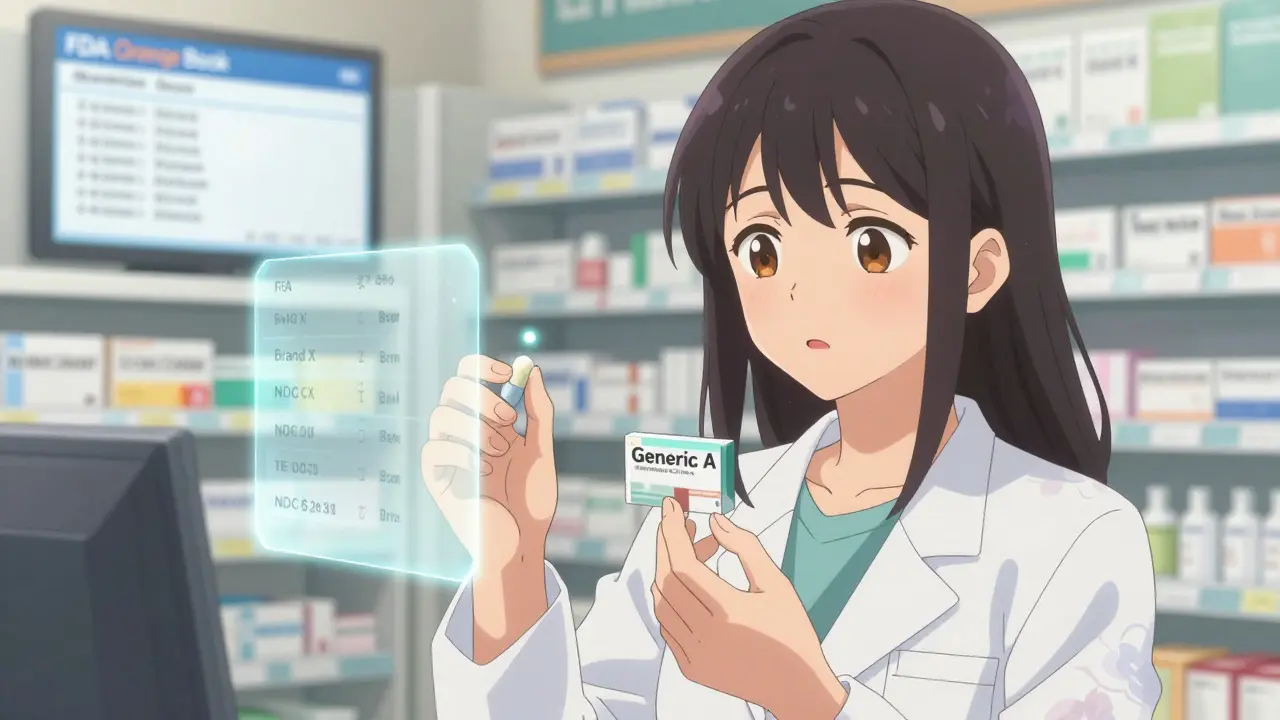
When a pharmacist fills a prescription, they don’t just see a drug name. They see a code, a label, a history, and sometimes a trap. The difference between a brand-name pill and its generic version isn’t just price-it’s a chain of data points that must be handled perfectly to keep patients safe. Too many pharmacy systems still treat generics and brands as interchangeable, and that’s where mistakes happen.
Why Generic vs Brand Matters More Than You Think
It’s easy to assume that if a drug is labeled "generic," it’s just a cheaper copy. But that’s not the whole story. The FDA requires generics to match brand-name drugs in active ingredients, strength, dosage form, and how they work in the body. That’s the law. But here’s the catch: generic doesn’t always mean "identical." Some generics have different inactive ingredients-fillers, dyes, coatings-that can affect how a drug is absorbed, especially in patients with allergies or sensitivities. A 2019 study in U.S. Pharmacist found that 0.8% of patients switching from brand to generic antiepileptic drugs reported new side effects. That’s a small number, but in a population of millions, it adds up.Then there are authorized generics. These are the exact same drug as the brand, made by the same company, just sold under a different label. They’re not cheaper because they’re not competing-they’re the same product, same factory, same batch. But pharmacy systems often can’t tell them apart from regular generics. A pharmacist at Walgreens reported in a Reddit thread that their system flagged 17 different generics for lisinopril but didn’t say which ones were authorized. That’s not just confusing-it’s dangerous.
The Backbone of Identification: NDC Codes and TE Codes
Every drug in the U.S. has a National Drug Code (NDC). It’s a 10- or 11-digit number that breaks down into three parts: the labeler, the product, and the package size. Think of it like a fingerprint for each version of a drug. A brand-name drug and its generic version each have their own unique NDC. If your system doesn’t pull the right one, you’re dispensing the wrong product-even if the name looks right.But NDC alone isn’t enough. The real key is the Therapeutic Equivalence (TE) code from the FDA’s Orange Book. This two-letter code tells you whether a generic is considered interchangeable with the brand. An "AB" code means it’s bioequivalent and substitutable. An "A" code without a second letter? That’s a problem. It might be a generic, but it hasn’t been fully evaluated. And an "X" code? That means it’s not equivalent at all-don’t substitute.
Pharmacy systems like Epic, Cerner, and Rx30 use these TE codes to auto-flag substitutions. But if the system isn’t updated monthly-when the FDA releases new Orange Book data-you’re working with outdated info. In 2023, the FDA started moving toward a real-time API for the Orange Book. That’s a big deal. No more waiting two weeks for updates. Just real-time accuracy.
Where Systems Fail: NTI Drugs and Branded Generics
Not all drugs are created equal. Some, like warfarin, levothyroxine, and phenytoin, have a narrow therapeutic index. That means a tiny change in blood levels can cause serious harm-too little and the drug doesn’t work; too much and it causes bleeding or seizures. These drugs need special handling.Systems that auto-substitute generics for NTI drugs without alerts are putting patients at risk. The Institute for Safe Medication Practices documented 147 adverse events over 18 months linked to improper substitution of warfarin. That’s not a glitch. That’s a system failure.
Then there are branded generics. These are generics that got their own brand name-like Errin, Jolivette, or Cryselle for birth control. They’re not brand-name drugs. They’re ANDA-approved generics, but they’re marketed like brands. Pharmacists see the name, assume it’s the original, and don’t check the TE code. A 2022 survey found 78% of pharmacists were confused by these names. That’s not the pharmacist’s fault. It’s the system’s.

How the Best Systems Handle It
Kaiser Permanente got it right. In 2022, they hit a 92.7% generic dispensing rate-not by forcing substitutions, but by design. Their system defaults to generics. But if a prescriber writes "dispense as written" or "brand necessary," the system stops. It doesn’t override. It asks. And it shows the patient a simple chart comparing the brand and the generic side by side. Result? A 37% drop in brand continuation requests. Patients understood. They trusted.Humana’s system goes further. It uses "therapeutic interchange" logic. When a brand is prescribed, the system doesn’t just ask, "Should we substitute?" It says, "Here are three clinically equivalent generics. One is 60% cheaper. Would you like to switch?" It gives the prescriber options, not just a yes/no. That’s not automation-that’s smart decision-making.
LexID and Medi-Span are the engines behind most of these systems. LexID handles over 2 billion prescription transactions a year with 99.98% accuracy. Medi-Span powers 75% of hospital pharmacies. They’re not flashy. But they’re the reason most systems don’t crash.
What You Can Do Today
You don’t need a $10 million system to fix this. Start here:- Check your TE codes. Are they pulled from the latest Orange Book? If not, your system is outdated.
- Disable auto-substitution for NTI drugs. Warfarin, levothyroxine, cyclosporine, digoxin-these should never be swapped without manual review.
- Train your staff on authorized generics. If your system can’t tell them apart, teach your pharmacists how to look up the NDC and manufacturer.
- Use visual aids for patients. A simple one-page handout showing "This generic has the same active ingredient" with a side-by-side image cuts confusion by half.
- Know your state rules. 49 states allow pharmacists to substitute generics without prescriber approval. But California requires documentation. Texas doesn’t. Your system must adapt.

The Future Is in the Data
The next leap isn’t in software. It’s in data. The FDA’s Precision Medicine Initiative is exploring how genetic markers could predict whether a patient responds better to one manufacturer’s version of levothyroxine over another. That’s not science fiction-it’s happening. Systems that can link a patient’s genetic profile to their drug history will soon be able to say, "This patient had a reaction to Generic A but not Generic B. Stick with B."AI is already helping. A 2023 study in the Journal of the American Medical Informatics Association showed AI models could predict therapeutic equivalence issues with 87.3% accuracy by analyzing prescription patterns. That’s better than most humans.
But none of this matters if the system doesn’t know the difference between a brand and a generic. And right now, too many do.
Bottom Line
Generic drugs save the U.S. healthcare system nearly $2 trillion every decade. That’s huge. But saving money shouldn’t mean cutting corners on safety. The best pharmacy systems don’t just tell you what drug to dispense. They tell you why. They flag risks. They educate. They adapt.If your system can’t distinguish between a brand, an authorized generic, and a branded generic-then you’re not managing drugs. You’re gambling with them.
Can pharmacists substitute generics without a doctor’s approval?
In 49 states, pharmacists can substitute a generic for a brand-name drug without asking the prescriber, as long as the generic has an "AB" therapeutic equivalence code. The only exception is New York, which requires prescriber consent. But even in states that allow substitution, pharmacists must follow state-specific rules-some require documentation, others require patient notification. Always check your state pharmacy board guidelines.
Are authorized generics the same as brand-name drugs?
Yes. Authorized generics are made by the same company that produces the brand-name drug, using the same formula, equipment, and facility. The only difference is the label. They’re sold under a generic name to compete on price. But chemically and biologically, they’re identical. Many patients don’t realize this, which is why clear labeling and patient education are critical.
Why do some patients react differently to generics?
The active ingredient is the same, but inactive ingredients-like fillers, dyes, or coatings-can vary. For most people, this doesn’t matter. But for patients with allergies, sensitivities, or conditions like epilepsy or thyroid disease, even small differences can affect absorption. A 2019 study found 0.8% of patients reported side effects after switching from brand to generic antiepileptic drugs. These cases are rare but real. Systems should flag drugs with known excipient issues and allow prescribers to override substitutions.
What’s the difference between a branded generic and a brand-name drug?
A brand-name drug is the original product developed by a pharmaceutical company, protected by patents. A branded generic is a generic drug that has gone through the FDA’s Abbreviated New Drug Application (ANDA) process but is marketed under a proprietary name-for example, Sprintec instead of norgestimate/ethinyl estradiol. It’s not the original brand. It’s a generic with a brand name. This confuses both pharmacists and patients, especially when multiple versions exist with similar names.
How often are NDC codes updated?
The FDA updates its National Drug Code directory approximately 3,500 times per month. That means new drugs, new manufacturers, and new packaging versions are added constantly. Pharmacy systems that don’t sync with real-time FDA data risk dispensing outdated or incorrect information. Systems that update daily or use the FDA’s API are far more accurate than those that update monthly or quarterly.
Do all pharmacy systems use the FDA’s Orange Book?
Most hospital and large retail pharmacy systems do, but not all. Independent pharmacies and older systems often rely on third-party databases that may lag behind the Orange Book. Since the FDA’s 2023 modernization initiative introduced real-time API access, systems that haven’t upgraded are at risk of displaying outdated therapeutic equivalence data. CMS requires all Medicare Part D pharmacies to integrate Orange Book TE codes with 99.5% accuracy-so if you’re in that program, you must comply.
What role do pharmacists play in managing generic vs brand identification?
Pharmacists are the last line of defense. Even the best system can’t catch every nuance-like a patient’s history of reacting to a specific filler, or a prescriber’s unspoken preference based on experience. Pharmacists must verify TE codes, recognize authorized generics, flag NTI drugs, and communicate clearly with patients. Training on these details isn’t optional-it’s essential. The American Society of Health-System Pharmacists recommends 8-10 hours of annual training for every pharmacy staff member.
Nicholas Gama
Let’s be real: if your system can’t tell an authorized generic from a regular one, you’re not a pharmacy-you’re a lottery booth.
0.8% of epileptic patients having seizures because some IT guy thought "AB" meant "all good"? That’s not negligence. That’s criminal.
And don’t get me started on branded generics. Marketing teams invented that loophole to trick pharmacists into thinking they’re helping patients. They’re not. They’re profit machines.
Stop pretending this is about cost savings. It’s about control. And someone’s getting rich off your patients’ confusion.